
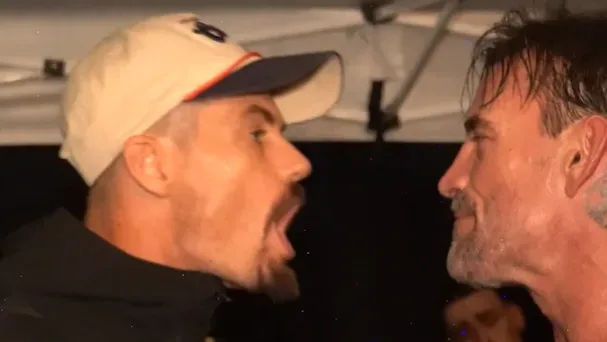
Grayson Waller believes the future of WWE is being influenced by more than the performers currently fighting for championships on television. The NXT Champion has pointed to Shawn Michaels, AJ Styles and CM Punk as three figures whose continued investment in younger talent is helping set the direction of the industry.
Waller returned to NXT in July and has since established himself as one of the brand’s central figures, capturing the NXT Championship while taking a blunt approach toward anyone he believes is not meeting the standard. His current position has also given him a close-up look at the people working behind the scenes and offering guidance to the next generation.
During an appearance on Insight with Chris Van Vliet, Waller discussed what it has meant to work around Michaels, Styles and Punk. While each has a different connection to WWE’s present-day developmental system, Waller said the common denominator is clear: all three are deeply committed to helping performers improve.
AJ Styles’ Approach Has Stood Out to Waller
Styles has increasingly spent time in NXT as a coach and producer, working with wrestlers in the ring while offering feedback based on his lengthy career at the highest level. For Waller, that has been especially meaningful because he came into the business as a fan of Styles.
For more background on this topic, read Je’Von Evans Reflects On Money In The Bank Ambulance Spot: ‘It’s Going To Be Remembered For Decades’.
Waller described Styles as enjoyable to work with precisely because he does not attempt to impose a rigid formula on everyone. Rather than telling talent exactly what they must do, Styles encourages wrestlers to bring their own ideas forward and then helps refine them.
“AJ is a big one,” Waller said. “He lets you go and lets you do you, and just makes everything better.”
That creative freedom matters in a developmental environment where performers are learning how to balance the fundamentals of television wrestling with the need to create an individual identity. NXT has long been a place where wrestlers are evaluated not just on athletic performance, but on their ability to speak, adapt, connect with a crowd and develop a distinct character.
Waller’s comments suggest that Styles’ role is not simply about teaching moves or structuring sequences. The former world champion is helping talent find stronger versions of the ideas they already have. Waller recalled Styles responding to a wrestler’s proposed direction by asking what could make it better, rather than shutting the concept down.
“What do you want to do?” is the type of question Waller associated with Styles’ style of coaching. The result, in Waller’s view, is advice that enhances a performer’s instincts without erasing what makes that performer different.
Waller said he wishes he had received even more opportunities to work directly with Styles inside the ring, though he noted that he has had some chances. Now, with Styles contributing in NXT, Waller sees that experience being extended to a broader group of wrestlers.
A Defining Moment After EK Prosper’s Match
The moment that most clearly reinforced Waller’s view came after his recent match with EK Prosper. Prosper was placed into what Waller characterized as the biggest match of his life on just 24 hours’ notice. The young wrestler ultimately lost to Waller, but Waller was struck by what happened after they returned backstage.
When Waller came through the curtain, Michaels, Styles and Punk were all there. To Waller, seeing those three men together at that moment carried considerable significance. They represent different eras of the business and different paths to stardom, yet each was present and engaged as a young talent processed a major opportunity.
“The three guys standing at the curtain were Shawn, AJ, CM Punk,” Waller said. “That’s three generations of guys who know how much they care about the business and how much they want to give back.”
Waller emphasized the expressions on their faces when Prosper returned through the curtain. Prosper had been given a sudden, enormous assignment and had come up short in the match, but Waller saw genuine concern and investment from the three veterans. That reaction, he said, offered a strong indication of what the future can look like for WWE talent being developed today.
“Seeing the look on their face when he came back through tells me everything I need to know about the future of the industry,” Waller said. “Those three guys are shaping it.”
The scene is notable because it goes beyond the familiar idea of experienced wrestlers offering occasional advice. Waller’s account describes an environment in which some of WWE’s most recognizable names are following the progress of newer performers closely, especially in difficult moments. A loss in a major match can be part of a wrestler’s growth, and the support surrounding that wrestler after the bell can be just as important as the preparation beforehand.
Shawn Michaels Remains Central to NXT’s Identity
Michaels has been a defining creative force in NXT’s modern era. Under his leadership, the brand has continued to serve as WWE’s primary developmental platform while also functioning as a weekly television product with championship programs, character-driven stories and performers seeking to establish themselves for larger opportunities.
For a champion like Waller, Michaels’ presence is especially significant. The NXT title remains one of the brand’s clearest symbols of who has earned trust as a leading on-screen figure. Waller has made that role his own since returning in July, combining his championship status with a willingness to challenge the effort and performance of others around him.
Waller’s perspective on Michaels is not limited to the creative side of NXT. The account of the backstage moment with Prosper frames Michaels as someone personally invested in the performers who are being asked to rise quickly. That type of attention can be vital for wrestlers who are still gaining experience under pressure.
Michaels is reportedly expected to move into Bruce Prichard’s position as WWE Executive Director when Prichard retires following WrestleMania 43. That possibility would represent another major shift in Michaels’ WWE responsibilities. For now, his influence over NXT remains evident in the way Waller describes the brand’s culture and the people guiding its talent.
CM Punk’s Visits Add Another Perspective
Punk has also made frequent visits to NXT, checking in with the brand and spending time around its developing roster. His presence alongside Michaels and Styles gave Waller’s recollection an added dimension. Michaels’ legacy is rooted in his work as an all-time WWE performer and his current leadership role. Styles brings a career shaped by excellence across multiple major wrestling stages before his WWE run. Punk offers yet another perspective from his own prominent career and current place within WWE.
Waller’s description of the three men as different generations was not merely about their ages or the years in which they became stars. It was about the combined experience available to NXT wrestlers. Newer talent can receive input from people who have succeeded in different creative climates, worked different styles and navigated the pressures that come with carrying major programs.
That does not mean every wrestler will be molded in the same image. In fact, Waller’s praise for Styles centered on the opposite idea: preserving a wrestler’s own instincts while making the finished product stronger. The blend of Michaels’ developmental leadership, Styles’ collaborative in-ring guidance and Punk’s regular involvement gives NXT talent several perspectives to draw from.
Waller Sees a Promising Developmental Environment
As NXT Champion, Waller has a vested interest in the standard around him continuing to rise. His on-screen attitude may be confrontational, particularly when he believes someone is not carrying their share of the workload, but his comments on Michaels, Styles and Punk reveal an appreciation for the infrastructure supporting the locker room.
Prosper’s short-notice match with Waller served as the example that brought that appreciation into focus. The situation tested a young wrestler in a highly visible setting. Even in defeat, Prosper had people with decades of experience watching closely and caring about the result, the performance and the next stage of his development.
For Waller, that is the point. The future of WWE will be determined by the wrestlers still learning to handle those moments, but also by the veterans willing to stand behind the curtain, assess what happened and help them move forward. With Michaels, Styles and Punk all offering their experience in different ways, Waller sees a developmental system being shaped by people who remain highly invested in the business and the talent coming after them.

Darryl Polo
Darryl Polo is a passionate wrestling fan covering WWE, AEW, TNA and beyond. He loves great rivalries, breakout stars and the moments that keep fans talking long after the bell. How we work.