
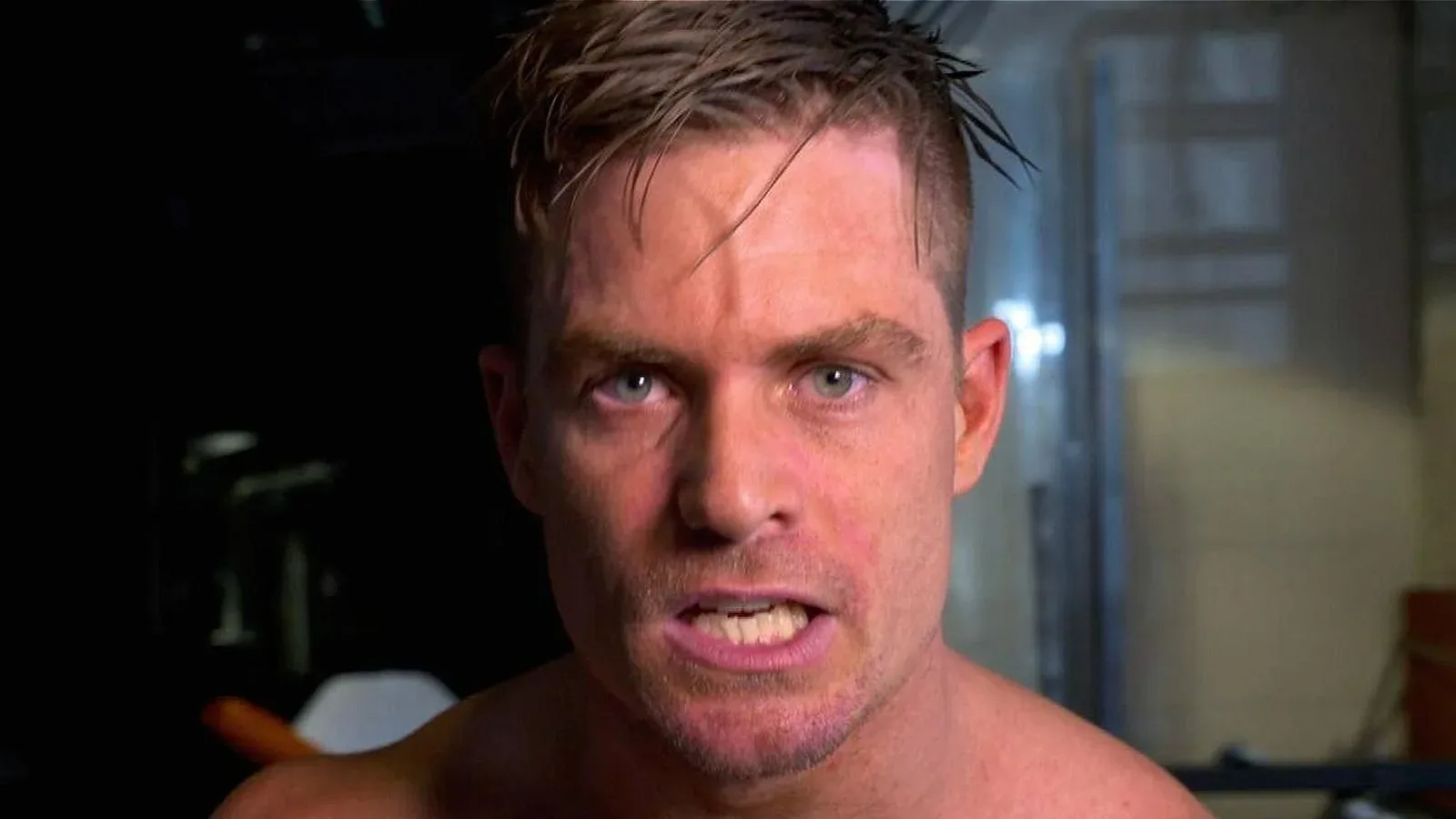
Grayson Waller has pinpointed WWE’s trip to Australia last year as one of the most disappointing moments of his main-roster tenure, describing the weekend as a missed opportunity to spotlight a performer who has made his national identity a central part of his presentation.
Now holding the WWE NXT Championship and speaking with renewed confidence about his place in the company, Waller looked back on a main-roster stretch that he felt never fully gained the momentum it could have. In an appearance on Cheap Heat, Waller said his frustration reached a particular level when WWE brought multiple shows to Australia but did not have a featured television storyline prepared for him.
For Waller, the issue was not simply missing a match. It was the sense that WWE had arrived in a market where he believes he has a distinctive connection with the audience, only for that connection not to be utilized in a prominent way.
“I’m the Aussie Icon,” Waller said on Cheap Heat. “We’ve got Rhea [Ripley] and Bronson [Reed], but no one reps Australia like I do. No one does media for Australia like I do — I’ve got the flag on all my gear. I love where I’m from.”
For more background on this topic, read Brad Williams Details Last-Minute Minihausen Role at WWE SummerSlam.
Waller’s comments underline the importance he places on representing Australia throughout his WWE career. His persona has long leaned into his confidence, arrogance, and willingness to provoke both opponents and crowds, but his attachment to his home country has also been a consistent part of the act. The Australian flag on his gear and his public emphasis on promoting WWE in the country have helped make that aspect of his character immediately recognizable.
That is why the Australian weekend appears to have carried added meaning for him. Waller said he was informed that there was “no story” planned for him despite WWE having three shows in the country. Rather than appearing in a featured capacity on one of the main television programs, he wrestled Rey Fenix on WWE Main Event.
While Main Event gave Waller a chance to perform, he viewed the placement as evidence of a larger problem with how he was being used at the time. Waller said he believed the reaction to the match proved that there was an appetite to see him in a more meaningful position during the tour.
“It felt great to be like, ‘I told you. I knew if you put me in the places that I was supposed to be, this could’ve been huge,’” Waller said. “I was a little upset that we had three shows and you didn’t have a spot for Grayson Waller.”
Waller also claimed that his bout with Rey Fenix received the biggest crowd reaction of the night. That experience did not erase his disappointment over the lack of a larger program, but it seemingly strengthened his belief that he can deliver when WWE places him in an environment suited to his character and history.
It is a notable reflection from a wrestler who has experienced both visibility and uncertainty since arriving on WWE’s main roster. Waller had an established identity before reaching Raw and SmackDown, and he entered the broader WWE landscape with a personality built to generate conversation. His willingness to speak bluntly, host segments, engage in media appearances, and position himself as a star has never been subtle. Yet the Australian tour, in his telling, exposed the gap between how strongly he believes in that identity and how he felt he was being featured at that point.
Australia Remains a Personal Proving Ground
There is an understandable emotional weight attached to WWE events in a performer’s home country. For Waller, Australia is not just another stop on the calendar. It is the place he repeatedly identifies as part of his wrestling identity, and he clearly believes that his presence could give WWE an immediate local focal point.
Rhea Ripley and Bronson Reed are also prominent Australian names within WWE, as Waller acknowledged. His point was not that he is the only wrestler capable of representing the country. Instead, he argued that his own approach is uniquely tied to carrying that role publicly. The “Aussie Icon” label is more than a nickname in Waller’s view; it is a claim to being one of WWE’s most vocal ambassadors for the market.
That framing explains why being told there was no storyline for him hit differently than an ordinary absence from a card. Waller was not merely looking for ring time. He wanted a role with stakes, visibility, and a clear reason for the audience to invest. A homecoming atmosphere can create a natural platform for a wrestler, whether as a fan favorite, a villain who plays off local expectations, or a personality at the center of a high-profile segment. Waller believed that platform was available and that he was not given the opportunity to capitalize on it.
The match with Rey Fenix, meanwhile, gave him a chance to make his case in front of the audience anyway. Waller’s description of the reaction suggests he viewed the bout as validation rather than consolation. In his mind, it was proof that the crowd would respond if WWE gave him the right setting and sufficient importance.
NXT Championship Run Changes the Context
Waller’s assessment of that difficult main-roster period comes at a markedly different point in his career. He is now the WWE NXT Champion, a status that brings both visibility and a concrete responsibility as one of the leading figures on the brand. The championship gives him a platform from which to present himself not as a talent waiting for an opening, but as someone already entrusted with a central role.
That change does not appear to have softened his memory of Australia. If anything, it has given Waller more reason to speak openly about what he wants from the next opportunity. He said the experience motivated him to work harder to prove himself to WWE and to make certain that the next time the company returns to Australia, he has something important to do.
The important distinction is that Waller is presenting the setback as motivation rather than resignation. He did not describe the weekend as the end of his ambitions on the main roster. Instead, he framed it as a reminder of what he needs to demonstrate: that he can be trusted with a meaningful role on a major show, particularly in a setting where his connection to the audience is already built into the story.
That is a practical target for a wrestler who has always projected certainty in his own value. Waller’s public character thrives on declaring that he belongs in the spotlight. His comments about Australia turn that familiar confidence into a specific professional goal. The next home-country WWE event is no longer simply a chance to receive a warm welcome; it is a benchmark he wants to meet with a substantial match, segment, or storyline.
A Clear Goal for the Next Return
Waller’s remarks do not establish what WWE’s future Australian plans will be or what role he will hold when the company returns. They do, however, make his expectations unmistakable. He wants more than a place on an ancillary broadcast. He wants to be integral to the presentation.
For now, the WWE NXT Championship has given Waller a prominent stage to continue strengthening that case. A title reign can provide the kind of sustained focus that was missing from the main-roster chapter he described, allowing him to build momentum through performances, promos, and the responsibility of representing a brand.
His Australian disappointment remains a low point because it combined personal pride with professional frustration. But Waller has turned it into a challenge directed at himself as much as anyone else. The next time WWE heads to Australia, he wants there to be no question about whether there is a story for Grayson Waller. He intends to make himself impossible to leave out.
In pictures

Darryl Polo
Darryl Polo is a passionate wrestling fan covering WWE, AEW, TNA and beyond. He loves great rivalries, breakout stars and the moments that keep fans talking long after the bell. How we work.