
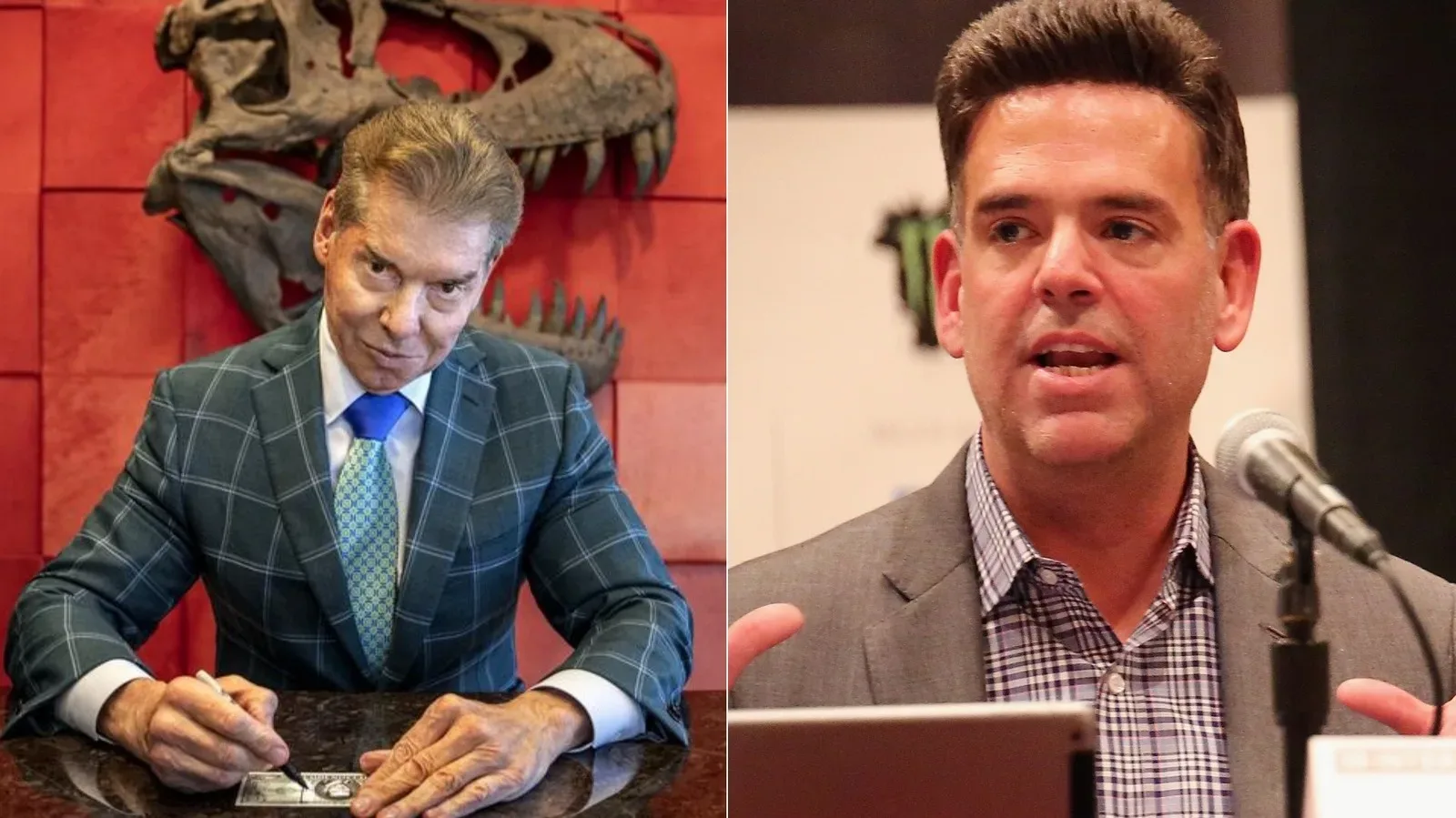
Former WWE Co-President George Barrios has offered a detailed account of the circumstances that led to his and Michelle Wilson’s departure from the company in 2020, describing an emotional meeting with Vince McMahon, an unsuccessful effort to reshape the executive structure, and an eventual decision to make an immediate break.
Barrios discussed the subject during an appearance on My World with Jeff Jarrett and Conrad Thompson. His recollection presents the departure not as a single sudden disagreement, but as the result of a growing desire for independence, followed by a difficult attempt to find a new working arrangement with McMahon.
Barrios joined WWE in 2008, nearly a year before Wilson arrived. Both rose through the corporate side of the organization and were appointed Co-Presidents in 2018. In those roles, they reported directly to McMahon, who was then WWE’s Executive Chairman. Their time as Co-Presidents lasted just under two years before their exits.
Barrios and Wilson wanted to build something of their own
At the center of Barrios’ explanation was the shared ambition he and Wilson had to lead a business independently. The pair ultimately remained business partners after WWE, becoming founding Co-CEOs of Isos Capital Management, but Barrios said the desire to remove the “Co” element was a significant part of their thinking at the time.
For more background on this topic, read Izzi Dame and Shiloh Hill Added to WWE John Cena Classic Field.
“Michelle and I, we’ve been Co-Presidents of the company, kind of running the show. But the reality is, you know, we want to go do our own thing. Eliminate the Co. We want to go run our own businesses, and the funny thing is we continue with the Co today. But at that moment in time, you know, it’s your ego and you want to go do it.”
Rather than raise the issue separately, Barrios said that he and Wilson agreed they would speak to McMahon together. They anticipated that the conversation would be difficult. What they did not expect, Barrios said, was how emotional it would become.
McMahon did not simply accept their stated interest in moving on. Barrios said McMahon pressed them for a clearer explanation and conveyed that he wanted them to remain with WWE. He recalled McMahon becoming visibly emotional during the discussion.
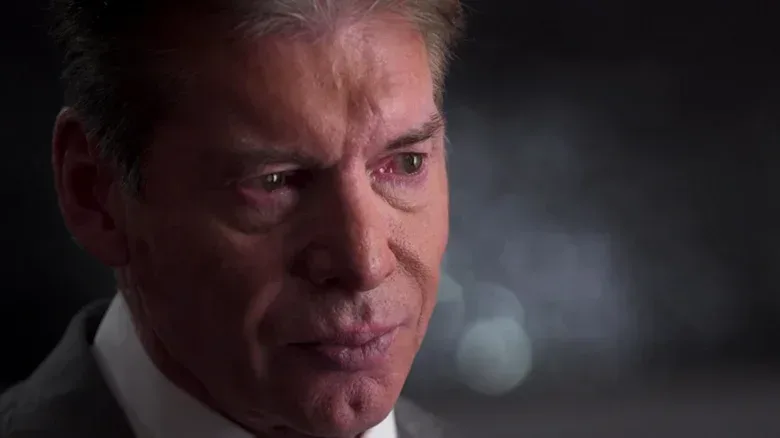
“Vince surprises us and he gets very emotional during this and tears up,” Barrios said. “Not to over dramatize it, but you know, that’s kind of meeting it is. The three of us at one point or the other are getting emotional.”
The description adds a personal dimension to a major executive change at WWE. Barrios and Wilson were not peripheral figures in the company’s business operations. They had been elevated to the presidency, worked closely with McMahon, and were among the most prominent corporate leaders in WWE during a period of substantial change for the company.
McMahon challenged Barrios’ explanation
Barrios said he framed the matter as a desire to pursue a new challenge, but McMahon responded by questioning whether WWE had truly prevented him from doing what he wanted professionally over the previous decade.
“I’m like, ‘Well, we just want to go do our own thing.’ And I remember him looking at me, he goes, ‘George, when have you not done what you wanted to do? Tell me in the last 10 years we haven’t done what you wanted to do.’ And I couldn’t.”
That exchange apparently did not produce a final resolution. Barrios said the initial meeting ended without an agreement, while Wilson still favored leaving at that point. Barrios, however, said he persuaded her to continue trying to work through the situation.
“Then I go into sell mode, and she knows I can be incredibly persuasive,” Barrios said. “So anyway, I convince her and she reminds me to this day we should have stuck with her plan.”
The comment reflects the tension at the heart of Barrios’ account. He and Wilson had entered the conversation ready to explore their future beyond WWE, but they did not initially seek an immediate or acrimonious separation. Instead, Barrios believed there could be room for a compromise that would allow them to operate at a faster pace while preserving their ties to the company.
An attempted new operating model changed the tone
Barrios said he later explained one of his core frustrations directly to McMahon: reporting to him was slowing the pace at which Barrios wanted to work. From there, he said the sides began discussing a different operating model intended to address that concern.
Yet Barrios recalled that McMahon was not comfortable with where that process was heading. What began as a conversation shaped by McMahon’s wish for Barrios and Wilson to stay gradually became more strained. In Barrios’ view, an arrangement that gave the Co-Presidents greater autonomy could also reduce McMahon’s day-to-day role.
“Well, he doesn’t like it,” Barrios recalled. “Slowly, it goes from that emotional, ‘I don’t want you guys to leave,’ to, ‘Hey, it feels like you guys are trying to push me in a corner.’ And you could argue it wasn’t that, but in some ways us getting what we wanted might diminish what he’s doing day-to-day.”
Barrios did not portray the clash as a simple matter of one side being entirely right or wrong. He acknowledged that the proposed structure could have been viewed as limiting McMahon’s daily involvement. At the same time, Barrios believed that the existing reporting relationship was keeping him and Wilson from working in the manner they envisioned.
As the process continued, Barrios said the emotions surrounding the situation hardened. He said there were a couple of issues that made him particularly angry, although he did not identify them. One exchange that remained with him concerned McMahon’s assertion that he had made Barrios rich.
“The fact I never sold a share of stock is what made me rich. By the way, that was me betting on me, not you.”
Barrios said he regretted making that response when looking back on the encounter. Still, he said it accurately reflected his mindset at that particular moment. The disagreement had moved beyond a discussion of career goals and operating structure into a more personal conflict over contributions, control and the meaning of their long professional relationship.
The final decision was an immediate departure
Ultimately, Barrios said McMahon determined that he and Wilson needed to leave WWE. Barrios recalled arguing that their exits should not happen immediately, but McMahon preferred a clean and swift separation.
“We’ve got to pull the band-aid,” McMahon told him, as recalled by Barrios.
The result was the end of Barrios and Wilson’s run as WWE Co-Presidents. Their departures closed a chapter that had begun with Barrios’ arrival in 2008 and had developed into a long partnership between the two executives. Although their time at the top of WWE’s corporate structure ended in 2020, neither their association with the company nor their partnership with one another was completely finished.
Barrios and Wilson went on to launch Isos Capital Management as founding Co-CEOs. The arrangement carried forward the executive partnership that had defined much of their WWE tenure, even if their earlier wish had been to lead something independently of the “Co-President” framework.
Barrios and Wilson later returned to WWE’s board
Their relationship with WWE resumed in a different capacity in January 2023, when Barrios and Wilson returned as members of the company’s board. Their return coincided with McMahon’s return to WWE after he had initially resigned in 2022 following allegations of misconduct.
McMahon subsequently oversaw the agreement that combined WWE and UFC under TKO Group Holdings through Endeavor. He served as Executive Chairman of TKO until resigning in January 2024 after a sex trafficking lawsuit was filed against him.
Barrios and Wilson departed following the completion of the merger. Their board roles were therefore tied to a pivotal corporate period that transformed WWE from a standalone public company into part of TKO Group Holdings alongside UFC.
Barrios’ comments provide an unusually candid look at a consequential WWE leadership change. He did not claim the 2020 split came down to one isolated dispute. Instead, he described a sequence of decisions: he and Wilson wanted greater independence, McMahon wanted to retain them, a possible compromise created concern over authority, and the relationship eventually reached a point where an immediate separation was deemed necessary.
It is also a reminder that WWE’s most significant stories have often extended well beyond the ring. The departure of two Co-Presidents involved questions of autonomy, executive decision-making and a changing relationship with McMahon at the highest level of the company. Years later, Barrios’ account makes clear that the end of that tenure was both professionally consequential and deeply personal.
In pictures

Darryl Polo
Darryl Polo is a passionate wrestling fan covering WWE, AEW, TNA and beyond. He loves great rivalries, breakout stars and the moments that keep fans talking long after the bell. How we work.