
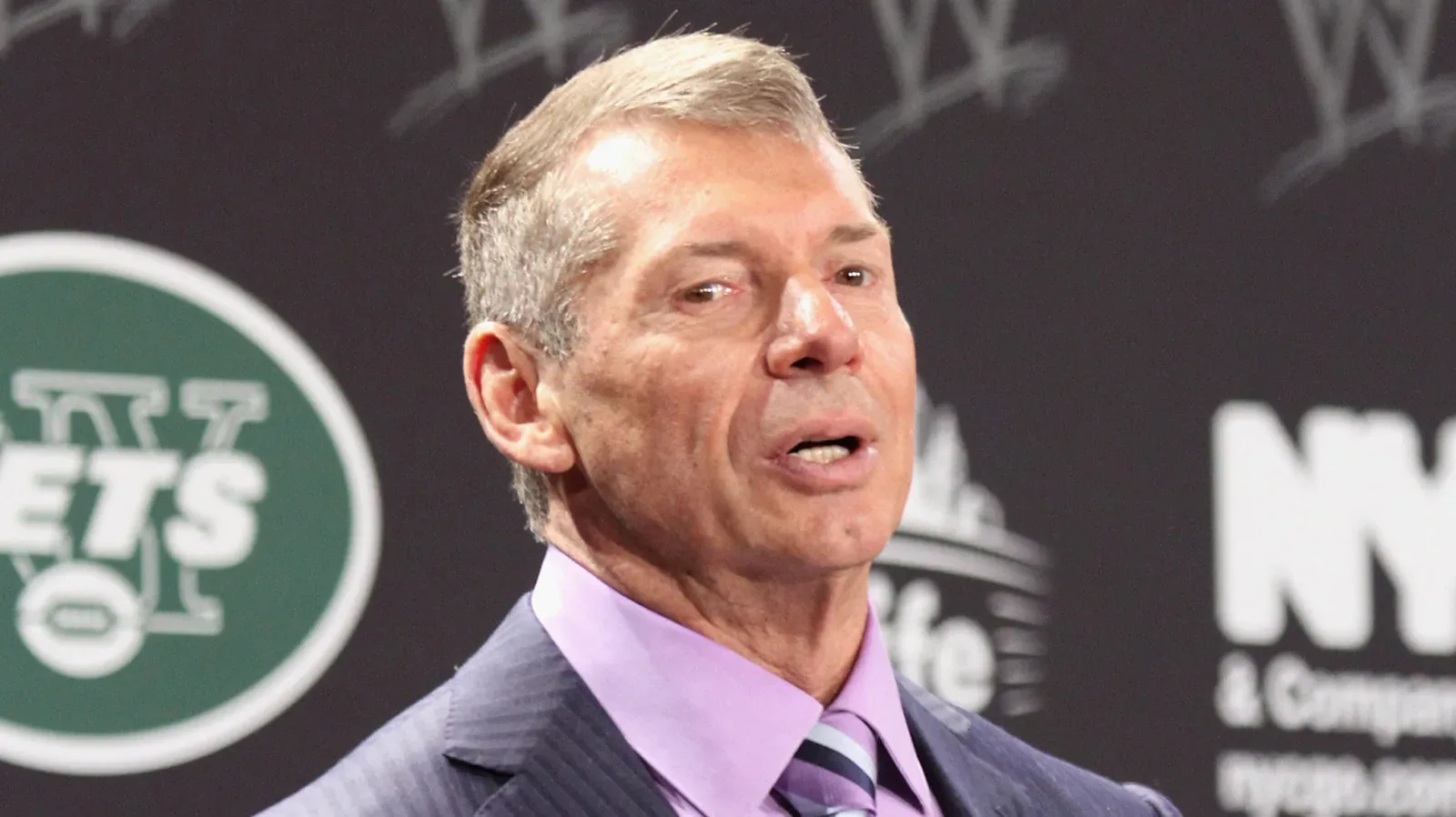
George Barrios has offered a detailed reflection on the Vince McMahon he came to know during his time as WWE co-president, describing a private executive who was markedly different from the larger-than-life personality that wrestling audiences had watched for decades.
Speaking on My World with Jeff Jarrett, Barrios discussed his early awareness of McMahon, the skepticism he encountered when he joined WWE, and the working relationship that developed between the two men. Barrios and Michelle Wilson served as WWE co-presidents before their exits from the company, and Barrios said his experience working directly with McMahon complicated many of the assumptions people had made about the longtime WWE chairman.
McMahon has occupied an unusual place in popular culture because his public identity has long been split between wrestling character and corporate leader. As the on-screen “Mr. McMahon,” he became one of the industry’s most recognizable antagonists: loud, confrontational, theatrical, and often ruthless within WWE storylines. Away from television, he has also faced substantial public scrutiny over the years, including legal controversies that have shaped how many observers view him.
For Barrios, the version of McMahon he remembered from childhood was not yet the villainous authority figure who later became central to WWE programming. He had known McMahon first as a familiar television presence from the earlier era of WWE broadcasts.
For more background on this topic, read Kay Lee Ray Eyes New EVE Opponents After Seven-Year Absence.
“I think he was just the announcer, or the commentator, the guy that’d come in the ring,” Barrios said. “That’s my picture of him. I hadn’t followed Vince’s career. If you would’ve asked me who Vince McMahon is before I took the job, I would’ve said, ‘The guy I used to watch.’”
That changed when Barrios was considering the opportunity to work for WWE. He explained that the reaction from people close to him was overwhelmingly doubtful. Friends, colleagues, and members of his family questioned why he would want to take a role with a company led by McMahon, demonstrating how firmly McMahon’s reputation had preceded any personal introduction.
Barrios said even his father-in-law, with whom he has a close relationship, raised concerns. The former WWE executive recalled his father-in-law asking whether McMahon was a “crook,” a question rooted in perceptions surrounding McMahon’s steroid trial during the early 1990s. The reaction was not isolated, and Barrios said he heard enough negativity about McMahon that it strongly influenced what he expected going into their first meeting.
A Quiet First Impression
Rather than meeting the boisterous figure he had watched on screen or the intimidating figure described by others, Barrios said he encountered someone unexpectedly reserved. He recalled being struck by just how little McMahon spoke during the interview process and how difficult he seemed to be to read.
“The first time I meet him, those are the two things I’ve got in my head. The bombastic guy that’s on TV and people saying, ‘This guy’s not a good guy,’” Barrios said. “I was stunned by how quiet he was. It took a lot for him to even ask a question even as we were doing the interview.”
Barrios described himself as the person largely carrying the discussion. In his recollection, McMahon did not readily engage in the kind of back-and-forth that might be expected from a powerful executive interviewing a prospective senior hire. McMahon also did not consistently make eye contact, instead looking away at points while Barrios spoke.
That behavior left Barrios with an immediate conclusion that did not fit the prevailing image of McMahon at all.
“The first impression’s like, ‘Wow. This is a really introverted guy,’” Barrios said.
The distinction matters because McMahon’s television persona was built precisely around the opposite traits. “Mr. McMahon” was designed as a character who filled every room, demanded attention, and used his voice and physical presence to drive stories. Barrios’ account suggests that the private businessman he encountered did not automatically operate in that same mode.
As their professional relationship continued over more than 10 years, Barrios said that first assessment held up. He came to believe the introversion was genuine, though he acknowledged that it could be challenging for him personally as an extrovert. McMahon’s restrained nature, he said, often made him difficult to interpret.
Barrios also noted that he did not recall McMahon raising his voice during their many years working together. Nor did he characterize McMahon as someone who regularly used profanity. Those observations again stand in contrast to the forceful public image that has followed McMahon throughout much of his career.
Barrios Says He Saw “Three” Versions of McMahon
While Barrios believes McMahon is frequently misunderstood, he did not present him as a simple or easily defined person. Instead, he said he came to recognize three distinct versions of his former boss.
The first was the WWE character known to the public. The second was the internal business leader: a serious, driven, demanding executive whose presence inside the company could be formidable. Barrios referenced the tyrannosaurus rex head in McMahon’s office as part of that image, a detail that reflected the intense and competitive persona associated with WWE’s longtime leader.
But Barrios said there was also a third side, one that appeared far less often than the others. He described that version of McMahon as vulnerable.
“Every once in a while, there was a third one that would show up, which was this really vulnerable, just a really vulnerable guy,” Barrios said. “Very rarely, Vince had, like we all have, we all have our masks.”
Barrios made clear that this was separate from both the scripted “Mr. McMahon” character and the serious executive seen by WWE staff. In his view, the vulnerable side was real but rarely visible. It was not the face that most fans saw, and it was not necessarily the personality most employees encountered in routine business settings.
One of the occasions when Barrios said that more exposed side emerged was during the meeting in which he and Wilson first resigned from WWE. Barrios did not provide additional details about the conversation itself, but he identified that moment as an example of McMahon allowing that guarded layer to show.
The recollection adds another perspective to a period that was significant for WWE’s corporate structure. Barrios and Wilson were prominent executives during a major phase of the company’s business evolution, and their departures marked the end of a long working relationship with McMahon. Barrios’ comments indicate that, even in a difficult meeting involving the resignation of two top leaders, he saw an emotional dimension from McMahon that was uncommon.
A Relationship Defined by Work, Not Friendship
Despite spending more than a decade in the same organization and working at the highest levels of WWE, Barrios said he and McMahon were not friends. He instead described their bond as one between “high performing teammates.”
That framing reflects the nature of their relationship: close in a professional sense, shaped by demanding work and shared business objectives, but not necessarily a personal friendship outside of that setting. Barrios said he nevertheless took a great deal from the experience of working alongside McMahon.
He also spoke respectfully about the way McMahon treated people throughout the corporate hierarchy. Barrios said McMahon dealt with individuals in a consistent manner whether they were at the top of WWE’s structure or in positions far below it. For Barrios, that was an important characteristic of the man he knew internally.
“Really interesting guy” was how Barrios ultimately summed up McMahon, adding that he has a great deal of respect for him. That does not erase the public perceptions Barrios himself acknowledged at the beginning of the discussion, nor does it change the history that has made McMahon such a polarizing figure. Rather, Barrios’ account is a personal one shaped by his own direct experience inside WWE.
His comments also underline the gap that can exist between a wrestling executive’s public mythology and the day-to-day reality experienced by colleagues. In McMahon’s case, that gap has always been especially pronounced. For generations of fans, he was first the commentator who appeared around the ring, then the defining authority figure of WWE’s most famous era. For Barrios, he became a reserved, demanding, at times hard-to-read business partner with dimensions that rarely reached public view.
Barrios did not minimize the intensity of McMahon’s leadership style. He described a serious and tough executive, someone deeply driven and clearly invested in the business. At the same time, his memories emphasize restraint rather than spectacle, and occasional vulnerability rather than constant invulnerability.
That combination is what made McMahon, in Barrios’ telling, so difficult to reduce to a single image. The televised villain, the severe corporate leader, and the guarded person who occasionally revealed a more vulnerable side were all parts of the same individual. For a former co-president who spent more than a decade working in WWE’s executive ranks, that complexity remains the most lasting impression.
In pictures

Darryl Polo
Darryl Polo is a passionate wrestling fan covering WWE, AEW, TNA and beyond. He loves great rivalries, breakout stars and the moments that keep fans talking long after the bell. How we work.