
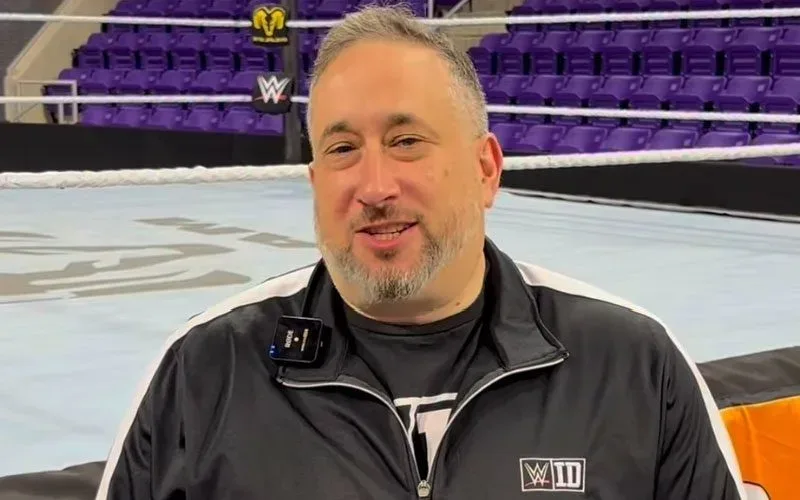
For many wrestlers, receiving a contract offer represents one of the defining moments of a career. It can mean financial stability, national exposure, access to experienced coaches, and an opportunity to work in a more structured environment. But a contract alone does not guarantee development, opportunity, or long-term satisfaction. Gabe Sapolsky, whose career has included influential work in independent wrestling and roles connected to WWE, WWE ID, and WWE EVOLVE, has laid out seven points that talent should weigh before putting pen to paper.
Sapolsky’s advice is straightforward: wrestlers should look past the excitement of being offered a deal and evaluate what that agreement actually provides. His list addresses a number of issues that can shape a performer’s path, from a promotion’s creative plans and training environment to contractual restrictions, career mobility, and a wrestler’s own instincts.
The message arrives at a time when more wrestlers have visible routes into major-company systems, developmental platforms, and contracted independent promotions. That creates more choices, but it also makes the details of every choice more important. A deal can be a major step forward, but Sapolsky’s framework emphasizes that talent should understand why a deal makes sense for them rather than treating the offer itself as the finish line.
View the referenced post on X
Ask About the Plan
The first question Sapolsky suggested is perhaps the clearest: “Ask what their plans are for you. This will immediately tell you if it’s a good opportunity.”
For more background on this topic, read Chavo Guerrero Jr. and Brad Small Launch Not Too Small Agency for Wrestlers.
In wrestling, a contract may mean very different things depending on the company and its current needs. Some performers are brought in with a defined role, a planned series of opponents, a training track, or a clear division in which they are expected to contribute. Others may be signed because a company sees potential but has not yet settled on the right presentation or place for them.
There is no universal answer that applies to every wrestler. A younger talent may value coaching and time to develop over immediate television exposure. An established independent wrestler may be seeking higher-profile opponents, a specific platform, or a deal that allows them to retain part of their outside schedule. The essential issue is whether the promotion can explain what it sees in the performer and how it intends to use that performer.
A wrestler does not need every future match mapped out before signing. Wrestling plans can change quickly. Still, Sapolsky’s point is that the conversation itself can be revealing. A thoughtful answer may show that a promotion has identified a wrestler’s strengths and has considered their next steps. A vague answer may also provide useful information before a major commitment is made.
Consider Upward Mobility Beyond One Promotion
Sapolsky’s second point asks whether there is “upward mobility not just in the promotion, but for the future in your career.” That distinction is significant. A wrestler can have opportunities within a company while also needing to consider whether that environment will help create options later.
Upward mobility can mean several things. It may involve being positioned to move into bigger matches, title contention, featured programs, or more prominent events. It can also involve building skills, improving visibility, and adding experience that makes a wrestler better prepared for future opportunities. A contract should be measured not only by what a wrestler gains in the moment, but by what it can help them become over time.
This is especially relevant for talent who are still developing their identities. A deal that provides a dependable place to work can be valuable, but wrestlers also need to assess whether they will continue growing. Does the company give them room to improve? Does it offer a path toward greater responsibility? Does it help them build the kind of resume and experience that can open doors later?
Sapolsky’s wording makes clear that the question is broader than title opportunities or immediate booking position. A deal may be worthwhile if it gives a performer a stronger foundation for the next chapter of their career, even if that next chapter is not yet fully defined.
Evaluate Who You Will Learn From
The third consideration is the people surrounding the talent. Sapolsky advised wrestlers to ask: “Who will you get to learn from and work with.”
Professional wrestling remains an experience-driven craft. In-ring fundamentals, match structure, promo work, character development, conditioning, production awareness, and the ability to adapt to different opponents are all areas where daily access to knowledgeable people can make a substantial difference. The names on a company’s roster, the producers or coaches available, and the range of opponents a wrestler can face are all part of the value of a potential agreement.
Learning does not only happen in formal training sessions. Working with more experienced performers can help a wrestler understand timing, crowd interaction, pacing, preparation, and the less visible professional standards that come with higher-level wrestling. Being in a room with the right people can accelerate a performer’s education in ways that are difficult to replicate elsewhere.
For that reason, a talent considering an offer should look carefully at the environment attached to it. The question is not merely whether a promotion has recognizable names. It is whether the wrestler will have meaningful chances to work with, observe, and learn from people who can help elevate their game.
The Contract Details Matter
Sapolsky’s fourth point is direct: “The devil is in the details. What are the limitations and what freedoms do you have.” It is a reminder that the headline of a contract offer is not the entire agreement.
Every deal can include boundaries that affect a wrestler’s schedule and career choices. Those boundaries may concern outside appearances, independent dates, travel expectations, exclusivity, use of a performer’s name or image, or other professional obligations. The precise terms will vary from contract to contract, but Sapolsky’s broader advice is for talent to understand the balance between what they are receiving and what they are giving up.
That balance will not look the same for everyone. One wrestler may be ready to make a full-time commitment in exchange for the structure and security attached to a deal. Another may place greater value on maintaining outside bookings, continuing work in particular markets, or preserving flexibility while they build their profile. Neither approach is automatically right or wrong. The important thing is that the wrestler knows the practical impact of the agreement before signing.
A contract can be a professional milestone, but it is also a set of terms. Sapolsky’s warning encourages talent to give those terms the same attention they would give the company name, the public announcement, or the initial financial conversation.
Being “Signed” Is Not Enough
One of Sapolsky’s strongest cautions is aimed at the status that comes with a contract. “Are you signing it just to be ‘signed.’ Not a good reason,” he wrote.
For wrestlers who have spent years traveling, paying their way to shows, and trying to get noticed, the idea of being officially signed can carry enormous emotional weight. It is understandable that an offer can feel like validation. But Sapolsky’s point is that validation should not be the only measure of whether a decision is beneficial.
A wrestler should be able to identify what the deal changes in a meaningful way. Does it offer better instruction? Does it create more significant in-ring opportunities? Does it put the performer in a stronger environment? Does it help them achieve a goal that would be harder to reach without signing? If the only appeal is being able to say that a contract has been secured, the wrestler may need to look more closely at what they are committing to.
This perspective does not diminish the achievement of landing a deal. Instead, it asks wrestlers to protect the value of that achievement by ensuring the contract has a purpose beyond the announcement.
Identify the Benefits You Would Otherwise Miss
Sapolsky’s sixth question is: “What benefits will you gain that you would miss out on if you don’t sign.” This pushes talent to compare a concrete offer with the route they would take if they declined it.
There are many potential benefits in a wrestling agreement, including regular work, stronger competition, institutional resources, coaching, broader exposure, and a more predictable professional structure. At the same time, staying unsigned can also offer benefits, such as independence, flexibility, the ability to work different promotions, and control over a wrestler’s schedule.
The decision is not simply contract versus no contract. It is a comparison between two career paths. What does the offer provide that cannot realistically be gained elsewhere? What opportunities might be delayed or lost by turning it down? Conversely, what possibilities might be limited by accepting it? Thinking in those terms can help move the conversation beyond the emotion of the moment.
A clear answer may make the choice easier. If a contract offers access to training, exposure, opponents, or a developmental setting unavailable through independent work alone, that can be a compelling reason to sign. If those advantages are unclear, a wrestler may have reason to take more time and ask more questions.
Trust Your Instincts
Sapolsky concluded with the most personal part of his advice: “What’s your gut feeling on it? Follow your heart.”
Practical considerations matter, and Sapolsky’s earlier points provide a useful checklist for examining them. Yet wrestling careers are also personal. Talent need to feel comfortable with the people, the environment, the expectations, and the direction being offered. A deal may look attractive on paper while still not feeling like the right fit at a particular time.
Trusting instinct does not mean ignoring details or avoiding difficult questions. In this context, it means taking the answers seriously and recognizing when the overall situation does—or does not—align with a wrestler’s goals. After considering the plan, mobility, mentors, restrictions, tangible benefits, and alternatives, the final decision still belongs to the performer.
Sapolsky has worked with WWE since 2016, beginning during the period when he was still running EVOLVE. After EVOLVE ceased operations and was purchased by WWE, he moved into a different role before being released in January 2022. He returned to WWE in September 2022 and is now involved with WWE ID and WWE EVOLVE.
His seven-point list does not offer a one-size-fits-all answer to contract decisions. Rather, it gives wrestlers a practical set of questions to take into every negotiation. In an industry where a single signature can shape years of work, knowing what to ask may be every bit as important as receiving the offer in the first place.

Darryl Polo
Darryl Polo is a passionate wrestling fan covering WWE, AEW, TNA and beyond. He loves great rivalries, breakout stars and the moments that keep fans talking long after the bell. How we work.