
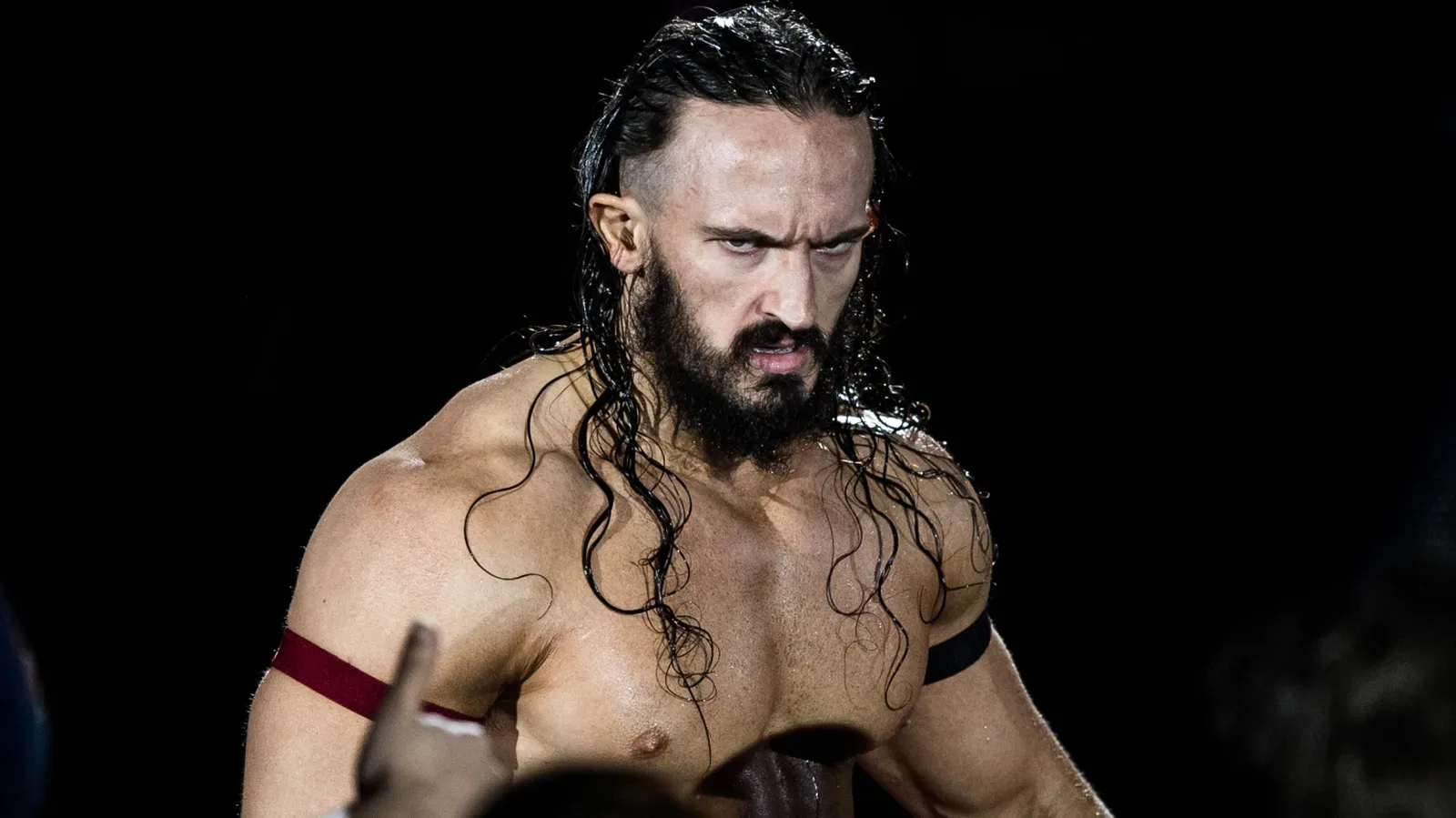
Gabe Kidd has shared a deeply personal remembrance of Benjamin Satterley, the wrestler known around the world as Pac, looking back on a friendship that began in the United Kingdom and grew unexpectedly stronger during the weeks before Satterley’s passing.
It has been nearly two months since the wrestling world lost Satterley. For Kidd, the memories that remain are not limited to their time as members of AEW’s Death Riders group or their final match together. They include an early meeting in Nottingham, long gaps between seeing one another, conversations in cars and restaurants, and the discovery that two intense, hard-nosed British wrestlers had more in common than either initially realized.
Speaking on Talk Is Jericho, Kidd traced the beginning of that connection back to 2011, when he was still finding his place around professional wrestling. He recalled being involved in setting up a ring in Nottingham for a Dragon Gate UK event, an environment that made a strong impression on him because of the venue’s distinctive atmosphere.
“I met Ben in 2011 in Nottingham, Dragon Gate, UK,” Kidd said. “I was setting up the ring because it was our ring. We were setting it up and it was in the Royal Albert Hall, and it was just this beautiful venue with an organ in the back.”
For more background on this topic, read Kyle Fletcher vs. Andrade El Idolo, Women’s Tag Title Match Announced for AEW Dynamite Thanksgiving Eve.
That initial meeting did not immediately turn into a constant friendship. Kidd said that he and Satterley crossed paths intermittently over the years, seeing each other “on and off” while their respective careers took them through different promotions, countries and stages of life. Pac became one of the most acclaimed British wrestlers of his generation, building an international reputation through his work in the United Kingdom, Japan, WWE and AEW. Kidd’s own journey eventually took him to New Japan Pro-Wrestling and then into AEW’s orbit.
Despite the stretches of time between their encounters, Kidd said the relationship took on a new depth shortly before Satterley’s passing. Traveling together gave them an opportunity to speak more openly, exchange stories and learn about sides of one another that were not necessarily visible in a wrestling locker room or in front of a television audience.
A connection built through travel, music and shared experiences
One of the memories Kidd highlighted involved music. The revelation that Pac was a fan of dancehall surprised Kidd, who had not expected that preference from his fellow Death Rider. The surprise quickly became a point of connection, particularly when Pac learned that Kidd enjoyed dubstep.
“Then I didn’t see him for years,” Kidd said. “We’d see each other on and off, but the weeks leading up to his passing, we’re in the car together. We were talking and we were learning. He told me he loved dance hall music. And I was like, I would never have thought that, bro.”
Kidd explained that he would bring a speaker into the Death Riders locker room to create energy before going out to perform. His music choice prompted another unexpected exchange between the two.
“In the Death Riders locker room, I’d bring a speaker just to get that energy up before we have to go out there,” Kidd said. “I’m putting on dubstep and he’s like, ‘You like dubstep? I love dubstep.’ We’re connected.”
The story offers a different perspective on two wrestlers often associated with their stern onscreen identities. Pac’s body of work was marked by an unrelenting physical style, sharp intensity and a willingness to excel in singles, tag team and faction settings. Kidd has developed a similarly confrontational presentation, especially through his work in NJPW and alongside the Death Riders. Yet Kidd’s recollection centers less on the aggression both men brought to the ring and more on the ordinary details that helped them understand each other away from it.
That sense of familiarity also extended to their experiences in Japan. Both men had spent important periods of their careers there, and Kidd said they spoke about how the country had helped shape their growth from young wrestlers into adults. The conversation was not solely about matches, promotions or professional accomplishments. It included the realities of living independently and learning how to handle the mundane responsibilities that come with traveling and working abroad.
Kidd specifically remembered that both he and Satterley had their own stories about doing laundry for the first time while in Japan. It is a small detail, but it reflects the larger point Kidd was making: the two shared an understanding of the transition from being young men pursuing wrestling to becoming adults navigating life far from home.
The British tag team concept that stayed a conversation
Among the ideas Kidd and Satterley discussed was the possibility of forming a tag team in AEW. Kidd said their concept was rooted in their shared British identity, with the pair imagining the appeal of presenting themselves as “two rough English boys on American TV.”
The idea came up during a dinner outing in Charleston, West Virginia. While it never developed into an established AEW tag team, the conversation illustrates the creative possibilities Kidd and Pac saw in working together. Both brought forceful physical styles, distinct personalities and experience developed across multiple international wrestling environments. In another set of circumstances, their common background and contrasting career paths could have made them a natural pairing.
Pac’s career had already shown his ability to thrive in partnerships and groups. He had been part of prominent AEW teams and alliances while maintaining his status as a formidable singles competitor. Kidd, meanwhile, arrived in AEW with his own reputation as a volatile and uncompromising presence. Their shared placement in the Death Riders gave that potential partnership a fitting context, even if the envisioned British tag team never became a regular act on AEW television.
For Kidd, the pitch was apparently more than a passing locker-room suggestion. It grew out of conversations where both wrestlers could reflect on their backgrounds, their years in Japan and the specific perspective that comes from coming up through British wrestling before reaching American television. The phrasing Kidd used was blunt and playful, but the idea carried genuine meaning because it represented a way for the two to bring a piece of their shared history into a major AEW setting.
Their final AEW match together
Kidd and Pac ultimately stood together under the Death Riders banner, aligning them with Jon Moxley in one of AEW’s most formidable groups. Their final in-ring appearance together came on the September 16 edition of AEW Dynamite, when Moxley teamed with Kidd and Pac against United Empire.
That match now carries added emotional weight in light of Satterley’s passing. At the time, it was another chapter in the ongoing Death Riders story and another opportunity for Kidd and Pac to share the ring. In retrospect, it stands as their final match on the same side, preserving a moment from a partnership that had grown stronger behind the scenes.
Kidd’s comments do not attempt to turn their friendship into a larger-than-life tale. Instead, they emphasize the sort of moments that often matter most after a loss: a first meeting in an unusual venue, music playing in a locker room, conversations during a drive, dinner in a different city and shared memories of learning to live independently in Japan.
Those details also underline why Satterley’s absence continues to be felt so strongly by those who knew and worked with him. Pac was celebrated for his exceptional talent and intensity, but Kidd’s recollections present him as a colleague willing to talk, listen and find common ground in unexpected places. The connection they found through dancehall and dubstep, British roots and Japanese experiences was one that Kidd clearly valued.
The tag team they discussed will remain an unrealized possibility, but Kidd’s memories ensure that the idea is not simply lost. For him, it represents a friendship that had begun years earlier, resurfaced at a meaningful point in both men’s lives and evolved into a bond built on mutual understanding. As AEW and the wider wrestling community continue to remember Satterley, Kidd’s story adds a personal account of the man behind Pac’s unmistakable presence.
In pictures

Darryl Polo
Darryl Polo is a passionate wrestling fan covering WWE, AEW, TNA and beyond. He loves great rivalries, breakout stars and the moments that keep fans talking long after the bell. How we work.