
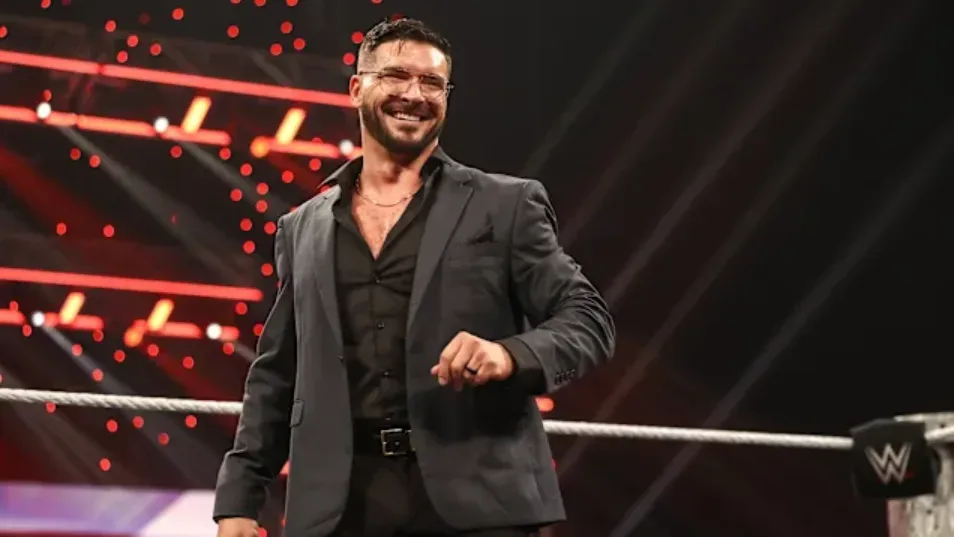
Ethan Page has offered a forceful idea for changing how future professional wrestlers enter the industry: make them promote wrestling events before they ever step into the ring.
Page, who is a full-time member of the WWE Raw roster while continuing to devote time to Canada-based Alpha-1, believes aspiring wrestlers would gain an essential perspective by being responsible for staging three independent shows of their own. In his view, the assignment would move beyond the initial thrill of holding creative control and expose prospective talent to the financial, logistical and promotional demands that come with presenting a live event.
His proposal is not framed as a minor adjustment to wrestling training. Page suggested it could have a major long-term impact on the business, arguing that a requirement of this kind would improve the attitude and professionalism of the people entering wrestling over the next five to 10 years.
“I have this ideology that no one will ever have the balls to implement, but I know for a fact it would fix professional wrestling in 5-10 years,” Page said.
For more background on this topic, read Ethan Page Questions John Cena Classic Format and Prize Package.
Page’s proposed path before wrestling training
Under Page’s idea, a person would not simply be encouraged to help at an independent show before beginning training. They would be required to run three events themselves before buying a pair of wrestling boots or pursuing a career in the ring.
The three-show threshold matters to Page because he sees a difference between the early excitement of becoming a promoter and the reality that follows once the novelty has worn off. Putting on a first show can be thrilling, particularly for someone who has long imagined choosing the matches, shaping the presentation and bringing a card to life. A second event may still benefit from that initial enthusiasm. By the third, Page believes the harder lessons of promoting become unavoidable.
“No one should be allowed to even become a professional wrestler, you can’t even buy a pair of boots until you run three events of your own,” Page said. “Not one, not two, the honeymoon phase of you having creative control of the most magical form of entertainment, that will go away.”
For Page, the important part of that experience is not just learning how to select talent or decide which matches should go on a card. It is understanding what must happen before an audience even arrives at the building. An event needs to be assembled, promoted and managed. Talent has to be booked. The audience has to be persuaded to attend. Every participant is part of a broader operation that depends on preparation and follow-through.
That perspective is at the center of Page’s argument. He believes a wrestler who has personally dealt with the pressures of presenting an independent event would arrive at bookings with a clearer sense of responsibility toward promoters, fellow performers, crews and fans.
Respect for the full event process
Page’s comments focused on what he views as a disconnect that can exist for talent who only see their own role on a card. Wrestlers may be focused on their entrance, their segment, their match and the time they receive in front of the crowd. Page’s proposed requirement is intended to make future performers recognize the amount of work that exists around those moments.
He emphasized that performers are often enjoying a brief opportunity in front of an audience they did not personally bring into the venue. From Page’s standpoint, that should create an obligation to honor the effort invested by everyone responsible for the event.
“The reality of what you have to do to accomplish a successful wrestling event will set in come show three,” Page said. “Then, you will respect every aspect of what this job actually is and you might actually show up to your bookings and do what you are being asked to do, because you understand everything that went into putting on this event, just for you to enjoy your fifteen minutes of fame in front of the audience that you 1000% did not draw.”
The point is particularly notable coming from Page because he continues to have a connection to independent promotion while working at the WWE level. Alpha-1 has hosted a range of independent names, including Channing Thomas, Sam Holloway and Laynie Luck. That continued involvement gives Page an ongoing view of the work needed to build an event outside the structure of a major wrestling company.
Independent wrestling promotions operate with varied resources and models, but the fundamental challenge is consistent: a show has to become a real, functioning event rather than simply an idea for a card. That means the person in charge must account for many moving parts, from personnel and venue considerations to the basic challenge of attracting paying customers. Page’s proposal would put aspiring wrestlers in direct contact with that reality before they begin asking promoters to invest in them as in-ring talent.
A demanding proposal, not a conventional requirement
There is no suggestion that Page’s three-event model is currently being adopted as a formal industry standard. Wrestling has no single governing body that controls all independent schools, promotions or training paths, and performers enter the profession through many different routes. Some train under established veterans, some work their way up through local scenes, and some begin with experience in related parts of the entertainment or athletic world.
That makes Page’s concept intentionally ambitious. He acknowledged that he does not expect anyone to implement it. Still, he presented the idea as a serious answer to problems he believes affect professional wrestling, particularly the need for talent to understand that wrestling is more than the minutes they spend performing between the ropes.
It would also be a substantial barrier to entry. Running one independent event is a major undertaking; running three would demand persistence through the inevitable complications that emerge from event to event. Page’s argument is that this is precisely why the requirement would have value. Someone who completes that process would have experienced the obligations placed on the people offering wrestlers a platform.
In practical terms, Page is advocating for empathy as much as education. A performer who understands the risk and effort behind a booking may be more likely to communicate professionally, arrive prepared and carry out the responsibilities attached to their spot on a show. Those may sound like basic expectations, but Page sees them as standards that could be strengthened if wrestlers first understood the promoter’s side of the business.
Alpha-1 experience informs Page’s perspective
Page’s continued work with Alpha-1 is central to why his comments stand out. Even as a WWE Raw talent, he has remained committed to the Canadian promotion. Alpha-1’s use of wrestlers such as Thomas, Holloway and Luck reflects the type of independent environment where talent, promoters and audiences all contribute to whether an event succeeds.
For an active wrestler who also promotes, the job is not limited to creating an appealing match lineup. The promoter must think about the entire experience and the practical work that supports it. Page’s comments suggest he wants young wrestlers to encounter those responsibilities early, before they develop habits or expectations based solely on the performer’s viewpoint.
His proposed three-event test is therefore less about preventing people from becoming wrestlers than it is about asking them to earn a fuller understanding of the profession. Page believes the process would reveal whether an individual can appreciate the commitment required to make wrestling happen in the first place.
“So, I think every wrestler, before they become a wrestler, should have to host three independent events to earn the right to even get in a ring and do what we do,” Page said.
Page also addresses the John Cena Classic
Elsewhere in the discussion, Page addressed the format of the John Cena Classic. His separate comments on that topic underline his willingness to speak directly about wrestling presentation and the structures surrounding it.
For now, his proposal involving independent-event promotion is the clearest expression of that philosophy. Page is arguing that wrestlers should not enter the business with only a desire to perform. They should also understand the responsibility of creating the setting in which performance is possible.
Whether anyone ever attempts to apply Page’s three-show standard on a broad scale remains uncertain. The idea would be difficult to enforce across the decentralized wrestling landscape. But Page’s larger message is straightforward: the best way for an aspiring wrestler to respect a booking may be to first learn what it takes to create one.

Darryl Polo
Darryl Polo is a passionate wrestling fan covering WWE, AEW, TNA and beyond. He loves great rivalries, breakout stars and the moments that keep fans talking long after the bell. How we work.