
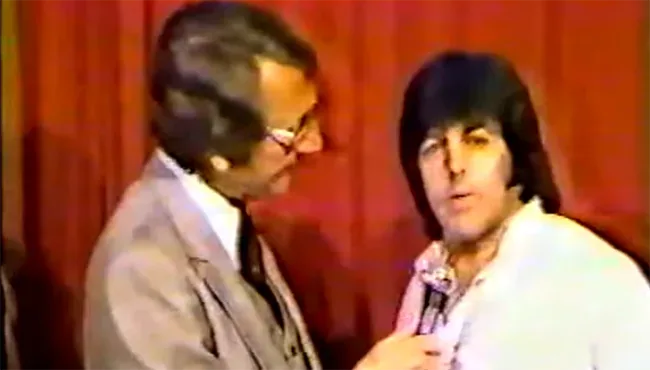
Eric Bischoff has reflected on the absence of Bill Dundee from WWE’s backstage creative structure, arguing that the late veteran possessed a perspective that could have been especially valuable to the company during its expansion into the United Kingdom and Europe.
Dundee, who passed away at the age of 82, was known as a major figure in Memphis wrestling. During a discussion on 83 Weeks, Conrad Thompson raised the question of why Vince McMahon never brought Dundee into WWE in a creative capacity, particularly when McMahon had worked with fellow Memphis standouts Jerry Jarrett and Jerry Lawler in different roles.
Bischoff separated the question of Dundee as an on-screen WWE wrestler from the idea of Dundee as a behind-the-scenes contributor. In Bischoff’s view, it was understandable that Dundee may not have fit McMahon’s preferred image of a WWE performer at that particular time. But he maintained that Dundee’s credentials as someone who could help shape a wrestling product were substantial.
“I don’t know, I think it’s pretty easy to understand why Bill didn’t work in WWE as a talent, right?” Bischoff said on 83 Weeks. “I don’t think he ever would have gotten by Vince’s kind of perspective of what — at that point in particular, what a wrestler was. But behind the scenes, he was more than qualified.”
For more background on this topic, read Jake Roberts Picks Randy Orton as His Dream WWE Opponent Today.
A distinction between the performer and the creative mind
Bischoff’s point speaks to a distinction that has long existed in wrestling: being a natural fit for a promotion’s television presentation is not the same as being equipped to contribute to its creative process. WWE’s talent presentation has historically been tied closely to McMahon’s particular instincts about star power, size, appearance, character and the kind of athlete he wanted representing the company on a national stage.
That philosophy could make it difficult for certain accomplished territory-era names to find a place as featured WWE performers, even when their reputations and abilities were beyond question in the markets where they had made their names. Dundee’s value, Bischoff suggested, could have been found in a different capacity. A creative room does not only need people who understand one company’s established formula. It can benefit from people who understand why audiences in other regions respond differently to pacing, rivalries, heroes, villains and in-ring psychology.
The Memphis connection makes the hypothetical especially interesting. Jarrett and Lawler were both central figures in that wrestling ecosystem, and their names came up as Thompson considered the possibility that Dundee could have been another Memphis voice brought into WWE. Yet Bischoff did not frame Dundee merely as someone who would have represented Memphis wrestling. He focused instead on Dundee’s broader international experience and the practical knowledge it could have brought to a company operating in overseas markets.
That is an important part of the discussion. Wrestling companies can plan international tours, market events and build television around global ambitions, but local familiarity is not always easy to replicate. The differences can be subtle: what a crowd views as credible, how quickly it accepts a storyline, the degree to which it values athletic competition over spectacle, and the type of emotional investment it expects from a match or feud.
Bischoff highlights Dundee’s European experience
For Bischoff, WWE’s history in the United Kingdom and the wider European market made the decision not to use Dundee in some advisory or creative role more difficult to understand. He noted that the UK had consistently been an important market for McMahon and WWE, while stressing that wrestling was not presented or received in exactly the same way everywhere.
“What makes it I think even more mysterious to me, to your point, is in WWE’s case, back when they were WWF, the UK has always been such a big market for Vince,” Bischoff said. “The entire European market obviously, and it’s a different style of booking over there. It’s a different culture; the psychology is different. What they’re used to and conditioned to believing in is different in nuance from what it is here, and it helps to have that perspective in a room creatively.”
Bischoff’s use of the word “nuance” is central to his argument. He was not saying that WWE needed to abandon its identity whenever it entered a new market. Rather, he was suggesting that a company can make better decisions when it understands the expectations that already exist among the audience it hopes to reach.
In a wrestling context, that understanding can affect far more than the card order for a live event. It can inform the kind of match that is positioned as a main event, how a major star is introduced, whether a particular character is likely to connect, and which themes should be emphasized in promotional material. It can also shape how creative personnel evaluate whether a reaction is meaningful. A response that looks different from a typical American television audience is not necessarily a bad response; it may simply be a reaction rooted in a different wrestling culture.
Dundee’s experience, as described by Bischoff, would have offered WWE access to someone who had worked as a major star outside the United States and understood the process of adapting to those surroundings. That kind of experience is difficult to gain secondhand. A company can study a territory or send personnel on short trips, but there is a difference between visiting a market and making a living in it.
The value of reading a market
Bischoff expanded on that idea by describing the practical value of employing someone who had already toured and succeeded in the countries where WWE intended to operate. His argument was not limited to Dundee’s name recognition or his standing among wrestling insiders. It was about the instincts developed by a performer who had learned, night after night, how to read different rooms.
“So if we’re going to do a tour, would you want somebody who has experience touring in the markets that you’re going to be in?” Bischoff said. “Because that guy you’re sitting in your room with, or you should be at least, he made his living by reading the room.”
That observation applies to an often overlooked skill in professional wrestling. The strongest wrestlers and bookers are frequently those who can recognize not only what an audience is doing, but why it is doing it. They can identify when a crowd needs more time to invest in a story, when it is ready for a payoff, when a babyface needs to show vulnerability, or when a heel must change tactics to maintain heat.
Creative planning necessarily happens before the show begins, but wrestling is also a live medium. It depends on an ongoing exchange between performers and the audience. Bischoff’s belief appears to be that Dundee’s overseas experience would have made him a useful resource before WWE even arrived in a European market, because he could offer informed insight into what fans there were accustomed to seeing and believing.
Bischoff continued by imagining the advantage of having a credible veteran with direct experience in a market where decision-makers had little personal background. He questioned why a company would pass on that kind of knowledge when it was readily available.
“Now I have an opportunity to hire a guy who was a big star in a foreign territory in which I have zero f**king experience by the way — I have an opportunity to work with this guy,” Bischoff said. “He’s in the business, he’s a credible guy, I know who he is. I know his career, but I’m not going to use him because I can do it myself, or with my existing staff who knows so much about that market because they wrestled there three times in their career or whatever the case was back then.”
A hypothetical that underscores Dundee’s legacy
There is no indication in Bischoff’s remarks that WWE had a specific creative role prepared for Dundee or that Dundee was close to joining the company behind the scenes. The discussion remains a retrospective hypothetical. Still, it offers a meaningful assessment of the skills Dundee brought to wrestling and the kind of knowledge that can be lost when promotions do not draw on experienced voices from outside their usual circles.
WWE has long been a global company, and its ability to present a consistent brand across many regions has been one of its defining strengths. At the same time, Bischoff’s comments highlight the potential benefit of including people whose careers were built within the very markets a global company seeks to serve. Familiarity with regional traditions is not a substitute for a company’s overall vision, but it can sharpen that vision and help avoid blind spots.
For Bischoff, Dundee was more than qualified to provide that kind of input. While he believed Dundee likely would not have matched McMahon’s preferred mold for WWE talent during the period in question, he saw no comparable reason to dismiss the veteran’s potential value in a creative environment.
The conversation ultimately serves as a tribute to Dundee’s range. His legacy is often tied to Memphis, but Bischoff emphasized that his experience extended beyond one territory and could have translated into a useful WWE role. In Bischoff’s assessment, Dundee represented the kind of proven wrestling mind whose firsthand understanding of audiences, touring and regional style could have helped a major promotion optimize its approach on an international stage.

Darryl Polo
Darryl Polo is a passionate wrestling fan covering WWE, AEW, TNA and beyond. He loves great rivalries, breakout stars and the moments that keep fans talking long after the bell. How we work.