
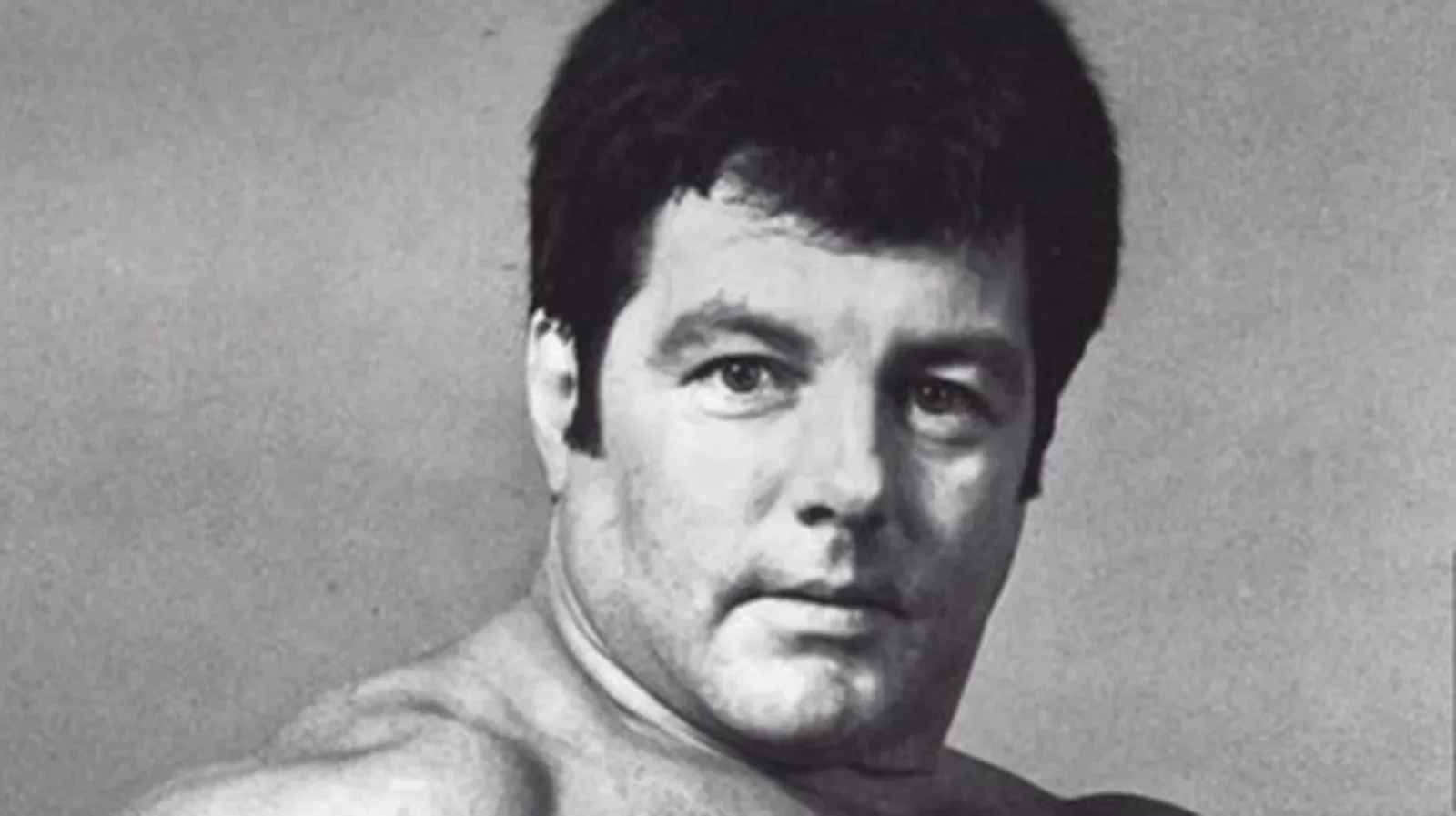
Eric Bischoff believes the most straightforward explanation for why “Superstar” Bill Dundee never became a WWE in-ring regular comes down to the company’s historical preference for imposing physical presence. Yet Bischoff also sees a more intriguing question in Dundee’s career: why a performer and booker with such extensive experience was not utilized in a meaningful creative capacity as WWE continued to expand internationally.
Dundee, who died earlier this month at age 82, was one of the defining figures of Memphis wrestling. His long career included a reported 60 championship reigns, and he was remembered as a dynamic, compact wrestler whose ability to connect with crowds made him a major attraction in the territory system. His background included circus training as a trapeze artist, an experience that helped inform the athleticism and confidence he brought into the ring.
Despite the reputation he built across decades in the business, Dundee never had the kind of featured WWE wrestling run that many fans might expect for a talent of his stature in the industry. On 83 Weeks with Eric Bischoff, Bischoff addressed both the likely reason Dundee did not fit the company’s on-screen presentation and the potential value he could have offered away from the ring.
“I guess it’s pretty easy to understand why Bill didn’t work in WWE as a talent, right? He would never have gotten by Vince’s kind of perspective of what, at that point in particular, what a wrestler was. But behind the scenes, he was more than qualified,” Bischoff said.
For more background on this topic, read Sami Zayn’s WWE Title Return Headlines Eventful Mexico and Latin America Tour.
Bischoff’s point speaks to a well-known part of WWE’s identity during the eras when Vince McMahon’s vision increasingly defined the national product. WWE certainly employed wrestlers of different heights, body types and styles over the years, but the company’s biggest presentation often emphasized extraordinary physiques and instantly recognizable larger-than-life characters. Dundee, listed at 5-foot-7, did not naturally match that prototype.
That does not diminish what Dundee accomplished. In a territorial environment, especially in Memphis, an act did not endure merely by looking the part. A wrestler needed to understand pacing, rivalries, local audience habits, interviews and the way a crowd could be taken from amusement to anger to anticipation during a match or a promo. Dundee’s career was built on that kind of connection. He had the ability to make fans invest in the outcome, a quality that is difficult to quantify but central to professional wrestling.
Memphis was also a famously distinct territory with its own rhythms and audience expectations. The area produced memorable personalities, emotionally charged angles and a style that frequently placed character work and crowd reaction at the center of the show. Dundee’s standing within that world was not simply based on his ring work. He was a veteran who understood how to structure wrestling for a live audience and how to sustain interest over time.
Bischoff Sees a Strong Case for Dundee Behind the Scenes
For Bischoff, the larger mystery is not whether Dundee would have fit WWE’s preferred in-ring mold. It is whether WWE missed an opportunity by not bringing in someone with his breadth of booking knowledge and familiarity with markets beyond the United States.
“I think, [what was] even more mysterious to your point, is in WWE’s case, back when they were WWF, the UK has always been a big market for Vince,” Bischoff said. “The entire European market, obviously, is a different style of booking over there... What they’re used to and conditioned to believing in is different in nuance from what it is here. And it helps to have that perspective in a room creatively.”
Bischoff’s argument is rooted in the practical value of local knowledge. WWE’s global growth has required more than simply bringing its established television formula into new cities. Different markets have their own wrestling traditions, their own familiarity with particular styles and their own expectations for how stars and stories should be presented. A creative team benefits when it includes people who understand those nuances rather than relying entirely on broad assumptions about what will work everywhere.
Dundee’s experience gave him an international perspective that was uncommon among many U.S.-based wrestling figures. He was born in Scotland, built a renowned career in North America and was familiar with the sensibilities that could shape wrestling audiences in the United Kingdom and Europe. That background is what Bischoff believes could have made Dundee especially useful when WWE was planning tours or considering how to connect with crowds in those regions.
“So, if we’re going to do a tour, wouldn’t you want somebody who has experience touring the markets that you’re going to be in? Because that guy you’re sitting in the room with, or you should at least, made his living reading the room,” Bischoff said.
The phrase “reading the room” is particularly relevant to Dundee’s legacy. The territories demanded immediate awareness of the audience. Promoters and wrestlers could not depend on a worldwide television machine to carry a presentation. They had to understand the people buying tickets in a specific building, the local heroes and villains fans responded to, and the stories that could persuade them to return the following week.
That ability remains valuable even in a wrestling landscape dominated by national television, streaming and social media. Global brands have more ways to reach fans, but live event reactions still matter. The strongest performers and decision-makers can recognize when a crowd is responding to a character, when a rivalry needs more heat, or when a particular market may require a different emphasis. Bischoff’s comments suggest Dundee was the sort of veteran who could have provided that insight.
Dundee Had Previously Discussed a Possible WWE Backstage Role
The subject has additional complexity because Dundee had previously said WWE showed interest in bringing him in for a backstage position. Dundee believed that opportunity did not move forward due to an alleged conflict involving WWE Hall of Famer The Undertaker. That account has added to the lingering questions surrounding why a performer with Dundee’s resume never had a formal WWE role that reflected his industry experience.
There is an important distinction between a potential backstage opportunity and the idea of Dundee being positioned as a featured wrestler on WWE programming. Bischoff’s comments make clear that he views those issues differently. In-ring, Dundee may not have aligned with the physical image McMahon favored at the time. As a creative voice, adviser or booking mind, however, Bischoff feels Dundee’s qualifications were significant.
It is impossible to know precisely how a WWE tenure for Dundee would have unfolded, whether it had occurred during the company’s national expansion or later in its international growth. Wrestling history is filled with highly respected territory names whose skills did not translate into major roles within WWE, often because timing, philosophy, personal relationships or the company’s changing needs moved in another direction.
Still, Dundee’s absence from WWE should not be confused with a lack of influence. His name carries considerable weight among those who followed Memphis wrestling and among wrestlers who value the lessons of the territory era. He represents a generation for whom working a crowd, selling an emotional conflict and making the audience care were not optional parts of the job. They were the job.
A Legacy Larger Than Any One Promotion
Dundee’s passing prompted WWE to pay tribute to him, an acknowledgment of a career that reached far beyond one company’s roster history. While he was never a signature WWE performer, his contributions to professional wrestling remain substantial. His Memphis work, his championship record and his longevity secured his place as one of the era’s most accomplished regional stars.
Bischoff’s reflection ultimately reinforces that legacy. Dundee may not have matched the visual template WWE often pursued for its top in-ring attractions, but wrestling is not defined only by size. It is also shaped by instincts, regional understanding, promotional intelligence and the ability to make an audience emotionally invest in what happens between the ropes.
For Bischoff, those are the qualities that made Dundee more than qualified to contribute behind the scenes. The fact that such a role never materialized in a lasting way remains one of the more notable unanswered questions attached to the career of “Superstar” Bill Dundee.
In pictures

Darryl Polo
Darryl Polo is a passionate wrestling fan covering WWE, AEW, TNA and beyond. He loves great rivalries, breakout stars and the moments that keep fans talking long after the bell. How we work.