
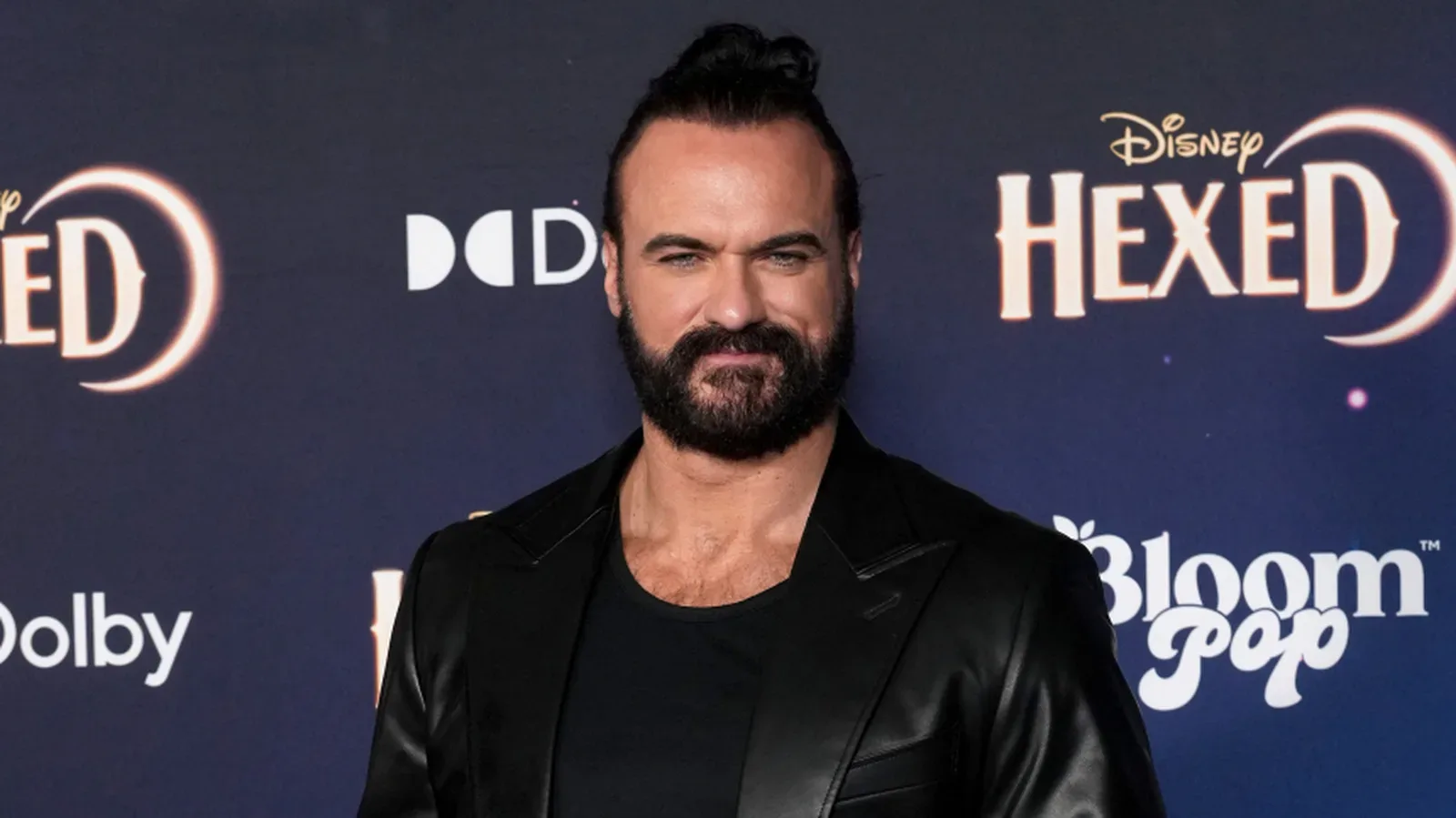
Drew McIntyre may be away from WWE programming, but the former Undisputed WWE Champion made clear that his connection to professional wrestling has not diminished. During a visit to a Pro-Wrestling EVE independent event in London, McIntyre shared a video from the crowd and offered an emotional reflection on the environment that helped shape a crucial chapter of his career.
McIntyre has not appeared on WWE television since WrestleMania 42, where he was defeated by Jacob Fatu in an unsanctioned match. While he has been occupied with acting work, including filming the action movie The Last Druid alongside Russell Crowe, the Scottish star’s visit to a packed independent show demonstrated how closely he still identifies with the live wrestling experience.
Standing toward the back of the venue, McIntyre looked out at the action and the audience before discussing the intensity that exists on the independent scene. His comments centered not simply on nostalgia, but on the sense of purpose he sees in performers fighting to establish themselves in intimate venues in front of fans who follow every moment closely.
View the referenced post on X
“Just reminds me that the fans here, they’re as passionate and critical as it gets,” McIntyre said. “Everybody’s wrestling like it’s WrestleMania, like their life depends on it, because this is what they care about most.”
For more background on this topic, read Ethan Page Reflects on Feeling Valued After His WWE Arrival.
That perspective carries particular weight coming from McIntyre. Before he became one of WWE’s most established main-event names, his path included a major rebuilding period outside the company. Following his WWE release, McIntyre spent the years from 2014 through 2017 working across the independent wrestling landscape. He described that stretch as “the biggest rush,” a period that gave him the chance to rediscover what he wanted from the industry and what he was capable of delivering within it.
McIntyre’s independent run was not framed in his London remarks as a detour from a larger career. Instead, it was clearly presented as a formative experience. He spoke about the wide range of lives and motivations represented behind the curtain at a show like the one he attended, underscoring the fact that wrestling rings bring together performers whose circumstances can be vastly different even as they pursue the same dream.
“Everybody’s got their own story backstage,” McIntyre said. “Everyone’s from a different walk of life. Different things going on perhaps in their personal life. Different reasons for pursuing this, but they’re working their f****** a**** in the ring.”
The statement captured one of the defining characteristics of the independent scene: the closeness between ambition and vulnerability. Wrestlers often perform in smaller spaces where the audience is only a few feet away, meaning there is little room to hide. The crowd can hear every reaction, follow every piece of emotion and respond instantly when it believes in what is happening. For a performer, that setting can be demanding. For fans, it can create a sense of investment that differs from the scale of a major arena production.
McIntyre specifically highlighted that atmosphere, noting how much he misses the noise and passion generated inside smaller venues. It is an environment he knows well, both from his own post-WWE journey and from the broader British wrestling culture that has remained an important part of his story. A London independent crowd is not simply an audience waiting for familiar names or established television storylines. It can be a place where competitors are tested on their ability to connect immediately and persuade people that every move matters.
That level of scrutiny was central to McIntyre’s message. He praised fans for being passionate and critical, two qualities that can push performers to deliver at their highest level. The independent setting gives wrestlers an opportunity to make a strong impression, but it also asks them to earn the audience’s attention in real time. McIntyre’s description of everyone wrestling as though it were WrestleMania spoke to the urgency of that challenge.
For McIntyre, WrestleMania remains the last place WWE audiences saw him compete. His unsanctioned match loss to Jacob Fatu at WrestleMania 42 removed him from the active WWE landscape, at least on television. In the time since, his focus has included Hollywood projects, a development he openly acknowledged while addressing his eventual return to the ring.
Even so, McIntyre did not offer a date, a WWE event or a firm timetable for his comeback. He instead mixed clear enthusiasm about wrestling with a deliberately guarded line about when fans should expect to see him again.
“It reminds me why I love this so much and I miss it so much and I can’t wait to be back,” McIntyre said. “But, ‘Hollywood’ Drew comes back when ‘Hollywood’ Drew wants to come back, as much as I miss it.”
The quote leaves the situation intentionally open-ended. McIntyre expressed a desire to return, but he did not indicate that a comeback is imminent or reveal what form it may take. His current absence is tied to his work outside wrestling, and the message suggests that he is balancing that growing screen career with an enduring drive to compete.
That balance is especially notable because McIntyre’s career has repeatedly been defined by reinvention. His years on the independents came after a difficult professional setback. His subsequent rise into a leading WWE role showed that time away from the company had been productive rather than passive. Now, while pursuing film projects, he is again in a position where his next wrestling appearance is being anticipated by fans.
Why the Independent Scene Still Matters to McIntyre
McIntyre’s visit was also a reminder that success at the highest level of WWE does not necessarily erase a wrestler’s affinity for the independent scene. The scale may be different, and the production may be smaller, but the core appeal remains recognizable: wrestlers trying to tell a compelling story in front of people who care deeply about what happens in the ring.
His comments did not reduce independent wrestling to a training ground or a temporary stop before a larger opportunity. He recognized the hard work of the talent and the personal stakes that can exist for people pursuing wrestling for a variety of reasons. That respect is meaningful given his own experience of rebuilding outside WWE before returning to become one of the company’s most prominent stars.
Pro-Wrestling EVE provided the backdrop for that reflection, with McIntyre watching rather than taking part in the action. Yet the visit still became a notable moment because it offered a rare direct update from him during his WWE hiatus. Rather than discussing a specific opponent, championship pursuit or storyline, McIntyre spoke about the reasons he remains emotionally invested in wrestling itself.
A Return Teased, but Not Scheduled
For WWE viewers, the key takeaway is straightforward: McIntyre says he misses wrestling and cannot wait to return, but he has not announced when that return will happen. His remarks should not be read as confirmation of a particular event or program. They are, however, a strong indication that his absence has not changed the importance wrestling holds for him.
The former champion’s trip to the London show connected his present circumstances with the period that helped transform his career. As he continues working in Hollywood, McIntyre remains attentive to the same close-quarters energy, demanding audiences and all-or-nothing performances that he experienced during his independent years.
For now, “Hollywood” Drew McIntyre is setting his own pace. But his message from the crowd was unmistakable: he still misses the ring, still values the passion of wrestling fans, and still sees the independent spirit as a powerful reminder of why he fell in love with the business in the first place.
In pictures

Darryl Polo
Darryl Polo is a passionate wrestling fan covering WWE, AEW, TNA and beyond. He loves great rivalries, breakout stars and the moments that keep fans talking long after the bell. How we work.