
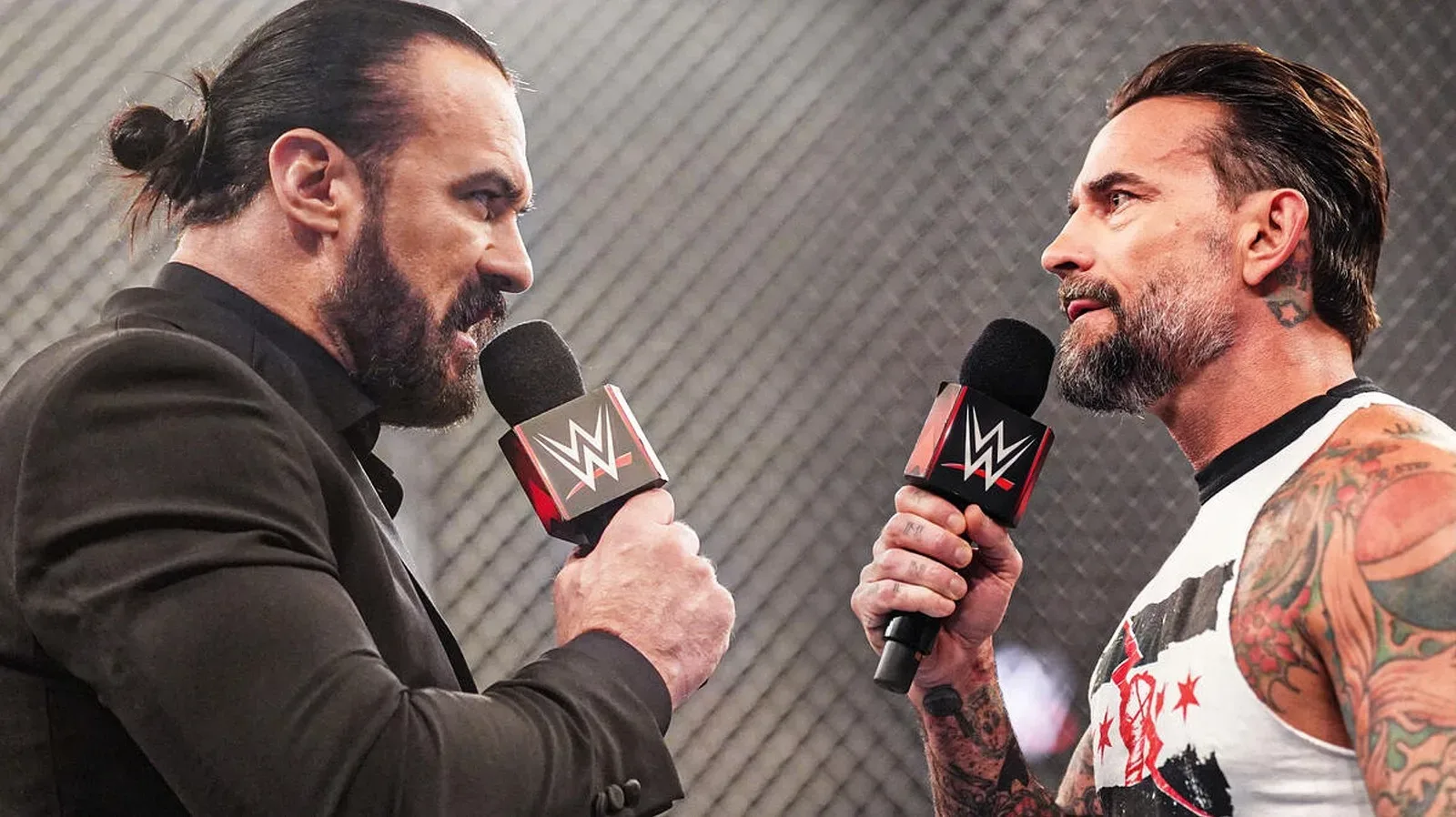
Drew McIntyre believes his Hell in a Cell showdown with CM Punk at WWE Bad Blood 2024 represents the kind of match that can explain professional wrestling to a first-time viewer.
Speaking on The Joe Vulpis Podcast, McIntyre looked back on the final one-on-one chapter of his long-running rivalry with Punk. The Scottish star has never hidden his feelings about Punk, repeatedly maintaining that the animosity viewers saw on WWE programming had a genuine foundation. Yet McIntyre said that real tension was ultimately part of what allowed the program to reach a rare level of dramatic credibility.
For McIntyre, the Bad Blood encounter was not simply another major premium live event match or another violent bout inside WWE’s signature steel structure. He viewed it as the clearest showcase of what his character, his opponent and their months of escalating conflict were capable of producing when the story reached its natural conclusion.
“That's the one that, if it's a new fan, and there's a build-up video prior to that kind of helps tell the story, that they'll see everything they need to see to be like, ‘Wow, that's what professional wrestling can be like?’ Because that is professional wrestling at its best, is McIntyre-Punk,” McIntyre said on The Joe Vulpis Podcast.
For more background on this topic, read Cody Rhodes Explains Why Suits Have Become Central to His WWE Identity.
A Rivalry Built on More Than One Match
The McIntyre-Punk issue became one of WWE’s defining personal rivalries of 2024. Its central conflict was sharpened by McIntyre’s resentment over Punk’s presence and influence, while Punk consistently met McIntyre’s verbal attacks with his own pointed responses. The feud had a volatile edge from the start, but it also unfolded through recognizable wrestling storytelling: interrupted victories, mounting frustration, direct confrontations and a steady sense that neither man could simply walk away.
That structure mattered in the eventual move to Hell in a Cell. The stipulation was not presented as a random attraction placed on a marquee card. It was the final measure available after standard matches and conventional attempts to settle the dispute had failed. McIntyre specifically praised that use of the Cell, arguing that the match returned the concept to the purpose that originally made it feel special.
Hell in a Cell has long carried major historical weight in WWE. From its earliest appearances, the stipulation was associated with rivalries that had become too heated or too chaotic to contain through ordinary rules. Over time, however, its use expanded, and McIntyre feels that expansion diminished some of its aura. In his view, the Punk match restored the feeling that the Cell was a last resort rather than an expected annual destination.
McIntyre said the brutality and emotional stakes of the match put it in company with the first Hell in a Cell encounter between The Undertaker and Shawn Michaels, a bout commonly treated as one of the stipulation’s most important landmarks. He did not frame that comparison lightly. Rather, it reflected his belief that the Bad Blood clash had the appropriate level of hatred, consequence and finality for the setting.
Professionalism Amid Genuine Dislike
McIntyre’s comments also underline a familiar reality in wrestling: performers do not need to be friends to create compelling work together. He again made clear that he dislikes Punk, even using an extreme comparison while discussing Punk’s personality. But McIntyre also stressed that both men understood the assignment and recognized they could work effectively with one another.
“That was our Mona Lisa. Like, that was a perfect wrestling program, no matter how we felt about each other and feel about each other,” McIntyre said on The Joe Vulpis Podcast.
The “Mona Lisa” description is a strong one, particularly from a wrestler who has worked across multiple eras of WWE and has featured in major championship programs, WrestleMania matches and stadium-scale events. McIntyre has often spoken confidently about his own standing and his own body of work. His willingness to single out the Punk program as a defining example suggests how highly he rates the complete package rather than just the match itself.
That distinction is important. A memorable wrestling match can be driven by athletic execution, spectacle or a major surprise. McIntyre’s praise is aimed at a broader formula. He pointed to the value of a pre-match video package for a new viewer because the package could provide the necessary context, while the match itself could communicate the rest through physicality, pacing and character behavior.
In other words, McIntyre sees the feud as accessible despite its long build. A viewer unfamiliar with the details could understand the stakes once the history was established: two men who could not coexist, who had repeatedly hurt and humiliated one another, finally placed in a setting designed to keep everyone else out and force a decisive ending.
Why the Character Work Stood Out
McIntyre’s reference to character work may be the most revealing part of his assessment. The rivalry leaned into qualities WWE audiences already associated with both performers. McIntyre brought an intense, confrontational presence and a willingness to say exactly what he thought. Punk, meanwhile, remained a figure capable of generating an immediate emotional reaction, whether he was being embraced by supporters or challenged by an opponent who questioned his motives and reputation.
Those established identities gave the conflict a foundation. Neither man had to suddenly become someone else in order to sell the feud. Instead, the program amplified traits that were already visible, making the exchanges feel more personal and less like a temporary dispute created solely to fill a card.
McIntyre also believes he and Punk share a similar outlook on the business, even with their personal friction. That shared perspective appears to have helped the rivalry. When two experienced performers agree on the importance of stakes, consistency and meaningful escalation, a program can maintain focus even when its central characters are openly hostile toward one another.
For fans, that can make the difference between a rivalry that produces isolated moments and one that feels cohesive from beginning to end. McIntyre’s comments suggest that every stage of the Punk story was intended to lead toward the final confrontation, with Hell in a Cell serving as the logical conclusion rather than merely the most visually imposing option.
The Value of Making Hell in a Cell Feel Earned
McIntyre’s broader point about Hell in a Cell is likely to resonate with viewers who prefer stipulations to emerge from the story rather than dictate it. A Cell match carries an inherent promise of danger and escalation. If the participants have not reached a point where that escalation feels necessary, the match can lose some of its impact regardless of what happens inside the structure.
At Bad Blood, McIntyre felt the conditions were right. The feud had exhausted other avenues. The hatred was established. Both competitors had enough history and enough credibility that WWE could position the Cell as the only remaining way to bring the conflict to a close. That is the traditional logic behind the stipulation, and it is the standard McIntyre believes the Punk match met.
His remarks do not erase the many other Hell in a Cell matches that have taken place over the years, nor do they turn the debate over the stipulation’s modern use into a simple one. They do, however, offer a clear performer’s perspective on why this particular match connected with him. In McIntyre’s eyes, it had the emotional justification that the cage demands.
McIntyre’s reflection is also a reminder that a wrestling rivalry can be elevated by conflict without requiring harmony behind the scenes. His comments make no attempt to portray his relationship with Punk as warm. Instead, he credits both men for putting their differences aside enough to deliver a program he considers complete, purposeful and representative of the art form at a high level.
For McIntyre, the verdict is straightforward: the Punk rivalry did not succeed despite the hostility between its two central figures. It succeeded because both men were able to channel that hostility into a story with escalating stakes, distinct character work and a conclusion worthy of Hell in a Cell.
In pictures

Darryl Polo
Darryl Polo is a passionate wrestling fan covering WWE, AEW, TNA and beyond. He loves great rivalries, breakout stars and the moments that keep fans talking long after the bell. How we work.