
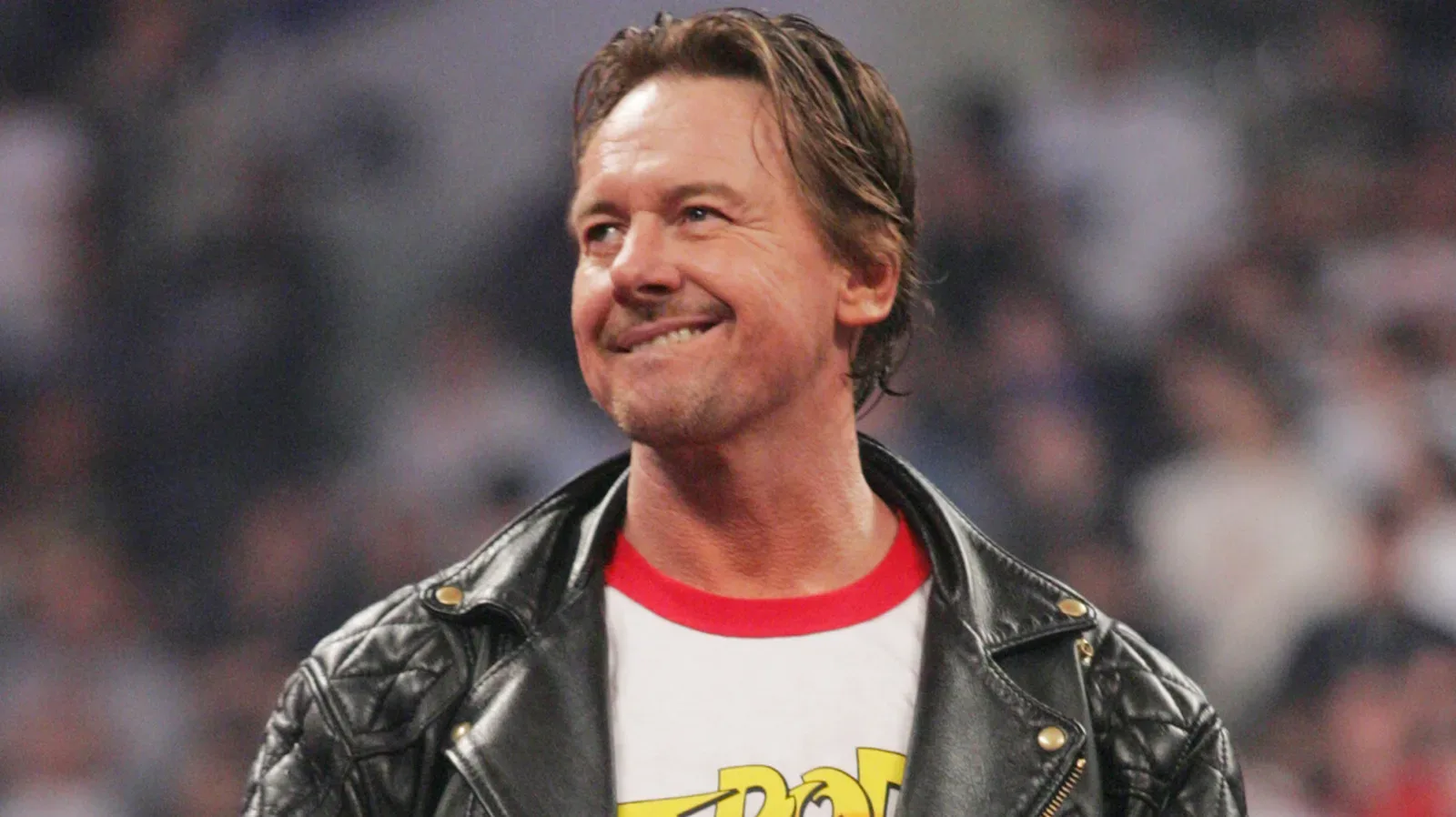
Diamond Dallas Page has reflected on the friendship he developed with fellow WWE Hall of Famer “Rowdy” Roddy Piper after their in-ring careers had largely moved into a different chapter.
Page, whose influence on professional wrestling has extended far beyond his accomplishments as an active performer, discussed his relationship with Piper during an appearance on The Major Wrestling Figure Podcast. The former WCW World Heavyweight Champion said that while he and Piper spent time together during their wrestling days, their connection grew significantly stronger after wrestling.
“Me and Piper got so close after wrestling,” Page said. “We were buddies. And we hung out occasionally when I wrestled, but afterwards, we got so close. He was so moved about what I was doing with Jake...I never thought in a million years that Piper, you know...would die that young.”
Page was referring to his highly visible efforts to support Jake “The Snake” Roberts during a difficult period in Roberts’ life. The work became an emotional story for wrestling fans, particularly because it centered on Roberts pursuing a healthier and more stable life after years of personal struggles. Piper, one of wrestling’s most outspoken and recognizable personalities, was among those deeply affected by what Page was doing for his old peer.
For more background on this topic, read Zoey Serrano Details WWE Push for a Modern Right to Censor Character.
For Page, Piper’s reaction was clearly more than a passing compliment from a fellow legend. It became part of a friendship that Page continues to remember following Piper’s death in 2015. Piper died on July 31, 2015, at the age of 61. His death was caused by cardiac arrest related to hypertension.
A Friendship That Grew Beyond The Ring
Professional wrestling has long been an industry built around intense schedules, constantly changing locker rooms, and relationships formed in the pressure of live performance. Wrestlers can share a card, a territory, a television taping, or even a major storyline without necessarily building a close relationship away from the business. Page’s recollection underlines that his friendship with Piper became more meaningful once the day-to-day competition of wrestling was no longer the center of their interactions.
Piper and Page were two distinct personalities whose careers left major marks on the industry. Piper was celebrated for his verbal intensity, his willingness to provoke audiences, and his ability to make virtually any segment feel unpredictable. His “Rowdy” persona made him a central figure in WWE’s rise during the 1980s, and he remained a familiar presence to multiple generations of fans during the decades that followed.
Page’s path was different. He emerged as a major star in WCW, eventually reaching the top of the promotion as WCW World Heavyweight Champion. His confidence, charisma, and perseverance helped make him one of the company’s signature names. After his full-time in-ring career, Page built another legacy through DDP Yoga and through his willingness to help fellow wrestlers who were confronting serious health and personal challenges.
The connection between the two men, as Page described it, was rooted in Piper’s appreciation for that work. Piper was not simply observing a wrestling colleague launch a new business venture. He was moved by the human element of Page helping Roberts pursue a better life.
Jake Roberts’ Recovery Became An Important Story
Roberts’ journey resonated throughout wrestling because of both his legendary status and the severity of the obstacles he faced. A gifted performer whose psychological approach to wrestling set him apart, Roberts remained a beloved figure to fans and peers alike. Seeing Page offer practical support and encouragement to Roberts gave the story a powerful sense of hope.
Page has been closely associated with helping wrestlers make meaningful lifestyle changes through his fitness program and personal support. Roberts is among the most prominent names connected to those efforts, but he is far from the only one. Over the years, Page has worked with former and current wrestling personalities including Lex Luger, Mick Foley, D-Von Dudley, and the late Scott Hall.
Those efforts have helped shape the public perception of Page’s post-wrestling career. His accomplishments in the ring remain an essential part of his legacy, but his work outside it has created another defining chapter. When Page speaks about Piper being touched by the situation involving Roberts, it highlights how personal that chapter was for members of the wrestling community.
The story was never solely about exercise or a fitness routine. It was about friendship, accountability, and giving someone an opportunity to make changes in circumstances where hope can be difficult to find. That broader message appears to be what made such an impression on Piper.
Remembering Roddy Piper’s Lasting Impact
Piper’s death at 61 was a profound loss for the wrestling world. He had remained an unmistakable voice in the industry for decades, with a presence that could command attention whether he was delivering a heated promo, hosting a talk-show segment, competing in the ring, or appearing at a wrestling event.
His importance to WWE history is impossible to separate from the era in which the company grew into a national phenomenon. Piper’s ability to antagonize crowds made him a natural foil for fan favorites, while his sharp instincts gave his promos a level of urgency that made viewers believe anything could happen. He could be brash, confrontational, funny, and dangerous within the span of a single interview.
Yet Page’s comments offer a quieter look at Piper. The public knew the on-screen “Rowdy” Roddy Piper as an unapologetic provocateur. Page knew a friend who was capable of being emotionally affected by the work being done to help Roberts. Both pictures are part of Piper’s legacy.
That contrast is often true of performers whose characters become larger than life. The moments that audiences see on television can define a career, but the relationships formed away from the spotlight frequently reveal a more personal side of the person behind the character. For Page, Piper’s support during the period in which he was helping Roberts clearly remains a meaningful memory.
Page’s Continuing Influence Outside Wrestling
Page’s comments also reinforce the impact of his continuing work with members of the wrestling community. DDP Yoga has become associated with adaptability and with helping individuals find ways to improve their physical well-being regardless of where they are starting. Page’s approach has reached people both inside and outside wrestling, but his willingness to work with fellow performers has made it especially notable to longtime fans.
The wrestling industry has become more open over time about the physical toll of life on the road, injuries, addiction, mental health struggles, and the challenges performers can face after retirement. Page’s work exists within that larger conversation. His role in helping Roberts, Hall, Luger, Foley, and D-Von Dudley has made him an important figure in discussions about recovery, mobility, and quality of life after active competition.
For Piper, the effort involving Roberts was something worth celebrating. For Page, Piper’s response helped deepen a friendship that he still speaks about with affection and sadness.
More than a decade after Piper’s passing, the memories shared by his peers remain a key part of understanding his legacy. Page’s recollection does not focus on one of Piper’s famous promos or his most celebrated matches. Instead, it centers on compassion, friendship, and a shared appreciation for seeing a fellow wrestler get another chance.
That is why the memory carries weight. It presents Roddy Piper not only as one of wrestling’s most electric personalities, but as a man who was touched by the possibility of positive change in someone else’s life.
In pictures

Darryl Polo
Darryl Polo is a passionate wrestling fan covering WWE, AEW, TNA and beyond. He loves great rivalries, breakout stars and the moments that keep fans talking long after the bell. How we work.