
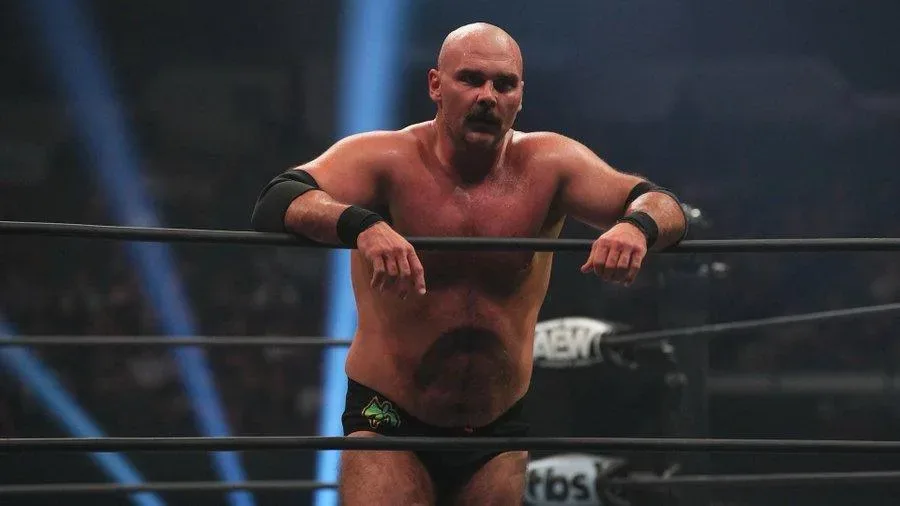
Dax Harwood believes AEW’s tag team division has reached a level that is difficult for any promotion to match. With FTR preparing to challenge for the AEW World Tag Team Championships at AEW All Out, Harwood assessed the landscape around his team and argued that the company now has an exceptional blend of proven all-time greats and hungry younger tandems.
Harwood’s outlook is especially notable because FTR has been central to AEW’s tag team scene for much of its modern history. The team has competed against many of the division’s biggest names, including The Young Bucks, while also being positioned as one of the standard-bearers for traditional tag team wrestling. Yet Harwood said the current environment feels more energized than any other point during FTR’s time in AEW.
“It’s more exciting in AEW now than it’s ever been in our whole time here, and that’s the honest-to-God truth,” Harwood said.
The timing of those comments comes after a series of additions and developments that have intensified discussion around AEW’s tag division. New Level and the Motor City Machine Guns have recently joined the company, adding more depth to a roster that already includes FTR, The Young Bucks, Cope and Cage, the Gunn Club, and the incoming Rascalz. Harwood sees that combination as more than a collection of recognizable names. In his view, it creates a division with established rivalries, fresh matchups, and competition across multiple generations of performers.
For more background on this topic, read Wheeler Yuta Says Daniel Garcia Partnership Has Clicked Since Death Riders Alignment.
FTR See a Division Filled With Opportunity
Harwood identified the Gunn Club’s Austin and Colton as part of AEW’s younger group of teams looking to rise through the ranks. He also cited the Rascalz as another young tandem entering the picture with the ambition to take FTR’s position. That point reflects the competitive structure Harwood believes is essential to a healthy tag scene: veteran teams need credible challengers, while newer acts need major opponents against whom they can establish themselves.
For FTR, that dynamic carries obvious stakes. Harwood and his partner have long been presented as a team with a strong belief in the importance of tag team wrestling. Their presence in a division crowded with ambitious younger teams ensures that their standing is never merely assumed. Every new arrival can become a possible opponent, a potential rival, or a threat to their claim as one of the era’s elite duos.
Harwood did not frame the younger talent as a distant future project. Instead, he spoke about them as active competitors who are already trying to move past FTR. That is a key distinction for any division built around teams rather than individual stars. A tag team roster gains momentum when established acts are not isolated from the next generation, and when new teams are given the chance to challenge performers with major credentials.
The names Harwood listed also suggest AEW has multiple styles under the same banner. Some teams are identified with long-established chemistry and decorated careers, while others are building their reputations in real time. That range can help prevent the division from becoming predictable. The appeal is not solely in determining which team is best; it is also in watching how teams with different experience levels, approaches, and histories react when they share the same competitive space.
Harwood Points to an Unusually Deep Veteran Class
While Harwood praised AEW’s emerging teams, the centerpiece of his argument was the remarkable group of established tandems now available to the promotion. He named FTR, The Young Bucks, and Cope and Cage among the teams with major historical standing. He then highlighted New Level, consisting of Austin Creed and Kofi, and the Motor City Machine Guns as further additions to that upper tier.
“On top of that, you also have some of the greatest tag teams of all time,” Harwood said. “Obviously FTR, The Young Bucks, and Cope and Cage, but now with the Austin Creed and, and Kofi, you’ve got The New Level, one of the greatest tag teams of all time. You’ve got Motor City Machine Guns, another set of guys who can lay claim as the greatest tag team of all time.”
That is a substantial claim, but Harwood’s broader point is clear. AEW is not relying on one marquee team to define its tag division. It has several acts that can credibly be placed in major matches, headline division-focused programs, or enter championship contention without needing extensive reintroduction to fans.
The possibility of matches involving FTR, The Young Bucks, Cope and Cage, New Level, and the Motor City Machine Guns gives AEW a deep pool of high-profile combinations. Some of those teams carry lengthy histories with particular opponents, while others represent matchups that can feel new simply because the available roster has changed. A division benefits when it can revisit a rivalry without exhausting it, while also holding back fresh pairings that have not yet been explored.
Harwood’s list also carries a wider implication for the presentation of tag wrestling. When several teams have enough stature to be regarded as attractions on their own, the division can feel less like a supporting component of the roster. The championship picture becomes more consequential because multiple teams can make a believable case for being the standard-bearer.
That atmosphere is particularly meaningful for FTR. Harwood’s comments are not just an endorsement of the opposition; they are a statement of where FTR wants to compete. The team’s confidence has long been connected to facing the best possible rivals and proving itself in major matches. A crowded field of respected teams creates more chances for that philosophy to be tested.
A Claim for AEW’s Place in Tag Team Wrestling
Harwood ultimately made his strongest assertion when describing what the current roster means for AEW’s identity. He argued that putting five of the top teams of the past three decades in one company, alongside a gifted younger group, makes the promotion a clear destination for tag team wrestling.
“So if you got five of the top tag teams in the last 30 years in one company under one roof, with some of the greatest young talent in the world, I think it’s almost undeniable to say that AEW is the home for tag team wrestling,” Harwood said.
It is a promotional statement, certainly, but it is also a reflection of the stakes surrounding the division’s next phase. AEW now has to turn roster depth into meaningful competition. The talent Harwood named creates the potential for major title programs and rivalry matches, but the division’s standing will be shaped by how consistently those teams are featured and how strongly their championship pursuits are presented.
The phrase “home for tag team wrestling” also speaks to an ideal rather than simply a number of teams. For Harwood, a premier tag division appears to require both elite veterans and motivated rising talent. It needs teams who can make a claim to historical greatness, but it also needs performers eager to replace them. The clash between those two groups is what can sustain the division over time.
AEW has an opportunity to lean into that competitive tension. FTR can defend its reputation against teams that want to surpass it. The established pairings can pursue the championships while competing for recognition as the best of their generation. Meanwhile, younger acts such as the Gunn Club and the Rascalz can use any success against those veterans as a defining moment.
None of that guarantees that every possible matchup will happen immediately, nor does Harwood’s praise settle debates over the greatest tag teams of all time. Those debates are subjective and will continue wherever tag wrestling is discussed. But his comments underline how much high-level talent is currently concentrated in one AEW division.
All Out Title Challenge Gives FTR an Immediate Test
Before any broader reshuffling of the division unfolds, FTR have a major opportunity directly in front of them. The team is scheduled to challenge for the AEW World Tag Team Championships at AEW All Out on Saturday, September 26.
The championship match gives Harwood’s words immediate relevance. FTR are not discussing the strength of the division from the sidelines. They are entering one of its most important contests with the chance to claim the titles and reinforce their place near the top of the field. A victory would give them another powerful point in their argument that AEW’s tag team division is where the best teams should want to compete.
A loss, however, would not lessen the competitive picture Harwood described. If anything, it would emphasize the depth he was celebrating: in a division filled with acclaimed teams and emerging challengers, no position can be treated as secure. The champions must continually prove themselves, and even a team with FTR’s reputation must earn every opportunity.
That is the standard Harwood appears to welcome. Rather than presenting AEW’s expanded tag roster as a complication, he views it as a reason for excitement. With championship stakes at All Out and a wide range of teams now positioned to shape what comes next, AEW’s tag team landscape has become one of the company’s most closely watched areas.

Darryl Polo
Darryl Polo is a passionate wrestling fan covering WWE, AEW, TNA and beyond. He loves great rivalries, breakout stars and the moments that keep fans talking long after the bell. How we work.