
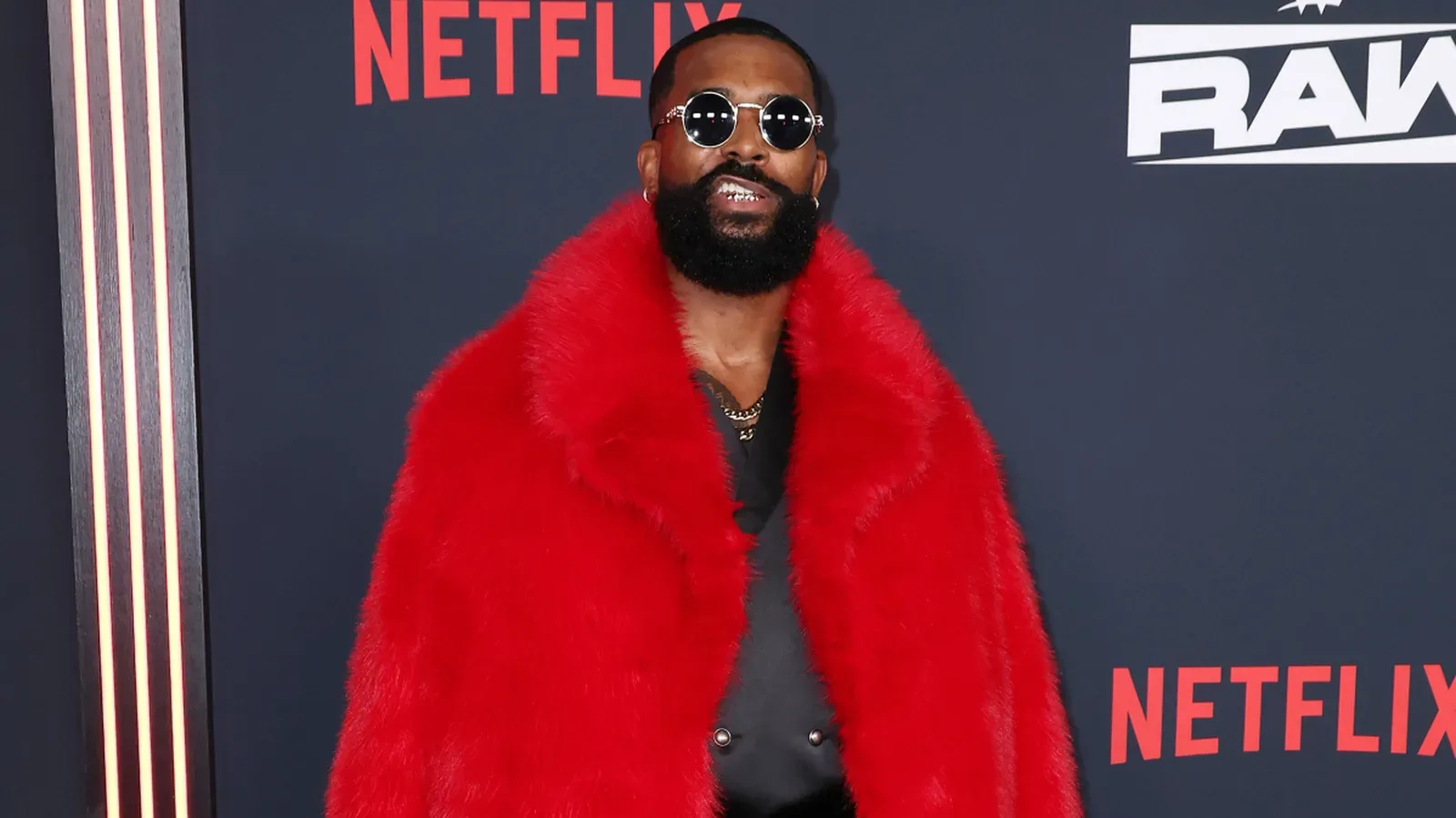
Former WWE performer and attorney David Otunga has offered a legal analysis of the civil claims facing Montez Ford following an alleged incident involving security guard Noel Lucas during the July 6 edition of WWE Raw.
Lucas is suing Ford over what he has characterized as an unwanted lap dance during the show. The dispute centers on a moment in which Ford performed a sexually provocative dance in front of Lucas, who was working as a security guard. After reviewing footage from another angle, Otunga said the additional video could strengthen Lucas’ argument that the interaction went beyond a crowd-pleasing performance and into potentially unwanted physical contact.
Otunga stressed that the matter is a civil dispute, not a criminal case. That distinction is important in discussing what Lucas would need to establish and what consequences could follow if Ford were found liable.
“These are civil claims, so we’re talking about liability and damages. They’re not criminal,” Otunga said on his YouTube channel. “Now, I still think Montez was entertaining the crowd and trying to get Lucas to break that serious expression and trying to get him to laugh. But you can be trying to make somebody laugh and still cross a legal line.”
For more background on this topic, read Unredacted WWE-Netflix Deal Language Reveals Netflix Had First Negotiation Rights for UFC Domestic Media Package.
Otunga Says the New Angle Could Matter
The key issue in Otunga’s breakdown was the apparent nature of the physical contact shown in the newer footage. Lucas has alleged that he did not consent to Ford’s actions. Otunga said that, if a fact-finder accepts Lucas’ account and determines the video shows repeated unwanted rubbing during a sexualized dance, a jury could reasonably consider that contact offensive.
“This new footage appears to show repeated contact. Lucas says he didn’t consent, and a jury could reasonably find unwanted rubbing during a sexualized dance offensive,” Otunga said. “Now, you don’t need a bruise or a broken bone for battery.”
That last point goes to the heart of the civil battery discussion. Otunga’s analysis was not that physical injury is irrelevant to a case’s potential damages, but that visible injuries such as bruises or broken bones are not necessarily required for a person to bring a battery claim. The question can instead turn on whether there was intentional, harmful, or offensive contact without consent.
In the context of a WWE broadcast, Ford’s performance style and the live-event atmosphere could become part of the discussion. WWE programming often features performers interacting with fans, officials, security personnel, and other people positioned around the ring. Entertainment value, however, does not automatically resolve the issue of consent when a person claims that physical contact crossed a boundary.
Otunga did not present the case as one-sided. He acknowledged a possible argument on Ford’s behalf: that the contact was incidental to the dance rather than a deliberate effort to make unwanted physical contact with Lucas. That would be a significant factual question if the matter proceeds further, particularly if the parties offer competing interpretations of the video and the circumstances around the segment.
The Competing Arguments in the Dispute
Lucas’ position, as summarized by Otunga, is that Ford rubbed against him without permission. From that perspective, the claim is not simply about a wrestler dancing near a guard in a high-energy arena environment. It is about alleged repeated physical contact in a sexualized context and whether Lucas agreed to be part of it.
Ford could counter that any contact was incidental to the performance. A defense built around that position would likely focus on the nature of the dance, the limited space involved, the expectations surrounding a live wrestling production, and whether the footage supports an inference of intentional contact. Otunga’s assessment was that the apparent repetition in the new angle is a factor that could make that defense more difficult, even though it remains an available argument.
Video evidence often becomes central in disputes that arise from televised wrestling events. It can provide a visual record that is more concrete than recollections alone, but footage can still be interpreted differently depending on the angle, duration, what happened immediately before and after the clip, and the credibility of the people involved. Otunga’s comments reflect that tension: he can see the entertainment-based explanation for Ford’s conduct while also believing the footage creates meaningful exposure in a civil case.
There is also a broader point in Otunga’s analysis about how claims of unwanted contact should be evaluated. He rejected the idea that Lucas’ sex, occupation, or physical stature means he should be expected to dismiss conduct that he considered inappropriate.
“A man shouldn’t have to accept contact we’d immediately question if it happened to a woman,” Otunga said. “The basic battery rule is the same. Being male, being a security guard, or being physically capable doesn’t mean that you have to laugh it off and just accept it.”
Otunga’s point does not decide the underlying facts. Rather, it addresses a potential public perception that a male security worker should be less entitled to object to a sexually suggestive interaction. His view is that the same basic legal standards regarding consent and offensive contact apply regardless of whether the person making the complaint is a man or a woman.
Why a Settlement Could Be Considered
Otunga ultimately suggested that WWE could consider resolving the matter through a settlement. A settlement would not, by itself, establish that Ford committed battery or constitute an admission of wrongdoing. Civil cases are often settled for a variety of reasons, including legal expense, uncertainty at trial, time, publicity, and a desire by all sides to avoid a prolonged dispute.
That possibility is particularly relevant when an incident takes place on national television and footage is available for public viewing and legal analysis. The presence of video does not eliminate factual disagreement, but it can influence how the parties evaluate their risks. If Lucas believes the footage supports his version of events and Ford maintains that any contact was accidental or incidental, a negotiated resolution could still be preferable to taking those competing narratives before a jury.
At this stage, Otunga’s comments are an outside legal opinion from someone with experience both as an attorney and as a former WWE talent. They are not a ruling on the lawsuit, and they do not determine whether Lucas’ allegations will ultimately be proven. The central issues remain whether the alleged contact occurred as Lucas describes, whether it was intentional or merely incidental, whether it was unwanted, and what damages, if any, may be appropriate under the civil claims.
Another Recent Wrestling-Related Civil Claim
The Ford lawsuit arrives amid another recent legal dispute involving a major wrestling name. AEW’s Jon Moxley was recently sued by a production crew member who alleged that Moxley shoved him and caused an injury. The existence of that case does not bear on the facts of Lucas’ allegations against Ford, but it is another example of how conduct connected to wrestling productions can become the subject of civil litigation.
Professional wrestling is built on physicality, character work, improvisation, and live reactions. Those elements can blur the line between a planned entertainment moment and an interaction that a non-performer says they did not agree to join. Otunga’s analysis suggests that the legal system may be asked to examine that line closely in Ford’s case.
For now, the lawsuit remains a civil allegation, and Ford has a potential defense that the contact was incidental to his dance rather than intentional misconduct. But Otunga believes the newly reviewed angle gives Lucas an argument that should be taken seriously. Whether the matter reaches a jury or ends in a settlement, the footage from the July 6 Raw segment is likely to remain at the center of the dispute.
In pictures

Darryl Polo
Darryl Polo is a passionate wrestling fan covering WWE, AEW, TNA and beyond. He loves great rivalries, breakout stars and the moments that keep fans talking long after the bell. How we work.