
The evolving media landscape around Paramount, Warner Bros. Discovery, UFC and All Elite Wrestling has produced another significant point of discussion for the professional wrestling business.
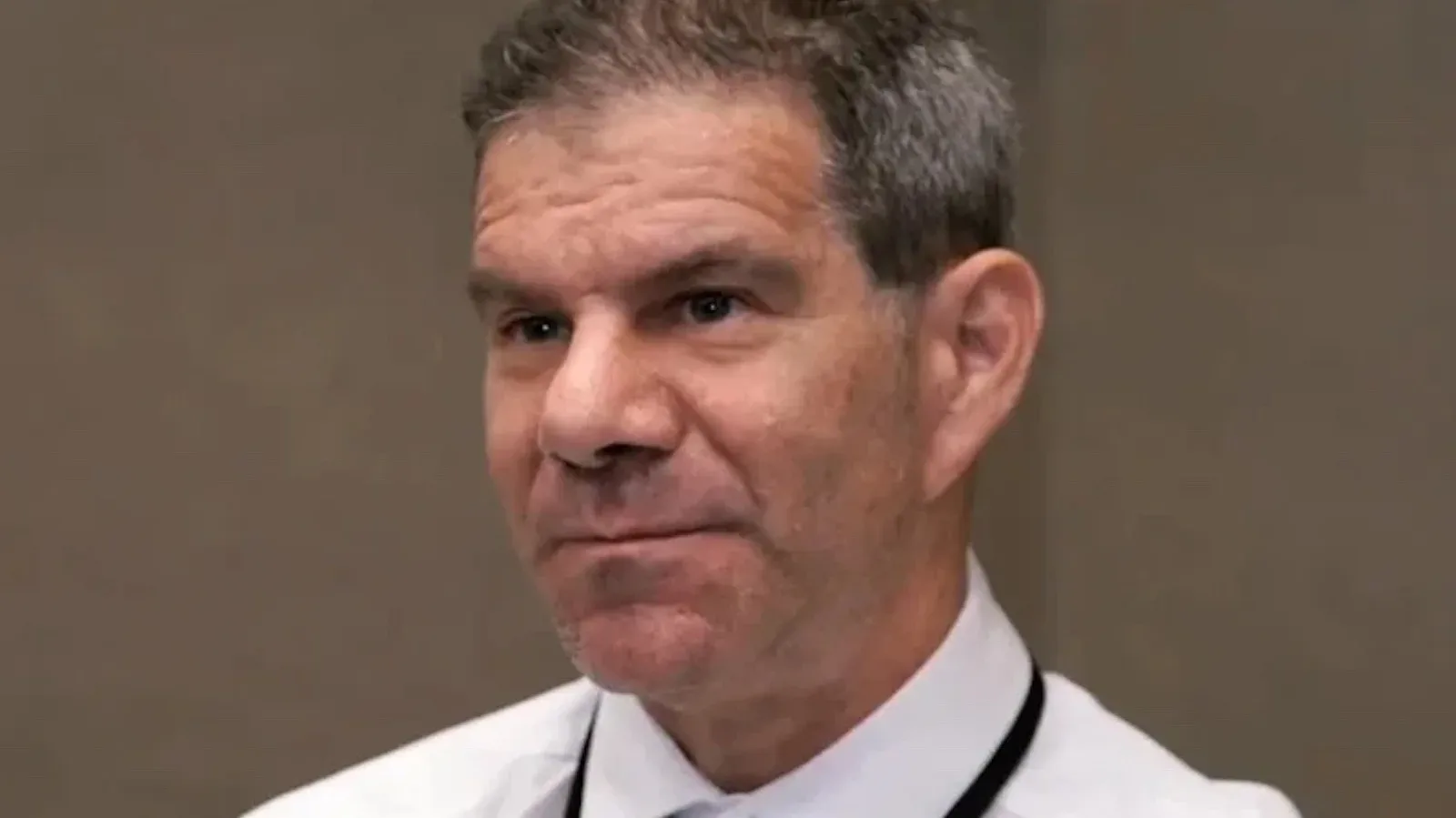
Dave Meltzer discussed a reported situation involving an unnamed wrestling company that had been in talks with Paramount+ roughly a year earlier. On Wrestling Observer Radio, Meltzer said the promotion believed it was nearing an agreement with the streaming platform, only for communication to abruptly cool as Paramount’s UFC agreement came into focus.
The identity of the wrestling company was not disclosed. There is also no confirmation that the UFC arrangement was directly responsible for the negotiations ending, or even that an agreement was ever imminent. The account instead offers a look at how rapidly sports-rights priorities can reshape the plans of major media companies, particularly when combat sports become part of the equation.
It arrives at a pivotal time for Paramount and Warner Bros. Discovery. Paramount has reached a settlement with states that had challenged its proposed merger on antitrust grounds, moving the companies closer to completing a transaction that could have wide-ranging consequences across entertainment, sports and streaming. AEW programming currently has a major presence across Warner Bros. Discovery properties, including TNT, TBS and HBO Max, making the potential merger especially relevant to wrestling viewers and industry observers.
For more background on this topic, read Thekla Says Willow Nightingale Rivalry Could Be a ‘Forever Feud’ Ahead of AEW All Out.
An Unnamed Promotion’s Paramount+ Talks
Meltzer described negotiations involving a wrestling group and senior Paramount personnel. The promotion was reportedly optimistic because Paramount+ did not have wrestling programming at the time, creating what appeared to be an available opening for a company seeking a prominent streaming home.
“There was a wrestling company that was negotiating with Paramount+. It would've been a little over a year ago and they did not have a written deal,” Meltzer said on Wrestling Observer Radio. “They were confident in a deal. They were negotiating with people at Paramount – top people, one of whom ended up losing his position in the Skydance merger.”
That distinction is important. Negotiations, even serious ones held with top executives, are not the same as a signed rights agreement. Media deals can change direction late in the process for a variety of reasons: shifts in leadership, revised budgets, changes in strategic focus, competing rights packages or broader corporate transactions. Meltzer’s account makes clear that the company did not have a written deal in place.
Still, the circumstances reportedly gave the promotion reason to believe it had a realistic path onto Paramount+. A wrestling property can be valuable to a streaming service not only through weekly programming but also through an extensive event archive, recurring live specials, documentary programming, shoulder content and the ability to retain subscribers between tentpole events.
Wrestling’s year-round schedule has traditionally been attractive to television partners. Unlike sports that have defined offseasons, a promotion can provide regular weekly episodes and premium live events across the calendar. That consistency can make wrestling useful in a platform’s broader programming mix, even when it does not carry the same annual rights price as the biggest traditional sports leagues.
Why the UFC Deal Became a Talking Point
According to Meltzer, the tone changed late in the process. As UFC’s arrangement entered the picture, the communication with Paramount+ reportedly stopped progressing.
“Everything suddenly got cold with them completely,” Meltzer said. “They don't know, but their thought was Ari Emmanuel.”
Ari Emanuel’s role in the wider combat-sports and entertainment landscape naturally makes his name notable in any conversation involving UFC rights and a potentially affected wrestling property. However, Meltzer presented the connection as the unnamed promotion’s belief rather than an established fact. No direct evidence was offered that Emanuel personally intervened, that UFC requested exclusivity from Paramount, or that Paramount formally decided it would not carry any pro wrestling because it had secured UFC.
That uncertainty should remain central to the story. Paramount’s decision-making could have been influenced by numerous factors, including cost, timing, executive turnover, evolving corporate priorities and the complicated environment surrounding the Skydance transaction. The reported loss of a Paramount executive involved in discussions also illustrates how quickly corporate changes can interrupt negotiations that may once have had internal support.
Nevertheless, a UFC agreement can plainly alter the calculation for a media platform considering another combat-oriented property. UFC brings a globally recognized brand, live-event programming and a defined sports identity. A company making a substantial investment in those rights may reassess how much additional programming it wants in an adjacent category, especially if executives believe there could be brand overlap or budget pressure.
At the same time, mixed martial arts and professional wrestling are distinct forms of entertainment with different audiences, presentation styles and programming needs. There is a long history of networks and streaming platforms carrying both sports and wrestling-related programming. The possibility of overlap does not automatically mean the two cannot coexist. That is another reason the unnamed promotion’s exact circumstances, and Paramount’s reasons for going cold, remain impossible to determine from the information available.
What It Could Mean for AEW
The discussion has understandably led to questions about AEW, given its current relationship with Warner Bros. Discovery and the potential implications of a Paramount-Warner Bros. Discovery combination. AEW has established itself as a central part of TNT and TBS programming, while its content also has a presence on HBO Max. Any major restructuring of Warner Bros. Discovery could prompt questions about future rights, distribution and strategic priorities.
Meltzer did not frame the reported Paramount+ story as a prediction that AEW will lose its position or struggle to find a platform. In fact, he expressed confidence that AEW’s television value would give the company options.
“AEW will probably get something somewhere because the reality is their television stuff is strong enough,” Meltzer said on Wrestling Observer Radio.
That assessment centers on the importance of television performance. In rights negotiations, a promotion’s value is not determined by one metric alone. Live ratings, delayed viewing, streaming consumption, advertising appeal, audience demographics, brand partnerships, live-event business and the ability to produce a dependable volume of programming can all factor into a deal. A property that consistently delivers programming and has an established audience can remain attractive even amid corporate upheaval.
AEW’s present footprint also means that its situation is different from that of an unnamed group attempting to secure its first Paramount+ agreement. AEW already has a major television and streaming relationship, a substantial library of events and an ongoing weekly presence. Those factors do not eliminate uncertainty created by merger discussions, but they do give the company a meaningful base from which to evaluate its next steps.
Tony Khan, David Ellison and the NFL Connection
Meltzer also noted that AEW President Tony Khan and David Ellison have spoken and have a relationship through the NFL. Khan’s family owns the Jacksonville Jaguars, while Ellison has connections within the sports and entertainment business. Meltzer said that the two have talked, a detail that will add to interest in how AEW could fit into a changing media environment.
Khan has previously expressed eagerness to work with Ellison. That does not establish any future AEW deal, and it should not be read as a guarantee of a particular outcome if Paramount and Warner Bros. Discovery complete their transaction. Corporate mergers involve extensive negotiations, regulatory considerations, financial decisions and leadership planning. A personal or professional relationship can open lines of communication, but it is only one element in a far larger process.
For AEW, the core issue is not simply whether Paramount has UFC. It is whether a combined company would see AEW as a valuable addition to a broader portfolio that could include major sports rights, entertainment franchises, cable networks and streaming services. The answer may depend on the eventual structure of the merged business and the executives who guide its programming strategy.
A Shifting Rights Market
The reported Paramount+ talks underscore the volatility of the current wrestling rights market. Promotions are no longer evaluating only traditional cable channels. They must consider streaming services, hybrid linear-and-digital deals, international distribution, event libraries and the corporate stability of potential partners. A deal that appears promising one month can be reshaped by a leadership change, a merger announcement or the arrival of a major sports package.
The pending Paramount-Warner Bros. Discovery situation makes that volatility even more pronounced. Until the merger process is fully resolved and the post-transaction priorities become clearer, definitive conclusions about AEW’s long-term media home would be premature. The same applies to assumptions that UFC’s Paramount presence would prevent all wrestling content from joining the company’s platforms.
What can be said is that the reported experience of the unnamed wrestling company serves as a reminder of the stakes. In an increasingly crowded fight for media rights, interest and optimism are not enough. Until contracts are signed and corporate strategies are settled, even advanced negotiations can change without warning.
For now, Meltzer’s comments add another layer to the conversation around Paramount, UFC and AEW. They do not provide a final answer on where any promotion will land. They do show why executives, wrestlers and fans alike are watching the next phase of the media business so closely.
In pictures
Darryl Polo
Darryl Polo is a passionate wrestling fan covering WWE, AEW, TNA and beyond. He loves great rivalries, breakout stars and the moments that keep fans talking long after the bell. How we work.