
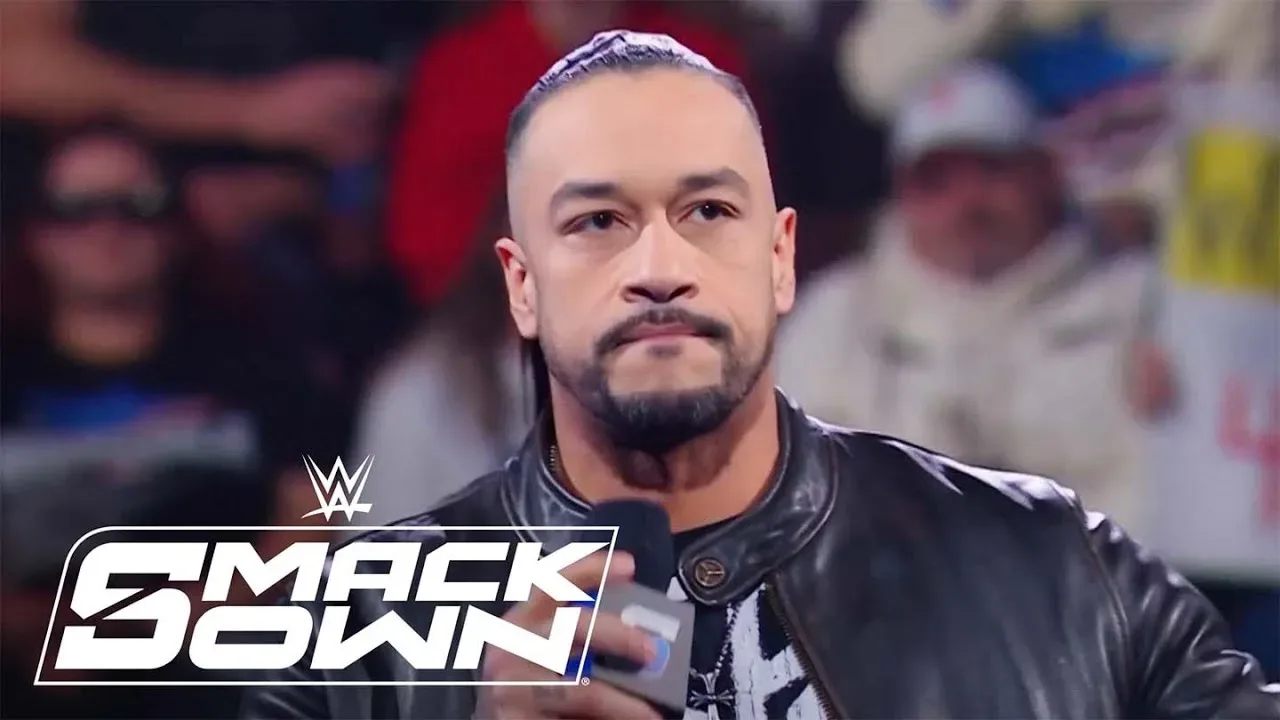
Damian Priest is not backing away from his belief that WWE’s main event scene can become too dependent on familiar names. But after reflecting on the comments he made during the summer, the former world champion has put the responsibility for changing that landscape squarely on himself.
Priest addressed the subject in a new interview following his pointed remarks on the July 24 episode of SmackDown. At that time, Priest said that “the boys are sick of the same people” occupying the top positions on WWE programming. The statement immediately sparked discussion about the company’s championship picture, the wrestlers routinely featured in marquee matches, and the challenge facing talent trying to climb into that level.
WWE Chief Content Officer Paul “Triple H” Levesque responded after SummerSlam by encouraging wrestlers to take a spot if they want one. Priest has now echoed the competitive core of that response. He still believes the complaint is valid, but he has concluded that complaining without taking action will not alter the status quo.
“I still stand by what I said, but the change wasn’t them, I realized it was me,” Priest said. “I needed to make a change so I can make an impact on what I’m complaining about. That’s on me, you know what I mean?”
For more background on this topic, read Stephanie Vaquer Named No. 1 In 2026 PWI Women’s 250.
Priest accepts the challenge of earning a return to the top
The distinction in Priest’s current outlook is important. He is not arguing that WWE should push aside its established main-event acts simply to make room for others. In fact, he openly acknowledged why certain wrestlers continue to cycle around the title scene. Those stars have earned their standing through their ability, connection with the audience, and track record in high-pressure situations.
At the same time, Priest sees no reason that group should be closed off. His point is that performers who believe they are ready for the spotlight need to create enough momentum, present enough of a threat, and perform well enough that they cannot be ignored. For Priest, that begins with his own work.
“That comment, I still stand by it, that I’m sick and tired of seeing the same people, but that’s on me to make it different, to do something about it,” Priest said. “That’s on everybody, that’s on everybody who’s not in that picture to do it.”
It is a blunt assessment of the WWE environment. Opportunities may be debated endlessly by fans, but the most prominent spots are ultimately limited. A wrestler hoping to enter the title picture is competing not only against the champions and designated challengers, but also against the momentum of every other act seeking a breakthrough.
Priest’s comments frame that reality as motivation rather than an excuse. He believes there is a difference between voicing frustration and producing the kind of output that forces decision-makers and viewers to see a wrestler as a main-event-level player. He wants to be the latter.
“So, that’s exactly what you see happening right now,” Priest said. “That’s why I’m doing what I’m doing so I can actually make a difference in that. I can not talk about it, but I can actually be about it.”
A former world champion seeking another defining run
Priest is speaking from experience rather than speculation. He has already reached WWE’s highest level, having previously held the World Heavyweight Championship. That history gives added weight to his insistence that he belongs in the conversation, while also raising his own expectations for what comes next.
Winning a world title establishes that a wrestler can carry a promotion at a particular moment. Remaining a constant fixture near that championship, however, is a separate challenge. WWE’s top programs are crowded with accomplished veterans, emerging headliners, champions, and performers whose rivalries have substantial audience investment. Priest knows that a prior reign alone does not guarantee an immediate return to that position.
His objective is therefore not merely to remind people that he has been a champion. He wants to rebuild the urgency around him and make another ascent feel necessary. Priest described it as reclaiming a place he feels has been away from him for too long.
“Those people are still going to always be a revolving door around the top spot and the titles and the main events because that’s the talent that they are,” Priest said. “It doesn’t mean that there isn’t space for anybody else, that’s where I come in. I’ve been there before and it’s been too long since I’ve been there, so I’m coming back for what’s mine again.”
That final sentiment captures the central message behind Priest’s recent remarks. He is not calling for a handout, nor is he treating the success of WWE’s most consistently featured stars as the problem. Instead, he is identifying the gap between being a respected member of the roster and being a regular player in the biggest matches, then declaring that it is his job to close it.
The larger debate over WWE’s main-event depth
Priest’s original statement resonated because it touches on a familiar debate in modern WWE. Promotions naturally rely on recognizable acts when building major events, title matches, and television-closing angles. Those wrestlers often have a proven ability to deliver in front of enormous crowds and draw sustained interest across long programs.
Yet a healthy main-event picture also requires fresh challengers. New names prevent championship scenes from becoming stagnant, create different matchups, and give fans a reason to invest in the next wave of top-level talent. The path from featured wrestler to true headliner is rarely straightforward, particularly on a roster as deep as WWE’s.
Priest’s argument is not that WWE lacks enough positions at the top. It is that wrestlers outside the established rotation must make the available space meaningful through their own performances and choices. That can come through a compelling rivalry, a defining promo, a streak of standout matches, a character adjustment, or simply the ability to seize momentum when television time arrives.
His willingness to place that burden on himself also turns the issue into a challenge for the rest of the roster. If a performer believes the same names are too frequently involved in the major programs, Priest’s view is that the answer cannot stop at criticism. The answer is to become impossible to overlook.
AAA plans currently paused
Elsewhere in the interview, Priest disclosed that his run with AAA is currently on hold. No further details regarding a timetable for that pause were provided in his comments.
That development places even greater attention on what Priest intends to accomplish in WWE. His focus is clearly on rebuilding his standing within the company’s biggest stories and proving that his earlier championship success was not a one-time peak.
There is no shortage of competition for that goal. The WWE main-event scene remains filled with elite performers who have already established themselves as dependable championship contenders. Priest does not deny their value, and he does not appear interested in minimizing what they have achieved. His stance is more direct: they deserve their positions, but he intends to earn his way back alongside them.
For Priest, the conversation has evolved from dissatisfaction with the existing hierarchy to a personal mission. He can still be tired of seeing a familiar rotation near the top. He can still want WWE’s marquee programs to make room for more names. But his next step is to make certain that Damian Priest is one of the names no longer left outside that rotation.

Darryl Polo
Darryl Polo is a passionate wrestling fan covering WWE, AEW, TNA and beyond. He loves great rivalries, breakout stars and the moments that keep fans talking long after the bell. How we work.