
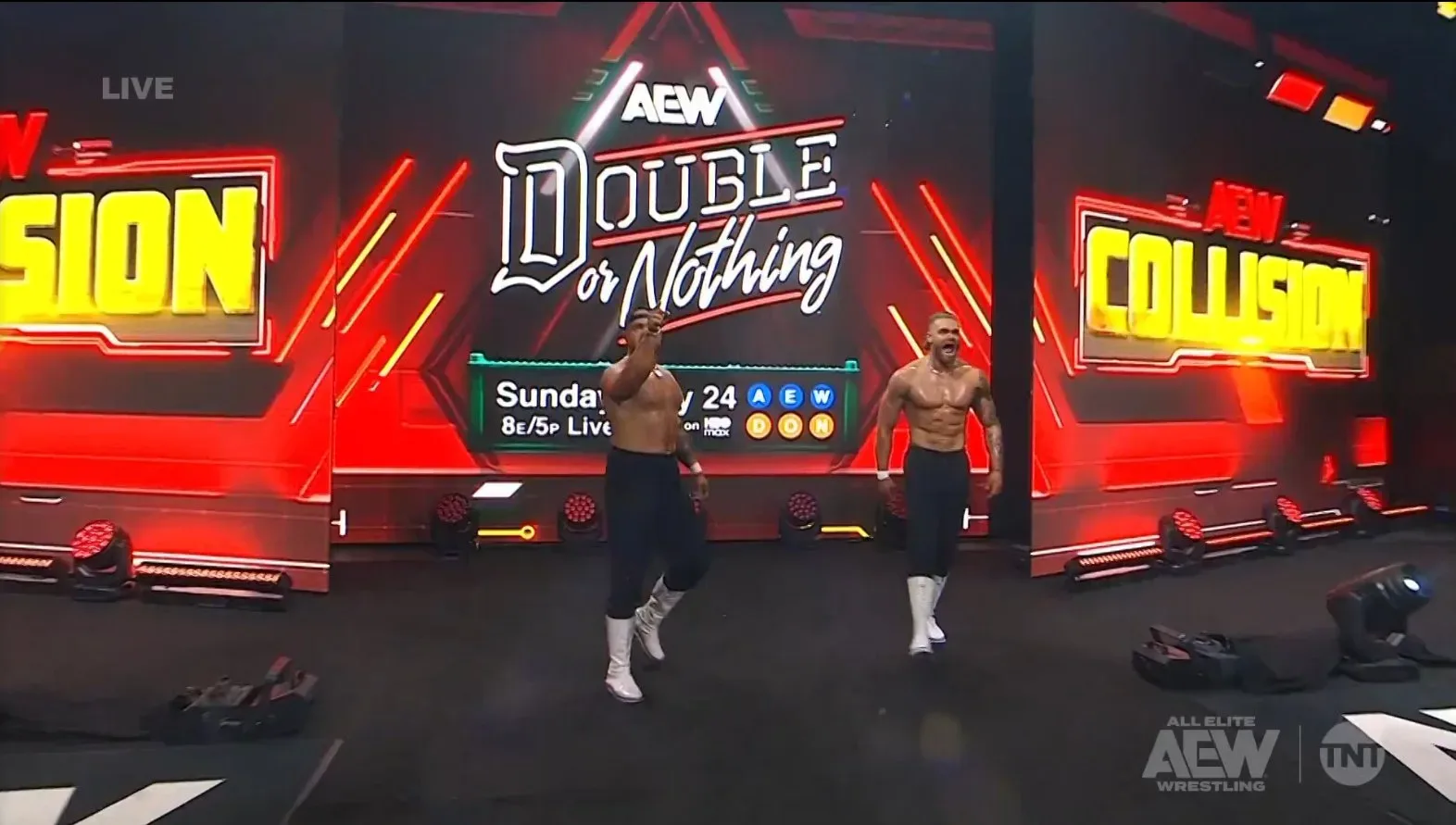
Colten Gunn’s return to the ring in May 2026 came after a recovery process that moved faster than the initial timetable he was given following a torn patella in July 2025.
The AEW wrestler, one half of The Gunns alongside brother Austin Gunn, has explained that the injury happened during what he described as an ordinary jump in a routine setting. At first, the expectation was that he would need between nine months and a year before he could even resume practicing in the ring. Instead, Gunn said he was back training at the five- and six-month marks and received medical clearance after seven months.
Speaking on What Happened When With Tony Schiavone, Gunn credited a demanding rehabilitation schedule, regular physical therapy, and a disciplined diet for helping him progress through recovery.
“I tore my patella, just from a regular routine jump,” Gunn said. “It was supposed to be nine months to a year before I could practice in the ring, but I went to physical therapy four times a week and stayed at it. Had my diet locked in, had my physical therapy, and I was back practicing at five and six months, and got cleared in seven months.”
For more background on this topic, read AEW Announces Free All Out Block Party Ahead of Chicago Pay-Per-View.
Gunn returned to competition after the difficult absence and said the experience of getting back between the ropes brought understandable nerves. Still, he was able to work through that initial uncertainty as he resumed his in-ring career.
“Now, I’m back. It feels pretty good,” Gunn said. “A little nervous at first, but got through it.”
A Faster-Than-Expected Road Back
Injuries affecting the knee area can be especially concerning for a professional wrestler, given the repeated impact involved in running the ropes, landing, leaping, striking, and executing offense. Gunn’s own account underscores just how serious the original prognosis appeared to be. The initial discussion was not merely about missing scheduled television or a short stretch of matches; he was told it could take nine months to a full year before he could return to ring practice.
That distinction makes his reported recovery timeline notable. Gunn said he began practicing again within five to six months and was officially cleared at seven months, cutting significantly into the expected window. While he did not present the process as easy, he pointed to consistency as the key part of the turnaround. Four physical therapy sessions per week gave him a structured rehabilitation routine, while his focus on diet complemented the work being done in therapy.
Gunn was sidelined beginning in July 2025, with his return arriving in May 2026. The period kept him away from active ring competition while AEW’s tag and trios landscape continued to shift around the group with which he has been closely identified. His return gave the Bang Bang Gang another established piece and reunited him with a familiar partner in Austin.
The Gunn brothers have long been presented as a unit in AEW, bringing a brash, polished tag-team approach shaped by their family history and their own development on national television. Colten’s absence created an unavoidable interruption in that momentum, but his comeback restored a key part of the team’s identity.
The Bang Bang Gang Connection
Colten Gunn is part of the Bang Bang Gang, which includes Austin Gunn, Ace Austin, Jay White, and Juice Robinson. The faction has featured a blend of tag-team chemistry, singles experience, and a group presentation that has made it a recognizable presence in AEW.
For Colten, the injury meant time away from a stable built around the relationships and history of its members. Austin remained his closest in-ring connection as his brother and longtime partner, while White and Robinson brought their own established alliance into the group. Ace Austin’s presence added another athletic and versatile performer to the mix.
Gunn’s account of his recovery did not include a detailed discussion of what was ahead for the Bang Bang Gang competitively, but being medically cleared and able to practice again represented the essential first step. Before any wrestler can resume a regular role on television, rebuild ring conditioning, or re-enter a tag-team rhythm, the physical hurdle of being cleared has to be met. Gunn reached that point well ahead of the projection he received after getting hurt.
Returning from a lengthy absence can involve more than being healthy enough to compete. Timing, confidence, conditioning, and comfort in the ring all must be re-established. Gunn’s remark that he felt nervous at first is a candid acknowledgment of that reality. The physical work of rehabilitation may lead to clearance, but the first matches and training sessions after a significant injury remain an important adjustment period.
At the same time, Gunn said he got through those nerves, and his positive assessment that being back “feels pretty good” reflects the relief of reaching the other side of a setback that originally threatened to keep him from ring practice for up to a year.
Commitment To Rehabilitation
Gunn’s recovery comments place the emphasis on the day-to-day commitment required during time away from the ring. Physical therapy four times per week is a substantial routine, particularly when paired with maintaining dietary discipline. Rather than framing the seven-month clearance as a simple matter of waiting for an injury to heal, he described actively staying on top of the work throughout the process.
That approach helped him advance from rehabilitation to ring practice sooner than initially expected. Gunn said he was practicing at five and six months, then cleared in month seven. Those milestones were meaningful because they signaled that his recovery was moving beyond basic treatment and toward the demands of professional wrestling.
There is no substitute for the in-ring component when a performer is preparing to return. Conditioning in a gym and progress in therapy are crucial, but pro wrestling asks for movement patterns, impacts, and timing that cannot be fully replicated outside the ropes. Gunn’s ability to get back to practicing before his initial projected timetable gave him an opportunity to work toward his eventual May return.
His story also serves as a reminder that projected recovery windows are exactly that: projections. The original nine-month-to-one-year estimate set a broad expectation after the torn patella, but Gunn’s specific progress, treatment routine, and clearance process allowed him to beat that forecast. He did not suggest that the injury was minor. On the contrary, the original timetable illustrates the seriousness of what he faced. His return was the result of navigating that situation successfully and steadily.
Looking Back At The Gunns’ Presentation
Elsewhere in the conversation, Colten and Austin Gunn also discussed their “Many Men” entrance and the way it came together. The entrance has become part of the brothers’ broader presentation, fitting their confidence-heavy style and providing an additional element of personality before the bell.
For a team such as The Gunns, presentation has always been intertwined with performance. Their entrances, mannerisms, and ability to draw a reaction have been as important to their identity as their work once a match begins. With Colten back from injury, those familiar elements can again be part of the team’s complete package.
The major takeaway from Gunn’s update, however, is the recovery itself. A torn patella in July 2025 appeared set to impose a long layoff, with ring practice potentially not possible until well into 2026. Through frequent physical therapy and a tightly managed routine, Gunn said he returned to practice months ahead of that anticipated schedule, gained clearance after seven months, and ultimately made it back in May 2026.
Now back in action, Gunn has described both the nerves and the satisfaction that came with returning. For the Bang Bang Gang and for the Gunn brothers’ tag-team future, his successful comeback means a key AEW performer has overcome a difficult injury absence and resumed the work that was temporarily put on hold.
Darryl Polo
Darryl Polo is a passionate wrestling fan covering WWE, AEW, TNA and beyond. He loves great rivalries, breakout stars and the moments that keep fans talking long after the bell. How we work.