
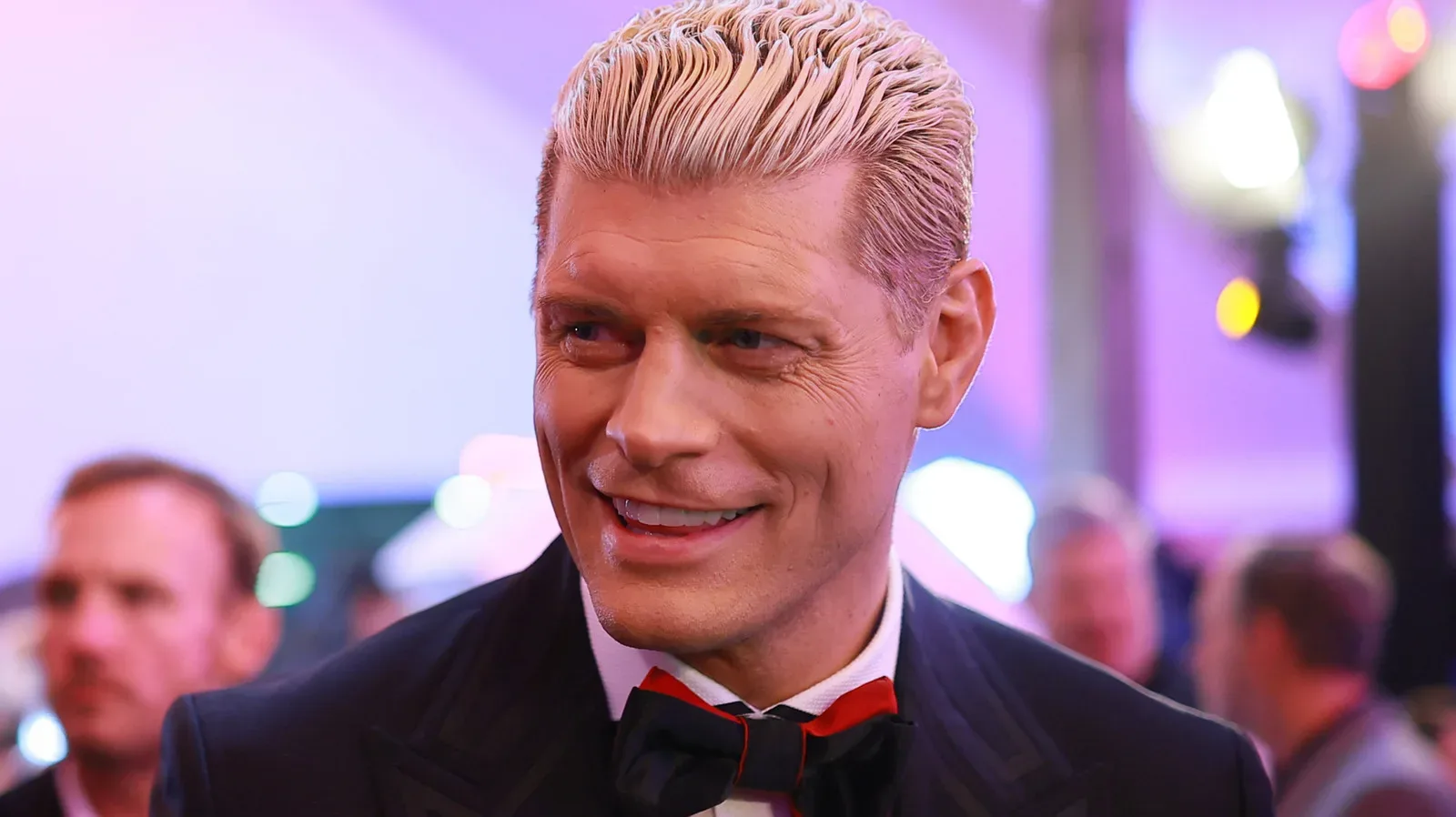
Cody Rhodes has spent much of his career making the case that professional wrestling belongs in the wider entertainment conversation. As one of WWE’s defining stars of the modern era, Rhodes has performed on the company’s biggest stages, carried championship-level expectations, and helped anchor stories built for a global audience. Now, as he broadens his work beyond the ring, Rhodes says his experience in acting has only strengthened his belief that wrestling and Hollywood have far more in common than many people assume.
Rhodes is set to portray Guile in the 2026 adaptation of Street Fighter, a role that marks his most significant acting opportunity to date. The casting places him in a major film property with deep roots in video games and pop culture, but Rhodes did not describe the transition from WWE to a movie set as a complete departure from the world he knows. Instead, he said the basic creative processes surrounding performance, character work, and audience investment felt immediately familiar.
During an episode of What Do You Wanna Talk About? With Cody Rhodes, Rhodes framed both industries as different expressions of the same central craft: storytelling. For a performer whose wrestling identity has long been tied to emotion, legacy, ambition, and spectacle, that common foundation appears to have made the move into acting more natural.
“It’s all part of the art of storytelling,” Rhodes said on What Do You Wanna Talk About? With Cody Rhodes. “And the biggest thing with Street Fighter that I couldn’t believe was: this is just wrestling!”
For more background on this topic, read Raj Dhesi Recalls Randy Orton’s Role In His WrestleMania 34 United States Title Opportunity.
Rhodes recognizes familiar creative conversations on film sets
The comparison goes beyond the fact that both wrestling and film ask performers to inhabit characters in front of cameras. Rhodes said he encountered moments away from filming in which actors were having discussions that sounded much like conversations he has heard throughout his WWE career. That observation speaks to the collaborative nature of both forms of entertainment.
In WWE, performers routinely work through motivations, presentation, rivalries, timing, emotional beats, and the long-term direction of their characters. The finished product may look spontaneous when it reaches the audience, particularly in a live setting, but it is supported by extensive preparation and a constant exchange of ideas. Film productions operate with their own structure, schedules, and departments, yet actors also need to understand who their characters are, what they want, and how each scene advances the larger narrative.
For Rhodes, the discovery that these conversations existed in a similar form was significant. Wrestling has often been treated by outside observers as separate from more traditional screen acting, even though top performers are required to communicate character traits, conflict, and emotional stakes in a highly visible format. The difference is not that wrestling lacks storytelling tools. Rather, it uses those tools in a unique environment, one where physical performance, live crowd response, and serialized television are all working at once.
Street Fighter also presents a particularly fitting project for a wrestler making a larger step into acting. The franchise is built around recognizable fighters with distinct appearances, backgrounds, mannerisms, and rivalries. Guile is among the most identifiable figures in that lineup. Bringing such a character to the screen requires physical credibility, but it also requires an understanding of what makes the character resonate beyond moves and visual trademarks. Rhodes’ WWE background has repeatedly demanded that same balance.
The Rock’s example helped Rhodes embrace new ambitions
Rhodes credited Dwayne “The Rock” Johnson with inspiring him to be more open about pursuing opportunities outside wrestling. Johnson’s own path from WWE superstardom to one of Hollywood’s most prominent names offers an obvious example for wrestlers interested in expanding their careers, but Rhodes emphasized a more personal lesson he took from him: the importance of being willing to say what you want to do.
Rhodes and Johnson shared one of WWE’s most high-profile conflicts on the road to WrestleMania XL. Their rivalry was built around the fight over Rhodes’ pursuit of the Undisputed WWE Championship and the wider question of who would stand at the center of WWE’s biggest event. The tension of that program was central to the WrestleMania season, but Rhodes has also indicated that there is a close relationship between the two outside the story being told on screen.
“Something I learned from The Rock, and really, really it sticks with me is — again, dealing with so much random shame and embarrassment over stuff, don’t be afraid to say, ‘Oh, I want to do that. I want to do that too!’” Rhodes said on What Do You Wanna Talk About? With Cody Rhodes.
That outlook applies directly to Rhodes’ decision to take on acting work. Public figures can face a peculiar kind of pressure when they attempt something new, especially when their reputation has been built in a different field. For wrestlers, that pressure can be amplified by the outdated assumption that a successful in-ring career should remain limited to wrestling. Rhodes’ comments suggest he sees no need to apologize for having ambitions that extend into film.
It is also an outlook that aligns with the direction of his broader career. Rhodes has been candid about the importance of goals, whether those goals involve winning championships, headlining major WWE events, building on his family legacy, or establishing himself in another performance medium. Taking a role in Street Fighter does not erase his WWE identity. By his own description, it has highlighted the performance instincts and storytelling experience that WWE has already given him.
WWE’s production standards stand out to Rhodes
While Rhodes sees substantial overlap between wrestling and movie-making, he also identified a major difference after spending time on Hollywood sets. In his view, WWE’s production value is higher than that of most productions he has experienced outside the company.
That assessment reflects the scale and consistency of WWE’s weekly output. WWE regularly produces live television with elaborate entrances, arena-sized lighting rigs, video packages, music, pyrotechnics, broadcast crews, camera operators, live audience coordination, and constantly changing creative requirements. Premium live events take that presentation even further, turning stadiums and major arenas into massive visual environments while still placing performers in front of a live crowd with no opportunity to stop and reset a moment.
Film and television sets have different demands, with scenes often built through multiple takes, carefully controlled locations, and post-production work. Rhodes was not dismissing that process. His point was that WWE’s machine operates at a level that can be easy to underestimate, particularly for anyone who has never been part of a live wrestling broadcast. The company’s performers work inside an environment that combines athletic execution with the technical needs of television production, all while responding to an audience in real time.
Rhodes expressed hope that wrestlers themselves eventually appreciate the level of production around them, along with those who still fail to recognize what wrestling performers contribute to the entertainment business. It is a notable perspective from someone who has experienced both sides of the comparison. His acting work has provided a closer look at another major performance industry, but rather than diminishing WWE’s place in that landscape, it appears to have reinforced his respect for it.
Street Fighter offers another stage for a WWE headliner
Rhodes’ role as Guile arrives at a time when WWE stars continue to attract attention beyond the ring. The relationship between wrestling and other entertainment fields is longstanding, but it remains meaningful whenever a current top-level performer gains a significant role in a major production. A project like Street Fighter gives Rhodes the chance to introduce himself to audiences who may know the character first and the WWE star second.
For existing fans, the casting presents an opportunity to see whether the skills that made Rhodes one of WWE’s leading storytellers translate into a different format. His comments indicate that he believes the transition is less dramatic than it may appear from the outside. Wrestling has prepared him to build a character, communicate conflict, work with a production team, and understand the importance of making an audience care. Hollywood offers a new setting for those abilities, not an entirely new language.
Rhodes’ larger message is equally clear: wrestlers should not be reduced to a narrow idea of what they can do. The live, high-pressure nature of WWE requires performers to be athletes, character actors, public speakers, and collaborative storytellers. His experience on Street Fighter has given him another way to articulate that case. Whether in a WWE ring or on a film set, Rhodes sees the same essential objective: give people a story worth following.
In pictures

Darryl Polo
Darryl Polo is a passionate wrestling fan covering WWE, AEW, TNA and beyond. He loves great rivalries, breakout stars and the moments that keep fans talking long after the bell. How we work.