
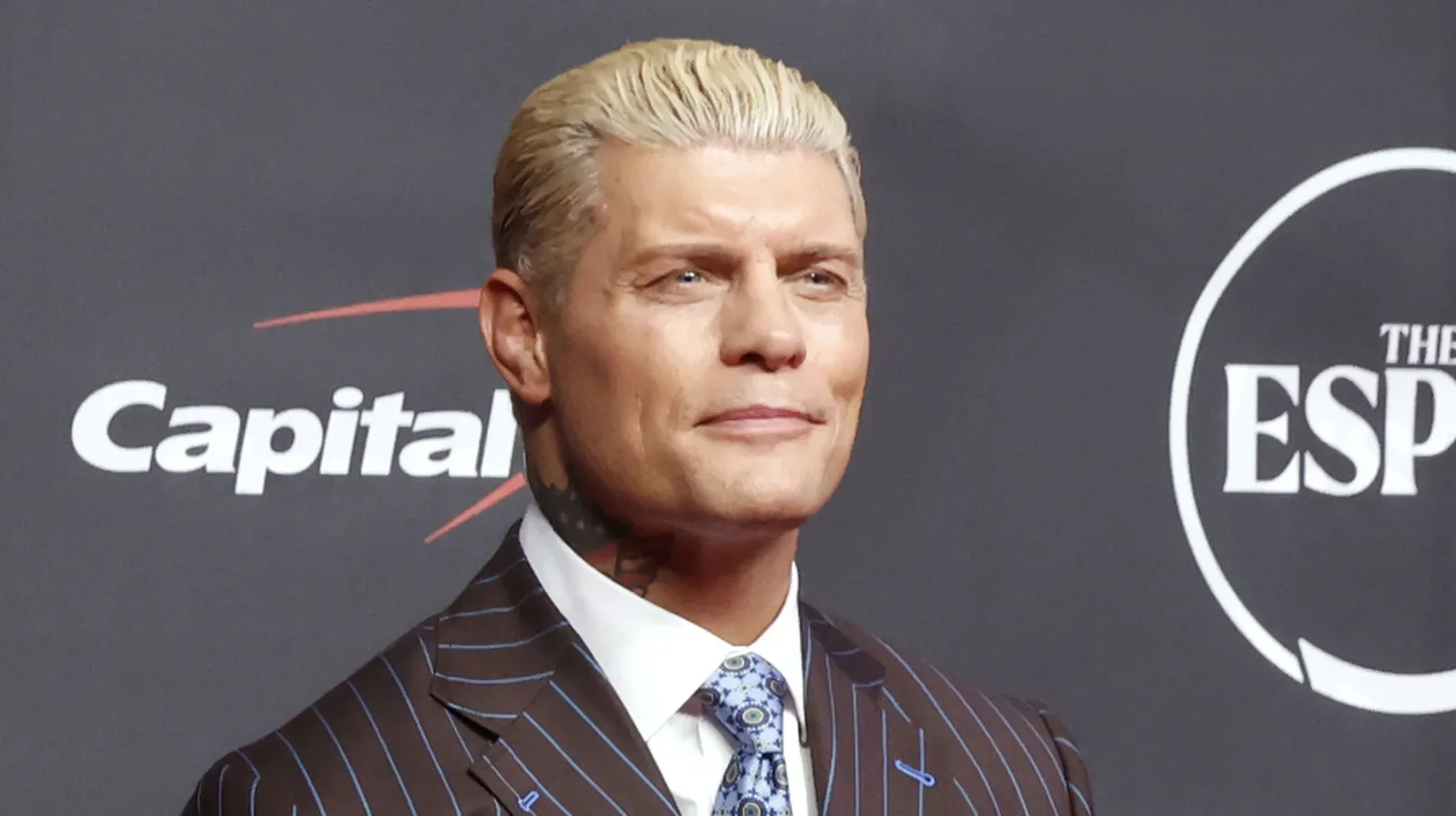
Cody Rhodes has again addressed one of the most persistent questions surrounding his WWE run: whether he could eventually turn heel.
The discussion has intensified amid Rhodes’ recent program with Randy Orton, during which portions of the audience sided with Orton over Rhodes. For a performer whose current WWE identity has been built around perseverance, family history and finishing the story, the reaction has created an interesting layer to his presentation. Some fans have embraced Rhodes as a central heroic figure, while others have increasingly viewed elements of his on-screen persona as overly polished or self-serious.
Appearing on The Ebro Laura Rosenberg Show, Rhodes made clear that he is not shutting the door on a heel turn. At the same time, he stressed that any change would have to serve WWE creatively rather than simply answer online speculation or crowd reactions.
“I’m open to anything if it’s something that moves the ball forward for WWE,” Rhodes said on The Ebro Laura Rosenberg Show. “I really am open to it, and it’s not a conversation about I wouldn’t or I’d been not willing to. But so much has happened already.”
For more background on this topic, read Raj Dhesi Eyes Potential Match With Amine After Final Slam Appearance.
That response leaves Rhodes’ immediate direction uncertain, but it offers a meaningful look at how he views the possibility. He did not present a turn as inevitable, nor did he suggest that WWE has committed to making one happen. Instead, Rhodes framed it as an option that would need to create genuine momentum for the company and for his own story.
Fan Reactions Have Added Another Dimension
The calls for Rhodes to move into a villainous role are not new. Discussions about his character have followed him for years, including during the latter portion of his AEW tenure, when a segment of the fan base pushed loudly for a more overtly antagonistic version of Rhodes. He never made that definitive shift at the time, and his eventual WWE return gave him the opportunity to establish himself in a dramatically different position.
In WWE, Rhodes has been presented as a leading babyface with an emotional connection to his family legacy and the audience. That foundation has made him one of the company’s most prominent stars, but high visibility also brings scrutiny. As Rhodes noted, some viewers have already made up their minds about him, even without an official character change.
“People already boo, right? There’s some that have already established, ‘No, he is,’” Rhodes said. “I think somebody was talking about thinking everything I do is fake and performative and pretentious. And I can see why some people would think that, and maybe they’ve already decided that that’s who I am.”
Rhodes’ comments are notable because they do not dismiss those reactions outright. Rather than insisting every fan must see him as a traditional hero, he acknowledged why certain aspects of his presentation can be interpreted differently. That awareness is often crucial for major wrestling characters, especially those whose real-life background, public image and television persona overlap as closely as they do with Rhodes.
His feud with Orton brought that issue further into focus. Orton has spent decades cultivating a connection with WWE audiences, and the dynamic between the two performers created room for fans to react in ways that may not fit neatly into the expected hero-versus-villain divide. Audience support shifting toward Orton does not automatically mean Rhodes must turn, but it has added fuel to a conversation that has followed him through multiple stages of his career.
The Challenge of Playing ‘Cody Rhodes’ on Television
Rhodes also discussed the unusual challenge of performing a character based so closely on himself. Wrestling has long relied on heightened versions of real personalities, but Rhodes’ public identity is especially connected to the way he speaks, carries himself and refers to his upbringing in the industry.
That connection can make criticism feel more personal than it would for a performer playing a character with a clearer separation from their real identity. Rhodes explained that he has noticed how frequently people attempt to define him completely based on what they see on television.
“There’s a lot out there that I’ve noticed people like to fully describe me as if they know me 110%,” Rhodes said. “Because I play me. So that’s where it gets a little ‘Oooph.’ It almost gets a little... it feels a certain way when you look at stuff that’s written about you. And you have to remind yourself that’s a person on television. It’s a character. But it’s also rooted in who I really am and how I came up in the business.”
That distinction matters when evaluating any potential heel turn. A character change for Rhodes would not simply involve wearing darker colors, delivering harsher promos or attacking a popular opponent. Because his WWE role is rooted in his actual history and in the legacy of his father, Dusty Rhodes, a heel shift would likely require him to reinterpret those familiar traits in a more confrontational way.
The characteristics some fans have criticized could potentially become the foundation of a villainous persona. Confidence could become arrogance. Sincerity could be portrayed as calculation. A strong belief in legacy could become a sense of entitlement. Rhodes did not say that WWE is headed in that direction, but he showed a clear understanding of why people believe such a change could work.
Rhodes Has a Specific Vision for a Heel Character
If Rhodes does make the transition, he has a firm idea of what kind of heel he would want to be. He indicated that his goal would be to create a character audiences genuinely dislike, rather than a so-called cool heel who receives admiration and cheers despite villainous behavior.
That is an important distinction in modern wrestling. Many major stars have found themselves cheered after turning heel because fans appreciate their in-ring work, charisma or commitment to a new edge. Rhodes’ comments suggest he would prefer a presentation designed to reject that response. The intent would be to provoke viewers, not to invite them to celebrate his change in attitude.
He also described a particularly restrained approach to explaining the turn. Rhodes said he would state his reasons once and only once. After that, he would avoid continuing to explain himself through promos, instead allowing a manager or mouthpiece to speak on his behalf.
Such a choice would represent a significant departure from Rhodes’ present-day role. His WWE character has frequently been defined by direct, emotional communication with the audience. Whether he is discussing his ambitions, his past or the stakes of a rivalry, Rhodes has often been the person delivering the central message himself. Removing that voice after one explanation would make a heel version feel deliberately colder and more distant.
It could also place greater emphasis on actions over repeated verbal justification. A manager or mouthpiece could intensify the antagonism while keeping Rhodes himself more controlled, less available and less interested in seeking approval. Again, Rhodes was describing a possible creative approach, not confirming that such a plan is underway.
Why Timing Remains the Key Question
For all the speculation, Rhodes believes the passage of time may make a definitive turn less likely. He suggested that the longer WWE continues without making an unmistakable change, the more difficult it becomes to pull the trigger on one.
“So I’m very open to the idea of if that would happen,” Rhodes said. “What I think is the longer we go without that definitive turn, that definitive thing, the less likely it becomes.”
That assessment reflects the reality of Rhodes’ current place in WWE. A turn would be a major creative decision, one that could reshape not only his own direction but the positioning of the stars around him. It would need the right rival, the right stakes and a story strong enough to justify altering a character who has been central to WWE’s modern landscape.
For now, Rhodes has not announced any immediate change in allegiance or presentation. What he has done is clarify that he is willing to explore the possibility if it meaningfully advances WWE’s storytelling. He has also made it clear that, if the moment ever arrives, he would not want to make the easy version of a heel turn.
Rhodes wants the audience to react strongly, understands why some already do, and recognizes that a definitive shift becomes harder to execute with every passing chapter. Until WWE decides whether that chapter should be written, the debate around Cody Rhodes’ character is likely to remain part of the conversation.
In pictures

Darryl Polo
Darryl Polo is a passionate wrestling fan covering WWE, AEW, TNA and beyond. He loves great rivalries, breakout stars and the moments that keep fans talking long after the bell. How we work.