
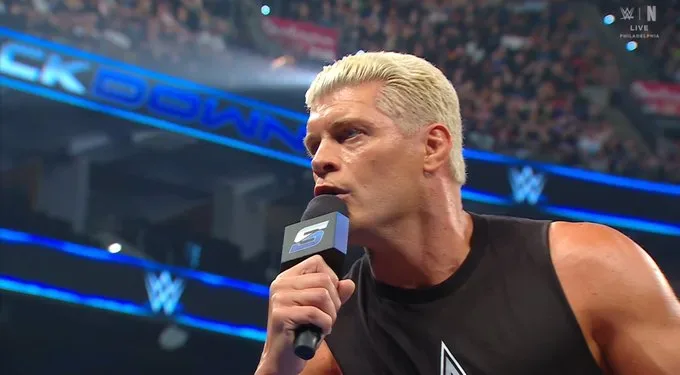
Cody Rhodes says video games remain a regular part of the atmosphere backstage at WWE events, with talent keeping a monitor available for anyone who wants to take part.
Speaking in a new interview with ExtraTV, Rhodes discussed gaming culture within the WWE locker room and explained that the setup is not limited to a select group of players. Instead, he portrayed it as an accessible activity where wrestlers are encouraged to pick up a controller, even when they may be facing opponents with considerably more experience.
“The locker room, actually, the Usos were always really big on Tekken. It’s still played in the locker room to this day. There’s always a little monitor set up. Also, no gatekeeping. You can jump right in, and they want you to jump right in because these guys have gotten really good. Nakayama, who’s responsible for the modern Street Fighter, I also played him in Australia. Dog walked me. So I need to get better at the modern franchise versus the vintage, the OG.”
A Casual Backstage Tradition in WWE
Rhodes’ comments offer a small look at how performers spend downtime around WWE television tapings and live events. The company’s schedule can involve long days of travel, production meetings, preparation and waiting before a match or on-camera segment. Gaming, in that setting, can provide a social outlet while talent waits for the next part of the day to begin.
For more background on this topic, read WWE Stars Set for WhatsApp’s The Chat During NFL Games.
The key point in Rhodes’ description was the openness of the environment. He said there is “always a little monitor set up” and stressed that there is “no gatekeeping” surrounding who gets involved. For a locker room that contains performers from different generations, backgrounds and experience levels, that kind of informal shared activity can make for an easy way to interact outside the demands of WWE programming.
Rhodes specifically pointed to The Usos as longtime Tekken players. Jimmy Uso and Jey Uso have been central figures in WWE for years, both as a team and in their respective singles careers, and Rhodes said their interest in the fighting-game series has remained part of the backstage scene. His wording made clear that Tekken is not merely something associated with an earlier period of their WWE runs; he said it is still being played backstage today.
Fighting games are a natural fit for that kind of environment. Matches are quick, competition is immediate and players can rotate in without needing the extended time commitment of some other genres. For wrestlers accustomed to performing under pressure and competing in front of large audiences, a few rounds of a fighting game can become another form of friendly rivalry.
Rhodes Addresses the Competitive Side of Street Fighter
Rhodes also used the conversation to acknowledge that enthusiasm and skill are not always the same thing. He recalled playing Nakayama in Australia and said he was decisively beaten.
“Dog walked me,” Rhodes said, using a blunt and humorous description of the result.
Rhodes identified Nakayama as someone responsible for the modern Street Fighter franchise. The admission gave the story a self-deprecating edge: even a WWE star who enjoys gaming and is willing to join in can find a significant gap between casual familiarity and facing someone deeply connected to the modern competitive landscape around a major fighting-game property.
He then drew a distinction between his comfort level with older games and the current version of Street Fighter. Rhodes said he needs to improve at “the modern franchise versus the vintage, the OG,” suggesting that his experience is stronger with earlier-era gameplay than with the newer systems and pace of contemporary entries.
That contrast is familiar to many players who grew up with classic arcade and console fighting games. Long-running series can change substantially over time, introducing new mechanics, visual styles, online competition and more technical approaches. Rhodes did not present himself as an expert in the modern game. Instead, he framed the experience as a reminder that he has work to do if he plans to keep up.
Gaming Has a Place in Modern Wrestling Culture
Gaming and professional wrestling have increasingly overlapped in the modern era. Wrestlers have publicly discussed favorite games, appeared in gaming-related content and taken part in streaming and other digital projects. The shared interest has become another way for performers to connect with audiences beyond matches, interviews and social media posts focused solely on wrestling.
Rhodes’ remarks are notable because they focus less on public-facing content and more on the everyday, private locker-room side of that relationship. The gaming monitor he described is not presented as a formal WWE initiative or a promotional feature. It is simply a fixture of the environment he experiences backstage, one that helps create spontaneous competition and conversation among talent.
That matters because WWE’s roster includes performers who may not always share the same brands, opponents or storylines. A casual game can cut through those professional divisions. Someone can be involved in a major championship program, preparing for a tag team match or working elsewhere on the card, but the invitation Rhodes described is the same: jump in and play.
The no-gatekeeping aspect is also important in a competitive workplace. Professional wrestling requires performers to pursue opportunities, prove themselves and stand out in a highly visible industry. Rhodes’ description of the gaming area suggests a different kind of competition, one with lower stakes and room for players of varying levels to participate.
It also aligns with Rhodes’ own presentation in the interview. Rather than claiming to dominate every game backstage, he readily acknowledged losing heavily to a better player. That makes the setup sound less like a showcase for one person’s ability and more like a communal pastime where getting beaten is part of the fun.
The Usos and Tekken Remain Part of the Conversation
Among the names Rhodes mentioned, The Usos stand out because of the longevity attached to his comments. He said they “were always really big on Tekken,” then immediately added that the game continues to be played in the locker room. The statement connects a longstanding personal interest from Jimmy and Jey Uso with an activity that remains present around WWE events.
Tekken has long carried a reputation as a series that can be easy to begin playing while still rewarding players who devote time to mastering its deeper systems. That makes it well suited to an environment with both experienced regulars and people who may only play occasionally. Rhodes’ account suggests WWE talent have developed enough skill that newcomers are likely to face a serious challenge once they decide to join.
Still, Rhodes did not describe the group as exclusive. On the contrary, he said the stronger players want others to participate. That can be part of the appeal of any competitive game: a player who knows the system well often wants a new challenger, even if the first result is one-sided.
Whether the contest is Tekken, Street Fighter or another game, the broader message from Rhodes is that gaming has become a dependable piece of backstage life. It is there for talent who want a break from the pace of an event, an opportunity to socialize or simply a chance to test themselves against a colleague.
Rhodes Looks Toward Improving His Modern Game
For Rhodes, the Street Fighter loss in Australia appears to have added a personal challenge to that routine. His comments did not suggest frustration so much as motivation. He knows where he stands against a highly capable opponent and recognizes that becoming more competitive with modern Street Fighter will require improvement.
That attitude fits the broader tone of his comments about WWE gaming. The monitor is available, the games are competitive and the invitation is open. Talent can step in at any level, whether they are returning to a familiar classic, keeping up with a long-running series or learning the current version of a game from scratch.
Rhodes’ account ultimately paints WWE’s backstage gaming culture as both competitive and inclusive. The Usos’ continued Tekken interest, the active Street Fighter competition and Rhodes’ willingness to laugh at his own loss all point to a locker-room pastime that remains alive alongside the demands of WWE’s event schedule.
For anyone backstage willing to take the challenge, Rhodes says the monitor is already waiting.

Darryl Polo
Darryl Polo is a passionate wrestling fan covering WWE, AEW, TNA and beyond. He loves great rivalries, breakout stars and the moments that keep fans talking long after the bell. How we work.