
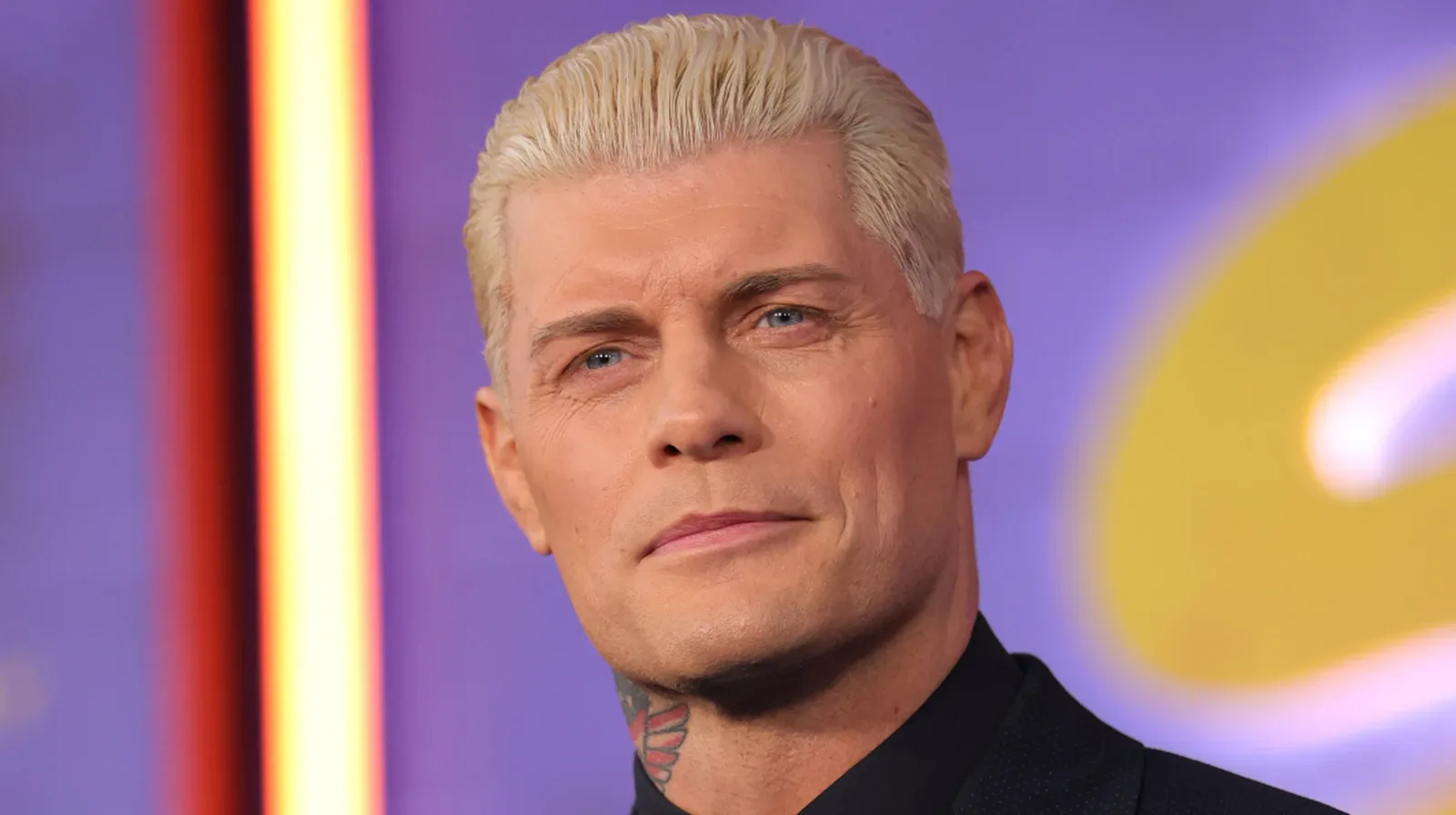
Cody Rhodes believes professional wrestling has arrived at a point where it no longer needs to ask for acceptance from mainstream entertainment. For the WWE star, the presence of three active wrestling names in the upcoming Street Fighter movie — Rhodes, Roman Reigns, and Hirooki Goto — represents a larger milestone for the entire industry.
Rhodes discussed the film and wrestling’s broader cultural standing during a conversation with Denise Salcedo. While the role is an important opportunity for him personally, he framed it as something bigger than an individual achievement. In his view, the casting of wrestlers with distinctly different backgrounds and identities is evidence that performers from the industry are being taken seriously on a wider stage.
“I really think it’s a moment for all of wrestling to be proud,” Rhodes said. “It’s kind of our moment.”
The former WWE Champion has become one of the most recognizable faces in the business during a period of considerable growth for wrestling. WWE has expanded its reach through major media agreements, international events, increasingly prominent crossover appearances, and a roster featuring performers who are known well beyond weekly wrestling programming. Rhodes sees the Street Fighter project as another example of that momentum carrying into entertainment spaces that may once have felt less accessible to wrestlers.
For more background on this topic, read Kayla Becker Says WWE Friendships Have Continued Since Her 2024 Departure.
A three-wrestler cast carries meaning for Rhodes
Rhodes, Reigns, and Goto do not represent one narrow version of what a wrestler can be. Rhodes is one of WWE’s defining modern stars and one of the promotion’s most visible representatives. Reigns has spent years positioned as a centerpiece act in WWE, becoming one of the company’s major crossover attractions. Goto brings a different connection to the global wrestling landscape through his work in Japan.
That range is especially important to Rhodes. Rather than viewing the cast simply as a collection of familiar wrestling names, he sees the group as a reflection of the variety that exists within the industry. The three men come from different places in their careers and carry different public personas, but all are entering the same high-profile film world.
“The fact that you have Roman, you have Goto, and me, and everyone’s vastly different,” Rhodes said, adding that he is excited for what the moment means for wrestling.
The Street Fighter movie gives all three performers an opportunity to work in a property with a long history in gaming and popular culture. Rhodes did not present the project as a guarantee that every wrestler will suddenly become a movie star. Instead, his comments focused on what the casting says about how wrestling talent is now perceived. The door is open wider, he believes, and strong work can lead to more chances.
For performers, that distinction matters. Wrestling has long produced athletes and entertainers with skills that can translate into acting, hosting, voice work, advertising, reality television, and other forms of media. Yet crossover success has not always been assumed. A wrestler had to overcome the old question of whether audiences outside the industry would accept them in a different role.
Rhodes suggested that the question is becoming less limiting than it once was.
Batista provided an example of a changing perception
While discussing the potential for wrestlers in movies, Rhodes looked back at Dave Bautista’s emergence as Drax in Guardians of the Galaxy. Bautista’s performance helped establish him as a significant actor outside his WWE career, and Rhodes recalled the curiosity surrounding how a wrestler would fit into such a major film.
Rhodes remembered the audience response to one of Drax’s early comedic moments and connected that laugh to Bautista’s wrestling identity. For Rhodes, it was not a case of a performer needing to hide where he came from in order to succeed. It was a moment where audiences could recognize the qualities that made Bautista effective in wrestling while embracing him in a completely different setting.
That example remains relevant as wrestling personalities continue to branch out. Crossover roles do not require every performer to follow the same route, and Rhodes, Reigns, and Goto are not expected to have identical acting careers. But Bautista’s success remains a clear illustration that a wrestler can earn major opportunities in film and deliver work that resonates with audiences.
Rhodes said performers “work your whole life” hoping for opportunities such as a role in a major movie. His remarks carried appreciation for receiving that chance, but also pride that the opportunity includes other wrestlers. The key point was collective: visibility for one wrestler can help create visibility for others.
Rhodes calls the current period wrestling’s best
Beyond the movie, Rhodes made an even broader assessment of the industry’s health. “We are in the best place the business has ever been,” he said.
It is a sweeping statement, but Rhodes’ explanation centered on wrestling’s ability to occupy mainstream spaces without appearing out of place. Fans who have followed the business through different eras will remember periods when wrestling’s position in wider popular culture felt less certain. Wrestling could be enormously successful and still be treated as separate from the entertainment world around it.
Rhodes argued that the industry is no longer in that position. In his view, wrestling does not have to fight simply to be included in mainstream conversations. Its stars, executives, programming, and events are already part of those conversations.
“Mainstream wrestling doesn’t have to fight for mainstream anymore,” Rhodes said.
That does not mean wrestling’s identity has changed beyond recognition. The industry remains built around live audiences, athletic performance, character work, rivalries, and the connection between wrestlers and fans. What has changed is the confidence with which it can enter other areas of culture. A wrestler appearing in a major film is no longer automatically treated as an unusual novelty. The expectation is increasingly that the performer may be well prepared for the opportunity.
Rhodes also included fans in his assessment. He pointed to people who are deeply committed to wrestling as well as those who may only watch casually. For longtime followers, broader acceptance can be particularly meaningful because they remember occasions when their fandom was not something easily shared in every social setting.
His argument was not that every person must become a wrestling fan. It was that fans can now take greater pride in an industry that has built enough cultural presence to be visible without apologizing for itself.
WWE leadership and the next wave of opportunities
Rhodes credited WWE President Nick Khan and WWE Chief Content Officer Paul “Triple H” Levesque for helping put WWE in what he described as the right position. Khan has been a key executive presence in WWE’s business operations, while Levesque has taken a leading role in the company’s creative direction and talent development.
“We’ve put ourselves in the right place,” Rhodes said. “I don’t think we’re in the rooms anymore where we feel like we shouldn’t be.”
The wording captures the change Rhodes sees in the company’s status. Rather than treating major entertainment rooms as places where wrestling must seek permission to participate, he believes WWE now belongs there. That confidence extends to the performers who represent the company beyond television and premium live events.
Rhodes expects more wrestlers to receive opportunities in outside projects as time goes on, provided they make the most of their chances. He connected that outlook to a message often expressed by his friend John Cena, whose own career has included a substantial move into film and television.
The lesson is straightforward: opportunities may come, but the performer must do good work once they arrive. In that sense, the path for wrestlers entering Hollywood or other entertainment fields is no different from any other professional challenge. The platform can create the opening; preparation and performance determine what follows.
For Rhodes, Street Fighter is a notable current example of that opening. It brings him together with Reigns and Goto in a project that places wrestling talent inside a recognizable global franchise. Whether it becomes a launching point for further roles will be determined over time, but Rhodes already sees value in what the casting represents today.
His message is ultimately one of optimism for the entire wrestling community. The industry’s biggest stars can now move into prominent entertainment projects while still carrying the credibility and distinctiveness that made them valuable wrestling performers in the first place. Rhodes believes wrestling has earned that place — and he expects the next generation of crossover opportunities to continue proving it.
In pictures

Darryl Polo
Darryl Polo is a passionate wrestling fan covering WWE, AEW, TNA and beyond. He loves great rivalries, breakout stars and the moments that keep fans talking long after the bell. How we work.