
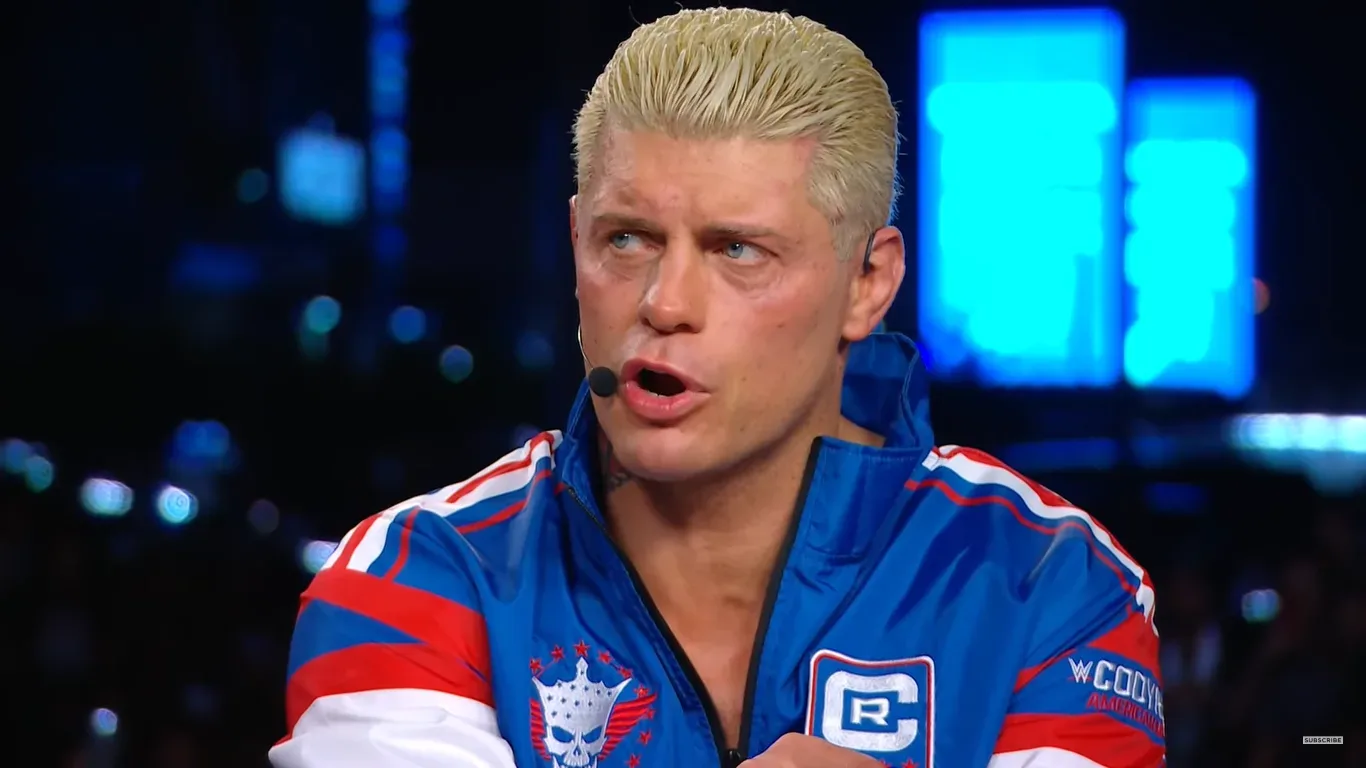
Cody Rhodes has offered high praise for Dominik Mysterio and Solo Sikoa, pointing to a quality that can be difficult to measure from the outside: their connection with the people around them in WWE’s locker room.
Both Mysterio and Sikoa have become highly visible figures on WWE programming in recent years, with their respective on-screen roles placing them regularly in major segments and high-pressure situations. Rhodes’ comments, however, were centered less on what either man does in front of the cameras and more on the way they are present among their peers behind them.
Speaking on Flagrant, Rhodes said he frequently jokes that Mysterio is the locker room leader, and he makes the same joke about Sikoa. But Rhodes made clear that there is sincerity behind the line. In his view, neither performer needs to be issuing instructions or acting as a traditional authority figure to have a meaningful impact within the group.
“I make this joke all the time that Dom is the locker room leader. I make that joke about him and Solo Sikoa all the time, but I make it because they really are. They may not be the guys marching orders and saying, ‘Hey, pick up the locker room’ or ‘Hey, don’t do that’, but Dom and Solo are in the locker room. They’re feeling it. They have a kinship with everyone.”
For more background on this topic, read Chad Gable Says AAA Run Forced Self-Reflection During El Grande Americano Story.
Rhodes describes a different kind of leadership
Leadership in a wrestling locker room can take many forms. Some veterans are known for speaking up, enforcing standards, or offering direct guidance to less experienced talent. Rhodes’ description of Mysterio and Sikoa highlights another version of that role: being accessible, engaged, and in touch with the mood of the room.
His comments do not present either Mysterio or Sikoa as someone who is trying to command the locker room. Instead, Rhodes framed their influence as something more organic. They are there, they are involved, and they share a rapport with the people working alongside them. That sense of kinship, as Rhodes put it, gives the pair a kind of standing that is not dependent on formally being assigned a leadership position.
It is notable praise coming from Rhodes, who has operated in prominent WWE environments and has consistently been positioned among the company’s central stars. His remarks also speak to the value of personal relationships in a business where performers spend extensive time together traveling, preparing for television, working live events, and collaborating across constantly shifting storylines.
For Mysterio and Sikoa, that ability to connect with others may be especially significant because both have spent much of their WWE time in prominent group dynamics on screen. Their television identities have often been defined by alliances, conflict, and faction-based stories. Rhodes’ perspective suggests that, away from those characters, each has developed a broad relationship with the locker room itself.
Dominik Mysterio’s rise continues to draw attention
Mysterio has become one of WWE’s most recognizable younger performers. He entered the company carrying one of the most famous family names in wrestling, but his development has increasingly been defined by his own work as a character and performer. His evolution from a young competitor associated closely with his father, Rey Mysterio, into a polarizing television personality has made him a consistent subject of audience reaction.
That on-screen reception can sometimes obscure the work required to sustain a role at WWE’s highest level. A performer who regularly draws strong emotional responses from crowds must also be able to work effectively with a wide range of opponents, partners, producers, and fellow talent. Rhodes’ comments suggest Mysterio has built the kind of relationships that support that demanding role.
Calling him the “locker room leader” may be a joke Rhodes repeats, but it is a revealing one. The joke works, in Rhodes’ telling, because it reflects something genuine about Mysterio’s place among his colleagues. He may not be delivering orders, but he is engaged enough with those around him that Rhodes views him as someone who understands the room and belongs at the center of it.
Mysterio’s position also reflects the changing makeup of WWE’s roster. Younger talents can become important voices and connective personalities without waiting for decades to pass. Respect is not necessarily limited to the longest-tenured members of the group; it can be earned through consistency, attitude, chemistry, and the ability to be a reliable collaborator.
Solo Sikoa earns similar respect from Rhodes
Rhodes placed Sikoa in the same conversation, underscoring that his praise was not exclusive to Mysterio. Sikoa has been a forceful presence in WWE, with an on-screen presentation built around intensity and physicality. That persona has made him appear imposing and often reserved in front of the audience.
Rhodes’ remarks add a different dimension to the picture. While Sikoa’s television character may not always be defined by lengthy speeches or overt emotional openness, Rhodes said he has a kinship with everyone in the locker room. That distinction is important. The traits that make an effective on-screen character are not always the same traits that determine how a wrestler is viewed by colleagues away from television.
For Sikoa, being described as someone who is “feeling” the locker room points to awareness as much as popularity. Rhodes did not claim that Sikoa is attempting to police the behavior of others or set formal marching orders. Rather, he portrayed him as someone who is connected to the environment and the people in it.
That can matter greatly within a large organization. WWE’s locker room contains performers with different levels of experience, different backgrounds, and different responsibilities on a given show. A person who can maintain genuine relationships across that range can help create a more cohesive atmosphere, even without being the individual who speaks the loudest.
On-screen roles do not tell the entire story
Rhodes’ comments are also a reminder that audience perceptions are often shaped by the roles wrestlers are asked to play. Mysterio and Sikoa have both been associated with confrontational, villainous, or intimidating presentation at various points in their WWE careers. Those portrayals are designed to generate investment from viewers, and they do not necessarily offer an accurate window into how performers interact with one another backstage.
In fact, the contrast can be part of what makes Rhodes’ assessment stand out. Two wrestlers who are frequently portrayed as antagonists can still be valuable presences among their peers. Strong character work, locker-room camaraderie, and professional reliability can coexist. There is no contradiction between being booed or feared on television and being respected by colleagues in a private work setting.
Rhodes did not offer a list of specific backstage examples, nor did he claim Mysterio and Sikoa have been given official leadership duties. His praise remained focused on the broad sense that both men have built authentic connections. The limited but clear point was that their influence comes from participation and shared understanding rather than directives.
A meaningful endorsement for WWE’s future
There is little question that Mysterio and Sikoa remain important names in WWE’s present and future. Their positions on television have given them valuable experience in high-profile stories, while Rhodes’ comments indicate their value may extend beyond what fans see each week.
Being trusted as a performer is one thing. Being regarded as somebody who has a bond with the wider locker room is another. Rhodes believes Mysterio and Sikoa have both achieved that, and he views it as a real form of leadership even if neither man is standing up to deliver instructions.
That endorsement carries weight because it recognizes the human side of the profession. WWE’s biggest stories depend on individual performances, but they are ultimately created by a roster that must work together across television, live events, travel, training, and creative changes. A strong locker-room culture is built by more than official leaders. It is also shaped by performers who make others feel seen, understood, and included.
For Rhodes, Mysterio and Sikoa fit that description. His recurring joke about them being locker room leaders may draw a laugh, but his explanation leaves little doubt that he means it as a compliment. In Rhodes’ eyes, both have earned a place of real connection among their WWE peers.

Darryl Polo
Darryl Polo is a passionate wrestling fan covering WWE, AEW, TNA and beyond. He loves great rivalries, breakout stars and the moments that keep fans talking long after the bell. How we work.