
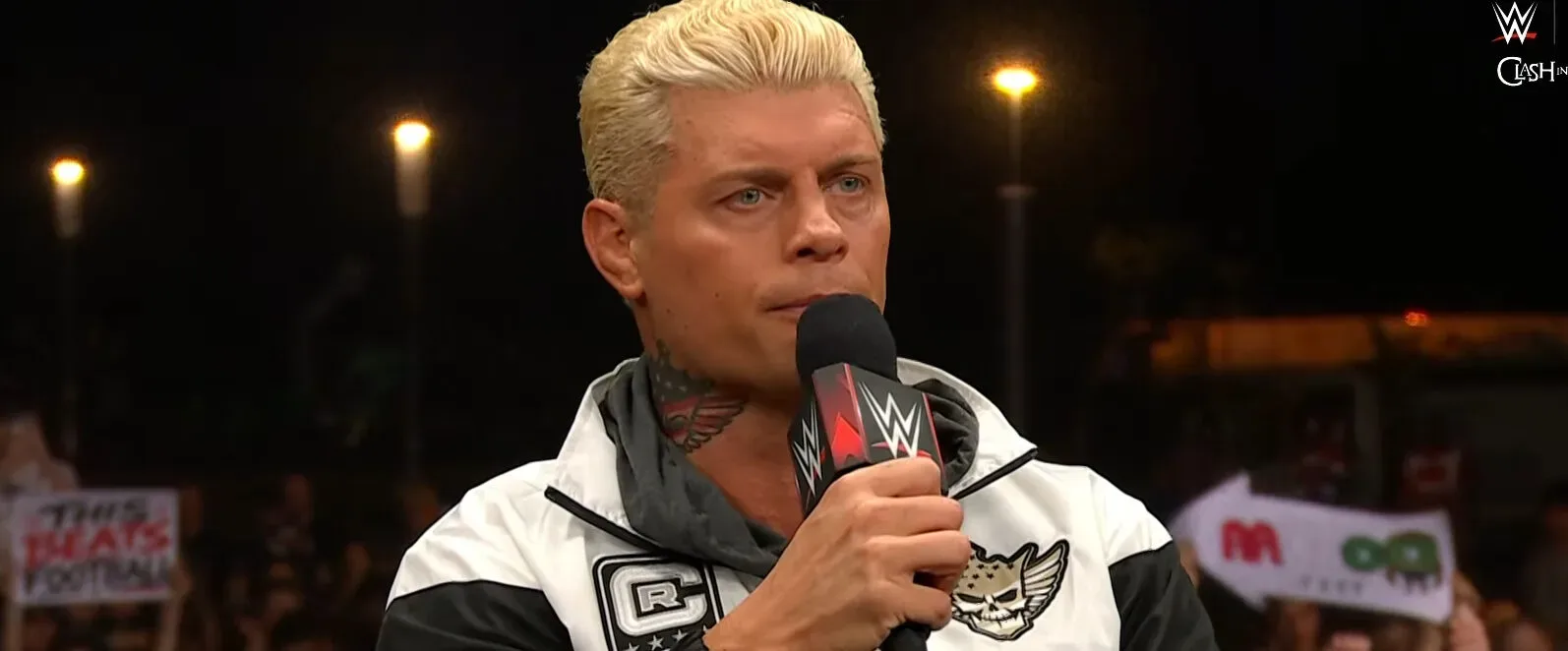
Cody Rhodes sees WWE’s Next In Line program as a modern version of an old wrestling-school philosophy rather than a departure from the business’s roots.
WWE launched its NIL, or Next In Line, initiative in 2021 as a pathway for college athletes to explore professional wrestling opportunities. The program has drawn varied reactions from dedicated fans, particularly those who favor wrestlers with years of independent experience or a conventional wrestling-training background. Rhodes acknowledged that skepticism while explaining why recruiting athletes from other sports has always been part of how wrestling found potential stars.
During an appearance on the Double Coverage Podcast, Rhodes and host Zach Hirsch discussed the legacy of Dusty Rhodes. The conversation touched on historic figures including Ernie “Big Cat” Ladd, Rocky Johnson, and Dusty Rhodes, leading Cody to reflect on Ladd’s move from professional football into wrestling.
For Rhodes, Ladd’s path is representative of an approach that predates the NIL branding by decades. Wrestling promoters have long kept an eye on athletes who possessed size, physical ability, presence, and competitive backgrounds, even if they had never seriously considered stepping into a ring.
For more background on this topic, read Maria Kanellis Revisits WWE Raw Match With Umaga and the Bump She Barely Felt.
Rhodes Sees a Familiar Recruiting Formula
Rhodes said hardcore wrestling fans do not always embrace the NIL system, but he argued that the model closely resembles the way talent was spotted in previous eras. In his view, the difference is largely one of presentation and infrastructure. WWE now has a formalized program connected to college athletics, while earlier promoters and bookers may have found prospects through chance meetings, scouting, or personal connections.
“Today, hardcore wrestling fans don’t always love the NIL system, and I don’t think they realize, or maybe they do. That’s how we used to do it,” Rhodes said.
He described the type of thinking that historically guided wrestling scouts: seeing a standout baseball player or another athlete and recognizing that the person’s appearance, confidence, and physical gifts could translate to the ring. Rhodes also referenced the kind of spontaneous recruitment associated with the territorial era, when a promoter such as Bill Watts could notice a football player and suggest that he give professional wrestling a try.
That is central to Rhodes’ argument. WWE’s NIL effort is not intended to replace the passion-driven wrestlers who devote themselves to the industry from the beginning. Instead, it creates an additional route for competitors from other sports who might otherwise never discover that wrestling is the right fit for them.
The Wrestlers Who Would Find Their Way Regardless
Rhodes drew a distinction between athletes who need wrestling to be placed in front of them and lifelong fans whose determination naturally pushes them toward the profession. He used Johnny Gargano as an example of the latter kind of performer.
“The reason they were looking for the athlete is because the wrestler’s always going to find wrestling,” Rhodes said. “The hardcore wrestler, the types that love it and it’s true to them, they’re going to find it.”
Rhodes said Gargano was always likely to reach WWE because of the effort and commitment he would bring to pursuing the highest level available. Gargano’s career path included extensive time building his reputation before becoming one of the defining names of WWE’s modern developmental era and later working on WWE’s main roster.
The broader point was not that one route is better than another. Rhodes instead framed the two routes as complementary. Wrestling still benefits from people who grew up studying the product, learning its history, and working relentlessly toward a place in the industry. At the same time, it can benefit from athletes whose first major sporting ambition was football, track and field, basketball, or another discipline.
Those athletes can arrive with tools that are difficult to teach from scratch. Strength, explosiveness, coordination, body control, a competitive mindset, and comfort performing under pressure can all be valuable in a WWE environment. None of those qualities automatically make someone a successful wrestler, but they can give a recruit a strong foundation once the learning process begins.
Oba Femi Represents the Opportunity NIL Can Create
Rhodes pointed to Oba Femi when discussing what can happen when a high-level athlete is introduced to wrestling and begins to connect with the craft. Femi came to WWE through the NIL system after competing in track and field at the University of Alabama, where he was known for his shot put accomplishments.
Rhodes was careful not to claim complete insight into Femi’s personal experience, noting that he watches from a distance. Still, he said he believes Femi is becoming increasingly invested in professional wrestling.
“I think Oba, I don’t know, I just kind of keep a distance, watch him. I think he’s falling in love with it,” Rhodes said.
That possibility is precisely what makes the NIL strategy appealing to Rhodes. A college athlete can enter WWE with a background that has little obvious connection to wrestling, then develop a genuine passion for the sport after being exposed to its demands and creative opportunities. The process is not simply about identifying someone who looks like a potential star. It is about finding out whether that prospect can develop the discipline, instincts, charisma, and personal investment required for a wrestling career.
Femi is one of the more visible names associated with the program, while Tiffany Stratton is another WWE performer who entered through NIL. Their emergence has helped make the initiative a significant component of WWE’s larger talent-development picture.
A Debate About Development, Not Just Recruitment
Discussion around NIL often reflects a larger debate over what fans value in emerging talent. Some viewers place particular importance on in-ring seasoning and the experience gained through smaller promotions, where wrestlers often work frequent matches in front of varied crowds. Others are intrigued by the upside of athletes who are new to wrestling but possess unusual physical traits and high-level sports backgrounds.
Both perspectives reflect real parts of wrestling’s history. The industry has produced major names through traditional training routes, family connections, amateur wrestling, independent circuits, and recruitment from mainstream sports. Its most successful performers have not come from a single template.
Rhodes’ comments place the NIL system within that long history. In his telling, the program is less about overlooking people who have dedicated their lives to wrestling and more about widening the pool from which WWE can find future talent. The wrestlers who are determined to make it, he believes, will continue to seek out opportunities. NIL gives WWE another way to reach people who could have the potential but may never have looked toward wrestling on their own.
That approach also aligns with the unique demands of WWE’s developmental system. A recruit is not only learning matches and ring mechanics. They are adjusting to live performance, television production, character work, interviews, travel, training schedules, and the physical demands of a full-time wrestling career. Athletic experience may help with some of those transitions, but it cannot remove the need for patience and development.
Rhodes’ observation about athletes “falling in love” with wrestling is therefore important. The initial recruitment can open a door, but long-term success depends on whether the person embraces the work after walking through it.
Wrestling’s Talent Pipeline Continues to Evolve
WWE’s NIL system represents one route in a talent pipeline that remains diverse. Independent wrestling continues to produce polished performers with deep experience. Amateur and collegiate backgrounds continue to be attractive. Families with wrestling ties remain influential. International talent remains an important part of the business. NIL adds another lane, focused on identifying college athletes with the potential to transition into sports entertainment.
Rhodes does not dismiss the concerns of fans who prefer a more traditional developmental path. His comments instead challenge the idea that scouting athletes from outside wrestling is somehow new or contrary to wrestling tradition. The historical examples he raised suggest the opposite: promoters have always searched for the next compelling athlete who might thrive in the ring.
For WWE, the central question is not whether every NIL recruit will become a star. That has never been the standard for any form of talent scouting. The question is whether a system can consistently identify people with the capacity to develop into meaningful performers. With talents such as Oba Femi and Tiffany Stratton having entered through the initiative, the program has already provided visible evidence of why WWE continues to invest in that search.
Rhodes’ perspective ultimately comes back to opportunity. The diehard wrestling fan with an unshakable dream will pursue wrestling with or without a formal invitation. But a standout athlete from another sport may need somebody to recognize the possibility first. WWE’s NIL program is designed to make that introduction—and, as Rhodes sees it, that is a tradition as old as wrestling itself.

Darryl Polo
Darryl Polo is a passionate wrestling fan covering WWE, AEW, TNA and beyond. He loves great rivalries, breakout stars and the moments that keep fans talking long after the bell. How we work.