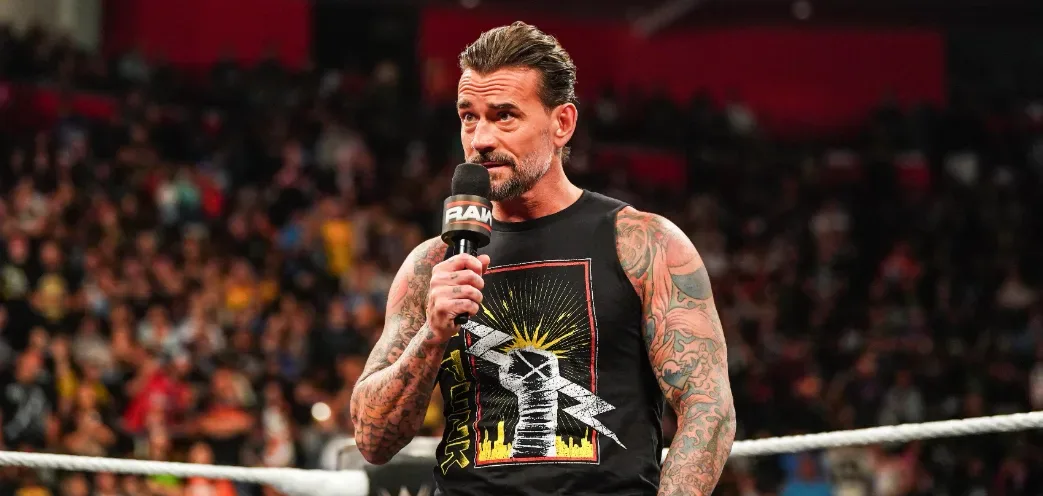
CM Punk has never hidden the fact that he is a fan first when it comes to the things that matter to him. Whether the subject is professional wrestling, comic books, horror movies, or a long-running franchise with a devoted audience, Punk understands the emotional investment that comes with caring deeply about a property. That investment, he believes, can produce equal parts excitement, frustration, criticism, and loyalty.
During a recent appearance on Hot Ones: Extra Heat, Punk was asked whether he had any ideas for a potential reboot of the Friday the 13th film series. The question brought out his enthusiasm for the horror franchise, but it also led him to compare the experience of being a horror fan with being part of the wrestling audience.
“Yeah. I mean, give me a pen, a paper, and a budget and I’m your huckleberry,” Punk said. “That’s one of those — because I’m such a fan, I’m constantly — this makes me relate with the wrestling fan, right? The wrestling fans who’s like, ‘Ah, this stinks’ and they just, you know, like nobody hates wrestling more than wrestling fans. Nobody loves wrestling more than wrestling fans.”
It is a blunt observation, but one that captures a familiar part of wrestling culture. Fans can be fiercely protective of promotions, performers, storylines, championships, and eras of the business. That level of passion can lead to loud disapproval when a creative decision does not meet expectations. It can also lead to the same fans celebrating the product with a level of enthusiasm that few other forms of entertainment inspire.
For more background on this topic, read Aalyah Mysterio, The Dropouts and More Join New WWE Performance Center Recruiting Class.
Punk did not frame that contradiction as something he stands apart from. Instead, he placed himself directly within it. His point was that a fan’s disappointment often comes from caring about a property and believing in what it can be, rather than from simple indifference.
“So, I am one of them and I get it when it comes to the properties that I really like,” Punk continued. “I’m cautiously optimistic, we should be getting a new Friday The 13th movie like once a year, every two years. It’s been a drought, it’s time to end the drought.”
Punk’s Fandom Remains Part of His WWE Presentation
The remarks fit naturally with the version of Punk that WWE audiences have seen in recent years. He has long been open about the pop-culture interests that inform his personality, and horror has been a particularly visible part of that identity. On the August 22 episode of SmackDown, Punk made his entrance wearing a mask inspired by Jason Voorhees, the iconic killer associated with the Friday the 13th series.
That entrance gave Punk an opportunity to bring one of his favorite horror images into a WWE setting without needing to explain the reference at length. For viewers who recognized the inspiration, the mask was an immediate visual nod to a genre staple. For everyone else, it still added a striking and memorable element to his entrance.
Wrestling and horror have often shared an audience because both thrive on heightened personalities, visual symbolism, suspense, and moments designed to create a strong reaction. A wrestler’s gear, entrance music, lighting, and body language can establish a character in seconds, much like the imagery attached to a famous movie villain. Punk’s Jason-inspired mask was an example of that overlap: a recognizable horror influence adapted into the theatrical language of a wrestling entrance.
For Punk, however, the connection is not limited to aesthetics. His comments show that he relates to the emotional experience of fandom itself. He knows what it is like to wait for a beloved series to return, to question whether a new installment will understand what made the original special, and to approach future plans with both hope and skepticism.
“Cautiously Optimistic” About Friday the 13th
Punk’s desire for more Friday the 13th films was clear. He argued that the franchise should be producing a new movie regularly, suggesting a schedule of once every year or every two years. Rather than discussing a particular production detail or offering a specific pitch, Punk emphasized his broader feeling that the series has been absent for too long.
His use of the phrase “cautiously optimistic” is notable because it reflects the mindset he had just described in relation to wrestling fans. Passionate audiences want to see the properties they love succeed, but history can make them wary. The more meaningful a franchise becomes to someone, the more difficult it can be to simply accept any new installment without questions.
That does not mean enthusiasm disappears. In many cases, it means the exact opposite. Fans who complain about a direction, a missed opportunity, or a creative choice are often paying close attention because they want the best possible version of the thing they enjoy. Punk’s observation about wrestling is that its audience contains both extremes at once. The same community can be highly critical on one night and completely electrified the next.
That dynamic is especially visible in professional wrestling because the medium unfolds in real time. Fans react immediately to matches, promos, turns, finishes, and appearances. Every week presents new material to analyze, debate, praise, or reject. Wrestling’s serialized nature gives its audience a continuous relationship with the product, and that relationship can become highly personal.
Punk’s comments do not suggest that all criticism is identical or that every negative reaction is automatically rooted in affection. Instead, his point is more fundamental: wrestling fandom is intense because wrestling matters intensely to the people who follow it. The emotional highs and lows are connected.
A Veteran’s Perspective on Wrestling’s Most Vocal Audience
As someone who has spent years performing at the highest level of the industry, Punk has experienced that passion from multiple angles. He has been cheered, booed, celebrated, scrutinized, and discussed by fans throughout different stages of his career. That makes his comparison particularly fitting. He is not simply talking about audiences in the abstract; he is acknowledging a form of devotion he recognizes in himself.
The quote also lands because Punk did not present fans as a problem to solve. He described their tendency to criticize and their capacity to love wrestling as inseparable. In effect, the intensity is the point. A quieter, less demanding audience might be easier to please, but it would not necessarily create the kind of atmosphere that has long made wrestling distinctive.
There is a similar tension in any fandom built around a legacy property. Longtime followers carry memories of what came before. They have favorite characters, favorite moments, and their own view of what the property should be. A new chapter may invite excitement precisely because it promises something fresh, while also prompting concern because it has to live up to those expectations.
Punk sees that same process in his interest in Friday the 13th. He would welcome the opportunity to develop an idea for the franchise if given the necessary tools, but he also speaks as someone who knows that fans will have strong opinions about any attempt to revive something they value.
The Passion Behind the Reaction
Ultimately, Punk’s comments offer a concise explanation for why wrestling debates can become so animated. The audience is not passive. Fans invest time, money, energy, and emotion into following the performers and stories they care about. When a show delivers, that investment can produce an enormous reaction. When it falls short in their eyes, the response can be just as forceful.
That duality has always been part of wrestling. It is a form of entertainment that invites viewers to pick sides, argue over outcomes, anticipate surprises, and build attachments to stars over years or even decades. Punk’s phrase that nobody hates wrestling more than wrestling fans is likely to resonate because it is not a dismissal of those reactions. It is an acknowledgment of where they come from.
Just as Punk is waiting for the next chapter of a horror franchise he loves, wrestling fans are constantly waiting for the next match, the next promo, the next return, or the next moment that reminds them why they became fans in the first place. The criticism may be loud, but so is the appreciation. For Punk, those are not competing realities. They are two sides of the same fandom.
Darryl Polo
Darryl Polo is a passionate wrestling fan covering WWE, AEW, TNA and beyond. He loves great rivalries, breakout stars and the moments that keep fans talking long after the bell. How we work.