
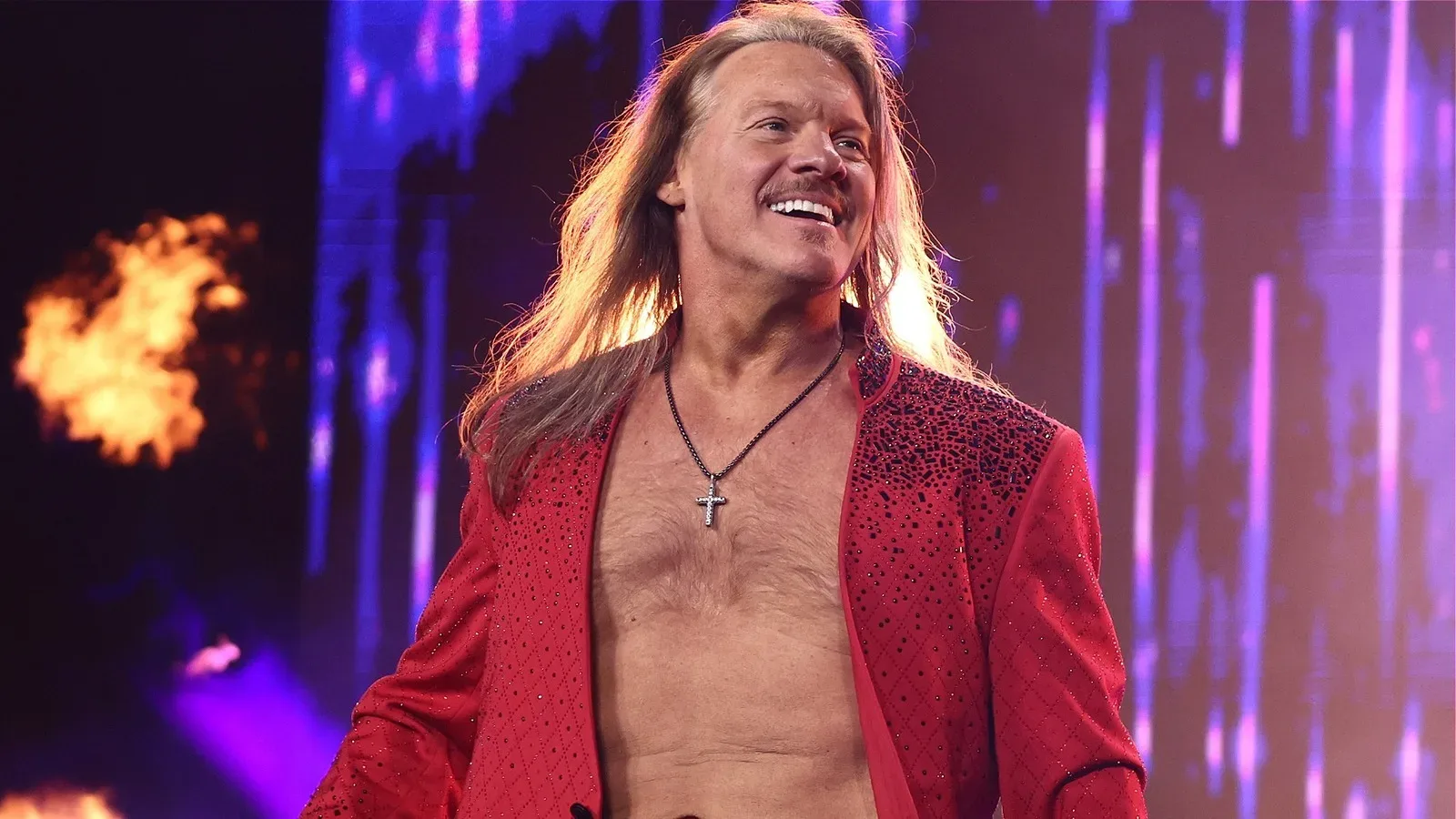
Chris Jericho’s AEW career has been defined by reinvention, but it has also been marked by one recurring role: leader. From The Inner Circle to the Jericho Appreciation Society and The Learning Tree, Jericho has repeatedly placed himself at the center of groups designed to shape stories around multiple performers at once.
Jericho has now explained that those alliances were not simply another layer of his changing on-screen persona. In his view, they were necessary tools for establishing fellow talent during important stages of AEW’s growth. Speaking on TMZ’s Inside The Ring, Jericho said the desire to find fresh creative ground has always driven his decisions.
“I always want new things to do and [to] create new moments,” Jericho said.
That outlook has been visible throughout his long career. Jericho has frequently changed presentation, alignment, terminology and supporting casts rather than remaining attached to one version of himself for too long. In AEW, however, the faction format became an especially prominent vehicle for those changes. It also gave him a way to share television time and story importance with wrestlers who could benefit from being closely associated with a major name.
For more background on this topic, read Chris Jericho Reflects On Calling Jon Moxley And PAC During AEW’s Formation.
Jericho noted that he had not been a faction leader during his WWE run in the same way he has been in AEW. Once AEW launched, he saw a specific need for that approach. The company had a roster with numerous performers who were still establishing their identities with a broad wrestling audience, and a group led by Jericho could immediately provide visibility and direction.
The Inner Circle and AEW’s Early Need for Recognizable Groups
The Inner Circle became the first major example of that strategy. The group brought together Jericho, Santana, Ortiz, Sammy Guevara and Jake Hager, creating a clear unit around one of the promotion’s most recognizable stars. Jericho explained that the team’s formation came from necessity as AEW was getting underway and many roster members were not yet household names to the audience.
For Jericho, the appeal was not merely putting allies around himself. It was about making the audience familiar with the people standing beside him. Santana and Ortiz were introduced to many viewers through their association with The Inner Circle, while Guevara was positioned as a young talent with a prominent role in the act. Hager, already a familiar face, added another known presence to the lineup.
“Okay, now we have a group of guys we can start building along with,” Jericho said on TMZ’s Inside The Ring.
The point is important because AEW’s earliest years required several acts to become established simultaneously. Jericho was one of the company’s marquee figures from its launch period, and his stable offered a reliable framework for stories, promos, matches and conflicts. A faction can make its members immediately easier to identify: they have a shared name, visual presence, stated mission and repeated screen time together. At the same time, individual personalities can emerge inside that structure.
Jericho’s explanation frames The Inner Circle as a group that served the promotion’s wider development rather than only his own character. As the roster grew and more talent became recognizable in their own right, the need for one act to carry so much introductory work changed. AEW developed a deeper upper-card presence, with more wrestlers able to hold major programs and attract audience attention alongside Jericho.
From the Jericho Appreciation Society to The Learning Tree
Jericho said the same broader philosophy continued with the Jericho Appreciation Society. While each of his factions had its own tone and identity, he described the underlying objective in similar terms: create a platform that allows wrestlers around him to become more visible and more valuable as individual acts.
The Jericho Appreciation Society was built around a version of Jericho who embraced being labeled a sports entertainer. That character direction distinguished the stable from The Inner Circle, while the group format again put several performers in recurring, high-profile situations. Jericho’s comments suggest that the changing names and concepts were not random resets. They were ways of keeping the presentation different while continuing to elevate others through association and opportunity.
He placed The Learning Tree in that same lineage. Jericho specifically said the group was constructed to help Big Cass become a larger name within AEW. The stable’s presentation leaned into Jericho’s self-appointed role as a teacher and mentor, using that idea as the foundation for the act’s identity.
“The goal was always to give guys a bigger platform so that they could become stars on their own,” Jericho said.
That statement provides a straightforward explanation for the repeated faction changes. Jericho’s role has not been limited to appearing as the established veteran at the front of a group. He has viewed the groups as mechanisms for helping performers gain credibility, exposure and a clearer place in the company’s landscape. Whether every audience member responds to each iteration in the same way is separate from the creative rationale Jericho laid out: each stable was meant to create opportunities beyond its leader.
It also helps explain why Jericho has been willing to abandon previous group identities instead of preserving them indefinitely. Once the people involved have developed further or the broader roster has shifted, another format can offer a new purpose. For a performer who says he is always looking to create new moments, the faction structure has been adaptable enough to accommodate multiple eras without requiring the same exact act to continue unchanged.
Why Jericho Is Going Solo Again
Jericho’s return to AEW in April brought a different conclusion. This time, he said he did not feel a stable was needed. Rather than launching another collection of protégés, allies or students, he chose to focus on himself under a simpler presentation: “Jericho.”
He described the current direction as a “self-titled era,” comparing it to artists releasing albums that are identified simply by the artist’s name or a famously spare title. Jericho referenced Metallica’s Black Album and The Beatles’ White Album while explaining the idea behind reducing the presentation to his own name.
“It was the self-titled era of Chris Jericho, hence ‘Jericho.’ I could have had another bunch of nicknames, you know?” Jericho said on TMZ’s Inside The Ring.
For Jericho, that simplicity is not a lack of character. It is an acknowledgment that the name itself carries the weight of a career that has now reached 35 years. He suggested there is not a dramatic distinction among many of the labels that have accompanied his recent reinventions. “Jericho,” in his view, is already enough to evoke the body of work and memories associated with his career.
The approach stands in contrast to the faction-driven periods that preceded it. Instead of using his television role to introduce a new group, Jericho indicated that his priority is to work with as many AEW names as possible. That could allow him to move between different opponents and programs without a permanent stable shaping every direction around him.
A Veteran’s Role in an Expanding Roster
Jericho’s comments paint a picture of how he sees his place in AEW at this stage. Earlier factions were, by his account, created when the company needed help making unfamiliar talent feel important. Now that AEW has a more developed upper card and a larger pool of established names, his role can be less dependent on a standing group.
That does not mean the central idea behind his past stables has disappeared. Jericho remains focused on working across the roster, and his own explanation makes clear that helping others gain a bigger platform has been a consistent consideration in his AEW creative choices. The difference is that he believes he can do that work without another branded faction built around him.
Jericho’s solo run is therefore not presented as a rejection of the groups that came before it. It is the next change in a career built on periodic transformation. The Inner Circle, Jericho Appreciation Society and The Learning Tree each served different on-screen purposes, but Jericho sees all of them as connected by an effort to create stars and memorable moments. For the current chapter, he believes the most fitting identity is the most direct one: Jericho.
In pictures

Darryl Polo
Darryl Polo is a passionate wrestling fan covering WWE, AEW, TNA and beyond. He loves great rivalries, breakout stars and the moments that keep fans talking long after the bell. How we work.