
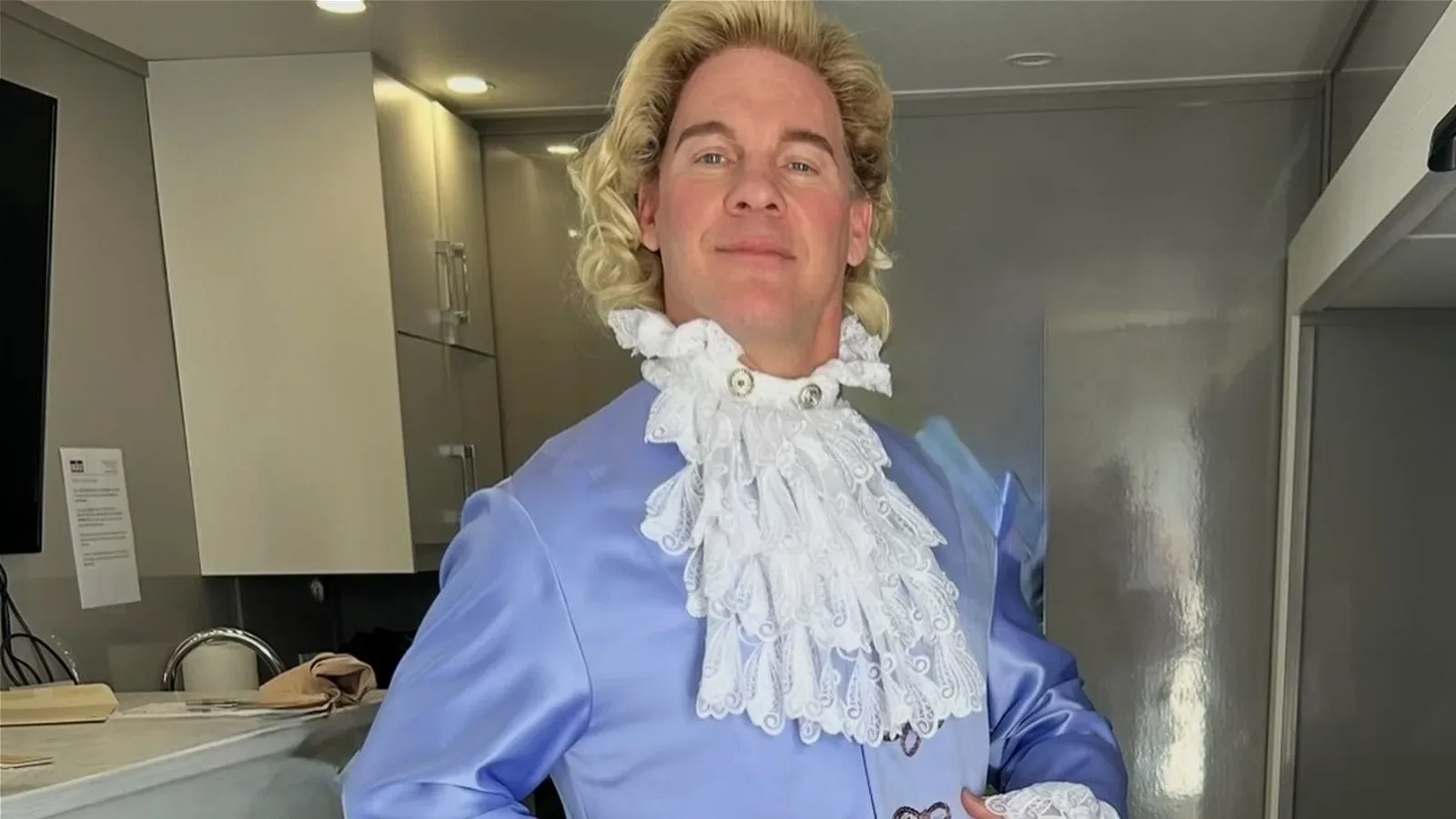
Chris Jericho is bringing one of professional wrestling’s most important early showmen to the screen.
The AEW star has been cast as Gorgeous George, the legendary wrestler born George Wagner, in Amazon Prime’s upcoming Muhammad Ali limited series, The Greatest. The project will touch on the formative influence Gorgeous George had on Ali when the future boxing icon was still known as Cassius Clay, connecting two larger-than-life figures whose approaches to presentation changed the way combat-sports audiences viewed their stars.
Jericho discussed the role during an interview with Christopher Smith, explaining that the production had been looking to fill the part for some time before his audition. For a performer whose own wrestling career has been built on reinvention, confidence, verbal charisma, and a strong command of audience reaction, portraying Gorgeous George represents a natural but still demanding opportunity.
The casting is especially notable because Gorgeous George’s importance goes far beyond a single historical cameo. Wagner became a major attraction in the 1940s and 1950s through an extravagant persona that made him one of the first national stars in professional wrestling. His elaborate entrance style, deliberate self-promotion, and willingness to make audiences react strongly to him helped establish a blueprint that generations of wrestlers would later adapt in their own ways.
For more background on this topic, read GCW Massacre in Missoula Results: Manders, Alec Price and Cheeseburger Score Wins.
A Wrestler Who Helped Redefine Star Power
Gorgeous George was not presented as an ordinary athlete. The character was built around glamour, arrogance, and an unmistakable sense that every appearance was meant to be an event. That approach was vital in an era when wrestling was expanding its reach and learning how powerful personality could be in drawing attention.
His legacy has long been tied to the broader idea that a combat-sports star can become more compelling by giving the public an emotional reason to watch. A fan did not have to admire Gorgeous George to be invested in seeing him. The character’s ability to create fascination, irritation, and anticipation made him a landmark figure in wrestling history.
That is the central connection to Ali explored in The Greatest. Ali was already a gifted boxer as Cassius Clay, but the series will acknowledge how the encounter with Gorgeous George helped demonstrate the value of a bold public identity. The wrestler’s influence was not about boxing technique. It was about understanding the power of performance, promotion, and saying something memorable enough that people would feel compelled to pay attention.
Jericho described the story of Ali meeting Gorgeous George in Las Vegas and receiving guidance that would help shape the persona he carried through the rest of his career. Ali would go on to become one of the most recognizable, outspoken, and influential athletes in history. The series’ inclusion of Wagner underlines that the road to that unmistakable identity included a meaningful wrestling connection.
Jericho’s Approach to the Part
Jericho did not approach the role simply as a chance to appear in a major limited series as a fellow professional wrestler. He indicated that his priority was to portray Wagner truthfully and capture the specific qualities that made Gorgeous George distinct.
To prepare, Jericho looked to an older movie featuring Wagner and studied the wrestler’s personality and cadence. That preparation matters because Gorgeous George was not merely a collection of flashy traits. His speaking style and the rhythm of his presentation were essential parts of the act. Recreating that requires more than dressing the part or delivering broad theatrical mannerisms.
Jericho’s comments also suggest he understands the difference between playing a historical wrestler and borrowing from the historical wrestler’s playbook. His own career has included a wide range of personas, from rock-star swagger to calculated villainy, alongside an ability to adjust his delivery for different audiences and periods. Still, the task in The Greatest is not to present a version of Chris Jericho inspired by Gorgeous George. It is to represent Wagner in a story centered on Ali’s development.
That distinction could be important to viewers who know Gorgeous George primarily through his towering reputation. Wrestling history is filled with pioneers whose names are frequently invoked but whose actual performances are less familiar to modern fans. A screen portrayal can introduce Wagner to an audience that may recognize Ali instantly but may not yet understand why an old-school wrestling character belongs in an Ali drama.
Jericho’s role has the potential to give that audience a concise explanation through performance. It can show why Gorgeous George stood out, why he was influential, and why someone as naturally gifted as the young Cassius Clay could see value in the wrestler’s ability to command a room.
The Shared Language of Wrestling and Boxing Promotion
The connection between Gorgeous George and Ali also speaks to the overlap between wrestling and boxing as forms of public entertainment. The sports are different in their competitive structure, but their biggest stars have often understood the same fundamental reality: talent becomes even more powerful when paired with a character people cannot ignore.
Gorgeous George recognized the value of becoming larger than the contest itself. His presentation encouraged crowds to react before the action began, transforming the walk to the ring and the personality around the match into major attractions. Ali would become celebrated for using a similarly magnetic sense of self-promotion, turning interviews and pre-fight declarations into moments that were every bit as memorable as the competition.
Jericho emphasized his understanding of the advice Gorgeous George offered Clay about connecting with an audience and becoming a larger-than-life figure. It is an idea that remains central to professional wrestling. In-ring ability is crucial, but the performers who leave the longest-lasting impressions are often those who communicate a clear identity and make supporters or detractors feel something immediately.
That is also why the role fits Jericho’s body of work. Across decades in the industry, he has remained relevant through changes in style, television presentation, and audience expectation. He has played heroes and villains, led groups, reinvented his look and voice, and used timing and characterization to keep his work recognizable. Those experiences do not automatically make an actor right for a historical role, but they do provide a useful foundation for understanding the craft Gorgeous George helped popularize.
A Significant Wrestling Presence in an Ali Story
The Greatest is fundamentally an Ali project, and Gorgeous George’s appearance will serve that larger narrative. Even so, the decision to include the wrestler is a meaningful recognition of professional wrestling’s place in the cultural story surrounding Ali’s rise.
For wrestling fans, it is an opportunity to see one of the industry’s foundational personalities represented in a high-profile drama. For viewers who come to the series because of Ali, it may offer a new perspective on how a wrestling star’s instincts for spectacle and audience engagement could help inspire one of sport’s most celebrated icons.
Jericho’s casting also continues a familiar pattern in modern wrestling, where performers’ skills extend beyond the ring. Wrestlers regularly operate in an environment that requires them to perform live, speak with conviction, adapt in front of large crowds, and maintain a character under pressure. Those abilities do not erase the unique challenges of acting for a scripted series, but they can translate effectively when a role calls for presence, precision, and an understanding of theatrical self-presentation.
In this case, the material carries additional weight because it is rooted in a real person whose contributions are widely felt even decades after his death. Wagner’s influence can be traced through the confidence, flash, and promotional boldness that became familiar parts of wrestling’s biggest acts. His brief place in Ali’s story further illustrates how those ideas crossed into another sport and helped shape a global figure.
Jericho will now be tasked with making that history feel immediate. His performance as Gorgeous George will not simply revisit a famous character from wrestling’s past; it will help explain why that character mattered at a pivotal moment in the development of Cassius Clay into Muhammad Ali.
For AEW’s Jericho, the role offers a chance to honor a pioneer while helping introduce Gorgeous George’s legacy to a much wider audience. For wrestling history, it is another reminder that some of the medium’s most enduring innovations began with performers who understood that being seen was only the first step. The real goal was to be impossible to forget.
In pictures

Darryl Polo
Darryl Polo is a passionate wrestling fan covering WWE, AEW, TNA and beyond. He loves great rivalries, breakout stars and the moments that keep fans talking long after the bell. How we work.