
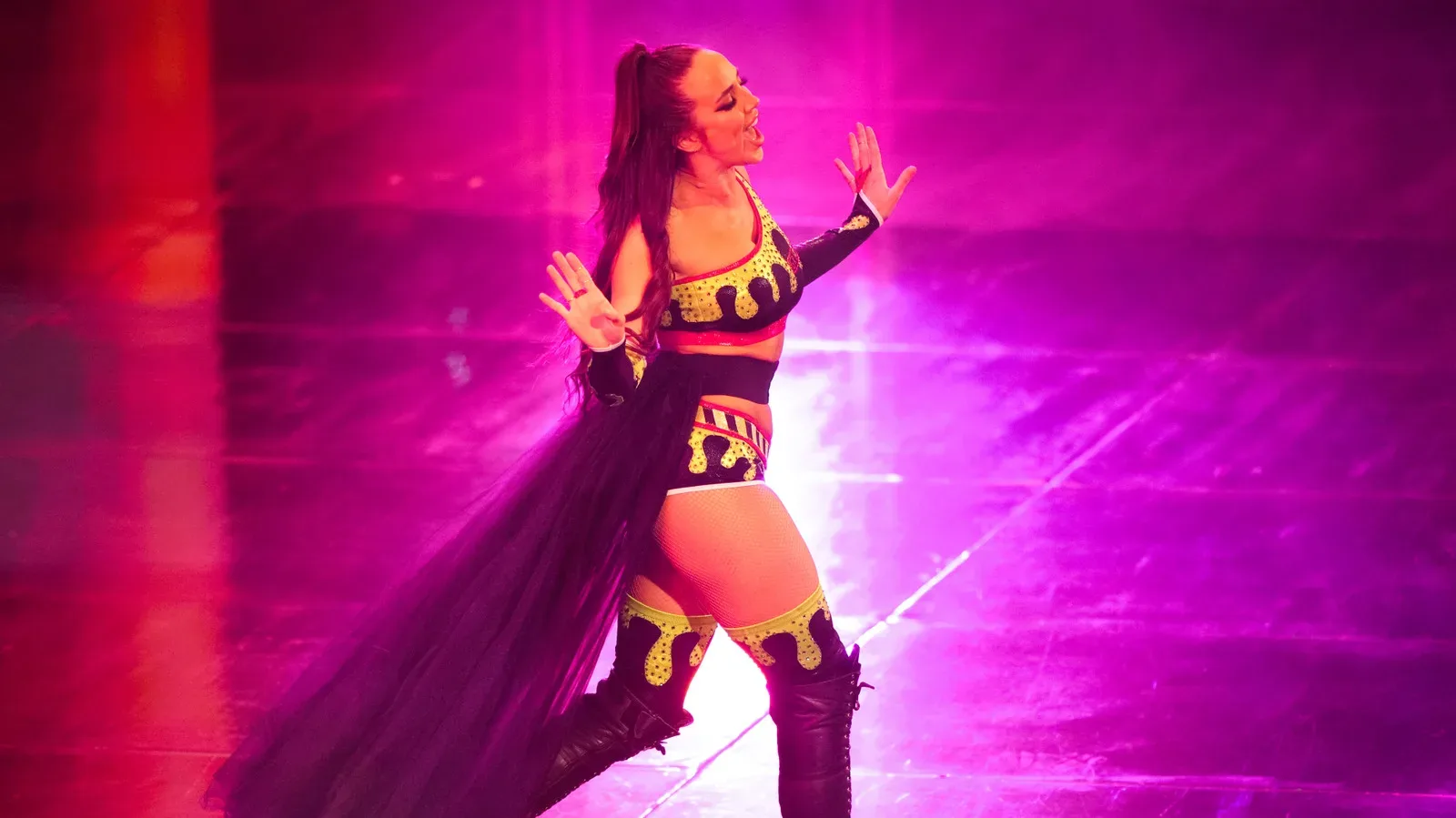
Chelsea Green has enjoyed a major run of momentum in WWE, but the new champion believes the work that resonates most with an audience is rooted in a simple principle: it has to feel real.
Green captured the WWE Interim Women’s Championship at SummerSlam and has continued appearing despite suffering a broken orbital bone just days after that victory. One week after the injury, Green took part in a widely praised in-ring promo segment with SmackDown General Manager Nick Aldis on the August 16 edition of SmackDown. Speaking on Insight with Chris Van Vliet, Green reflected on why she felt that exchange connected so effectively.
For Green, the answer was not merely having dialogue prepared. It was approaching the material with emotional specificity and resisting the familiar delivery style that can make wrestling promos sound overly rehearsed.
“If I have to hear another promo where the cadence is so wrestling-y... it gives me the ick,” Green said.
For more background on this topic, read Nic Nemeth Says Bron Breakker vs. Oba Femi Booking at SNME Had a ‘Vince McMahon Match’ Feel.
That criticism is not a rejection of promos themselves, nor of the heightened personalities that have always been central to professional wrestling. Green’s point is instead about presentation. A wrestler can have a clear character, a carefully constructed story and scripted words, but the audience must still believe there is genuine feeling behind what is being said.
The distinction matters especially for a performer such as Green, whose WWE persona often operates with a sharp, theatrical edge. Her character work can be broad, animated and intentionally dramatic, yet Green indicated that the most successful version of that performance still needs an emotional foundation. Even when a segment is designed to entertain through exaggerated reactions, the wrestler must know what the character wants, why the character is upset and how each line serves that moment.
Green’s approach to making promos feel authentic
Green said that the industry has improved in this area as performers continue to develop their acting skills and look for more truthful ways to communicate on television. In her view, authenticity requires preparation that goes beyond remembering the assigned words.
“I cringe all the time,” Green said. “Like, it’s getting better and better because we’re leveling up. We’re taking acting classes, we’re realizing that it needs to be real, it needs to be authentic, and if it’s not, you have to dive deep like you would in acting.”
Her description frames a wrestling promo much like a scene in a scripted television drama. The dialogue may be planned, but the performer still has to build the circumstances around it. Green said that means creating a backstory and finding something emotionally relatable enough to allow for recall when it is time to deliver the segment in front of a live crowd and television cameras.
“Come up with a backstory, create something that’s real so that you can do an emotional recall, you know what I mean?” Green said. “And that’s what I was doing.”
The August 16 segment with Aldis provided a notable example of that philosophy in action. Green and Aldis worked to make the interaction feel grounded rather than relying on an artificial rhythm or an obvious recitation of dialogue. Green’s comments suggest that both performers placed a premium on making the stakes of the conversation clear within the world of SmackDown.
That approach can be particularly valuable in WWE, where television stories regularly move between comedy, confrontation, championship pressure and personal conflict. A performer must be able to shift between those tones without making the transition feel forced. Green has often displayed a strong sense of comedic timing, but her recent championship run has also placed greater emphasis on her ability to carry serious, high-stakes material.
In discussing the Aldis segment, Green was also candid about the balance between preparation and spontaneity. She did not claim the moment was improvised or deny that the promo had been constructed beforehand. Instead, she stressed that carefully written material can still feel immediate when the person delivering it understands the emotional purpose underneath every line.
“Yes, the words were real, the promo was real, but at the end of the day, I still wrote it, memorized it, and then acted it out for you,” Green said.
A championship test awaits Nia Jax
Green will have a different kind of responsibility on the upcoming episode of SmackDown. Rather than focusing on a promo segment, she is set to make her first defense of the WWE Women’s Championship since winning it at SummerSlam. Nia Jax will challenge Green for the title.
The match arrives after Jax and Lash Legend defeated Green and WWE United States Women’s Champion Tiffany Stratton two weeks earlier. Jax also laid out Green only days after Green captured the Women’s Title, immediately establishing herself as a dangerous presence around the new champion.
That recent history makes the title defense significant on multiple levels. Green is entering the bout following a high-profile title win and while working through the broken orbital bone she suffered shortly afterward. Jax, meanwhile, has already shown that she can physically overwhelm Green and has momentum from the tag team victory alongside Lash Legend.
There is also an obvious contrast in styles. Green’s current presentation has been driven by personality, character detail and her ability to make viewers react to every development around her. Jax presents a direct physical threat, and Green will need to navigate that power advantage in her first championship defense. The aftermath of SummerSlam has given the challenger an early opportunity to target Green at a vulnerable point, while the champion has had to prove that her reign will not be defined by the injury or by an immediate setback.
Why Green’s promo philosophy fits this moment
Green’s remarks about promo delivery are timely because a championship reign often asks a wrestler to communicate as much outside the ring as inside it. The title holder has to convince the audience that the championship matters, that every challenger is a threat and that the emotional consequences of a potential loss are real. For Green, that does not mean abandoning her established personality. It means giving that personality a truthful center.
A title story can lose urgency if performers simply announce matches and repeat familiar talking points. Green’s argument is that wrestlers should instead treat those moments as scenes with real motivation. What does the championship represent to the character? How does an attack change the champion’s mindset? Why does a challenger believe she deserves the opportunity? Those questions can help make a segment feel less like an exchange of slogans and more like an actual conflict.
That is the standard Green appears to have applied in the segment with Aldis. It is also the standard that will follow her into the Nia Jax match. A first defense is an important marker for any champion, but Green’s situation adds extra pressure: she has a difficult opponent, a recent injury and a challenger who has already made a statement at her expense.
For now, Green’s focus shifts from explaining how a compelling promo is built to demonstrating the same conviction under championship conditions. Her comments make clear that she sees wrestling performance as a blend of discipline, acting and emotional truth. On Friday’s SmackDown, she will have the chance to put that mindset behind her and fight to keep the WWE Women’s Championship against Nia Jax.
In pictures

Darryl Polo
Darryl Polo is a passionate wrestling fan covering WWE, AEW, TNA and beyond. He loves great rivalries, breakout stars and the moments that keep fans talking long after the bell. How we work.