
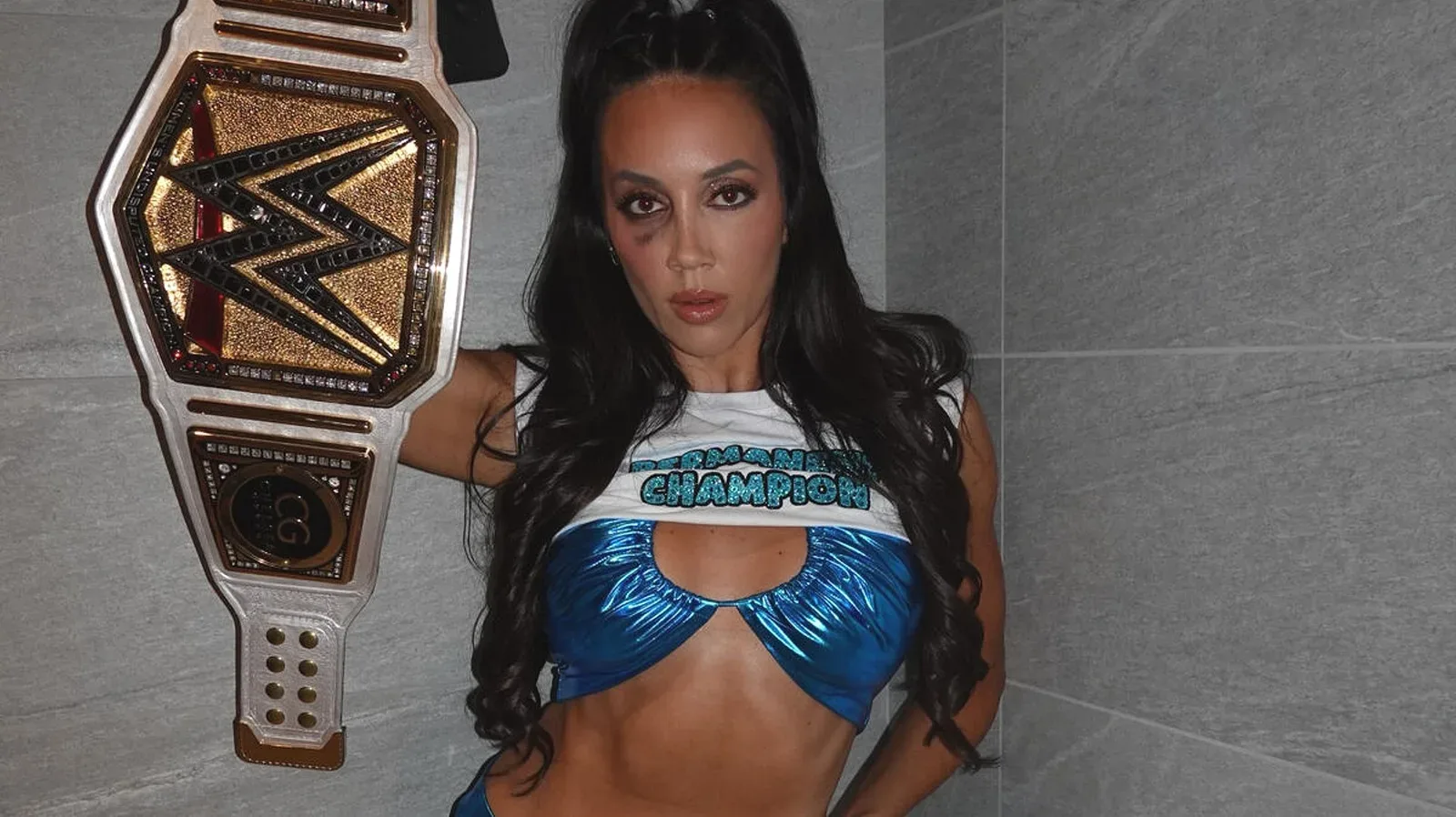
Chelsea Green’s WWE return began with the kind of character designed to get under the audience’s skin. She embraced being obnoxious, entitled and spectacularly unhappy whenever events failed to go her way. The tantrums were not incidental to the presentation; they were central to it. Green made frustration part of the act, turning the familiar heel complaint into something bigger, louder and deliberately ridiculous.
That approach has since developed into a notably different relationship with WWE fans. Green has become a major crowd favorite, even while maintaining many of the traits that initially positioned her as an antagonist. With fans increasingly behind her and praise arriving for WWE’s decision to put her in position to win the WWE Women’s Championship at SummerSlam, Green has reflected on why the character found an audience.
Speaking alongside Matt Cardona on Casual with Katie Nolan, Green described the connection as the result of several factors coming together at the right time.
“It was this perfect storm of them liking this annoying character but maybe also liking my take on wrestling? It’s kind of a fresh take because we’ve had a lot of the same takes on wrestling for many years.”
For more background on this topic, read Ethan Page Denies Being the Secret Leader of The 946 After Solo Sikoa Outfit Speculation.
Green did not specifically define every part of the “take on wrestling” she meant in that remark. However, she has recently voiced criticism of promos that can sound overly “wrestling-y,” a phrase that reflects her interest in making a character feel distinct rather than simply relying on established genre habits. Her comments point to a performer thinking not only about whether a character is good or bad, but also about whether the character feels recognizable to an audience that has seen countless wrestling personas over time.
An Annoying Character With More Than One Layer
The early version of Green’s returning WWE character leaned hard into an exaggerated “Karen” persona. It was a broad, intentionally over-the-top role: someone convinced she deserved better treatment, someone who could turn inconvenience into catastrophe, and someone whose outrage could become funny rather than merely hostile. The key to that presentation was that Green did not treat the character’s frustration as subtle. She made it theatrical.
That style gave fans something clear to react to. Wrestling audiences understand the archetype of the complainer, but Green’s version was built around escalation. A loss, a setback or an unwanted result was not just a storyline beat. It became an opportunity for the character to unravel publicly. By repeatedly leaning into that response, Green created a personality that could be booed, laughed at and remembered.
In her interview, Green explained that the character did not remain static after her return. The comedy became a larger part of the presentation over time, and that shift helped broaden its appeal.
“There’s so many layers to this,” Green said of the character, describing herself as a “Karen” who was extremely over the top. “I added some comedy to it as time went on, and she got funnier, and funnier, and then I think people realized through media, through our Netflix show Unreal, through interviews that, ‘Oh, maybe I like her?’”
That distinction is important. A wrestling persona can be intentionally irritating without becoming compelling. Green’s comments suggest that the character worked because fans were eventually offered more than a single note. The exaggerated complaints remained, but comedy made the act more entertaining, while media appearances and interviews gave viewers a chance to separate Green the performer from the on-screen troublemaker.
That does not necessarily mean the character ceased to be a heel at the moment fans began cheering. Wrestling reactions are often more complicated than traditional alignment labels. Audiences may enjoy a performer’s timing, commitment and personality even when the character continues to behave selfishly. In Green’s case, the very qualities meant to provoke the crowd appear to have become part of why people wanted to see more of her.
Finding Fresh Ideas in Familiar Influences
Green also addressed the challenge of creating something new in an era where wrestling characters must compete for attention within a crowded entertainment environment. Wrestlers are working with a long history of established archetypes, while also trying to connect with current pop-culture conversations and audience expectations. For Green, that balancing act is not simple.
“At this point in time, I really feel like it’s best to pull from old movies and things we can redo in our own way,” Green said on Casual with Katie Nolan.
Her point was not that a successful character needs to duplicate an old idea. Rather, she framed older movies and other familiar influences as material that can be reworked through an individual performer’s voice. Wrestling has always been built in part on recognizable types: heroes, villains, celebrities, athletes, eccentrics and larger-than-life personalities. The difficulty is taking an idea audiences can immediately understand and adding enough of a personal spin to keep it from feeling recycled.
Green’s answer was to create a character she considered the opposite of what a “hot girl” should be. She made clear that she still wants to be a “hot girl,” but the contrast itself became useful material. Instead of centering the persona entirely on glamour or confidence, she mixed those elements with self-deprecating humor, silliness and outsized indignation.
That combination creates tension within the character in a productive way. Green can project vanity while also making herself the joke. She can demand attention while exposing the absurdity of that demand. She can be polished in appearance but deliberately unpolished in emotional reactions. The result is a character with room to move beyond a standard heel template.
Why the Audience Response Matters
Green’s explanation also underlines a larger reality of modern WWE presentation: fans learn about performers in more places than weekly television alone. The in-ring and storyline character remains crucial, but interviews and other media can add context. A viewer may dislike an on-screen character’s behavior while appreciating the performer’s creativity, sense of humor or willingness to commit fully to a bit.
Green specifically referenced appearances in the media and Netflix’s Unreal as places where audiences may have come to see her differently. Those additional touchpoints can make crowd reactions less predictable. Instead of simply rejecting a heel because the character is unpleasant, audiences may cheer because they recognize the craft involved in making that unpleasantness entertaining.
That shift can be especially valuable for a performer whose character is rooted in comedy. Comedy requires timing and a willingness to look foolish when the moment calls for it. Green’s persona benefits from her readiness to make the character’s outrage bigger than life, rather than protecting the character’s dignity at all costs. When a wrestler is willing to be the punchline, the audience often gains another reason to invest.
The positive response also demonstrates why a strong presentation need not be limited by its initial alignment. Green returned as a heel, but her work created enough personality that fans found their own way into it. The audience could enjoy the antics while recognizing the character’s faults. In wrestling, that is often the foundation of a durable connection.
A Character Built to Evolve
Green’s remarks portray her WWE character as an ongoing evolution rather than a finished formula. It started from a specific exaggerated concept, gained momentum through increasingly prominent comedy, and then developed further as fans saw more of the person behind the character. That progression helped turn an annoying figure into one who could be celebrated for being annoying in a uniquely entertaining way.
The SummerSlam WWE Women’s Championship victory marked a significant point in that journey. Fans who once encountered Green primarily through her loud complaints and exaggerated frustrations had increasingly embraced her as a favorite. Her comments suggest that this was not the product of one isolated change, but the “perfect storm” of character work, humor, fresh creative choices and expanded exposure.
For Green, the goal appears to be preserving the layers that made the act work in the first place. She can still be glamorous. She can still be dramatic. She can still be impossible for others to deal with. But by making the character funny, self-aware in its presentation and flexible enough to reveal new dimensions, she found a way to make fans want to follow along.
That is the challenge Green identified: finding something that feels new without pretending wrestling has no past. Her solution has been to borrow recognizable ingredients, reshape them through her own sensibility and commit to a persona that is not afraid to be ridiculous. WWE fans, in turn, have shown that they are more than willing to cheer the chaos.
In pictures

Darryl Polo
Darryl Polo is a passionate wrestling fan covering WWE, AEW, TNA and beyond. He loves great rivalries, breakout stars and the moments that keep fans talking long after the bell. How we work.