
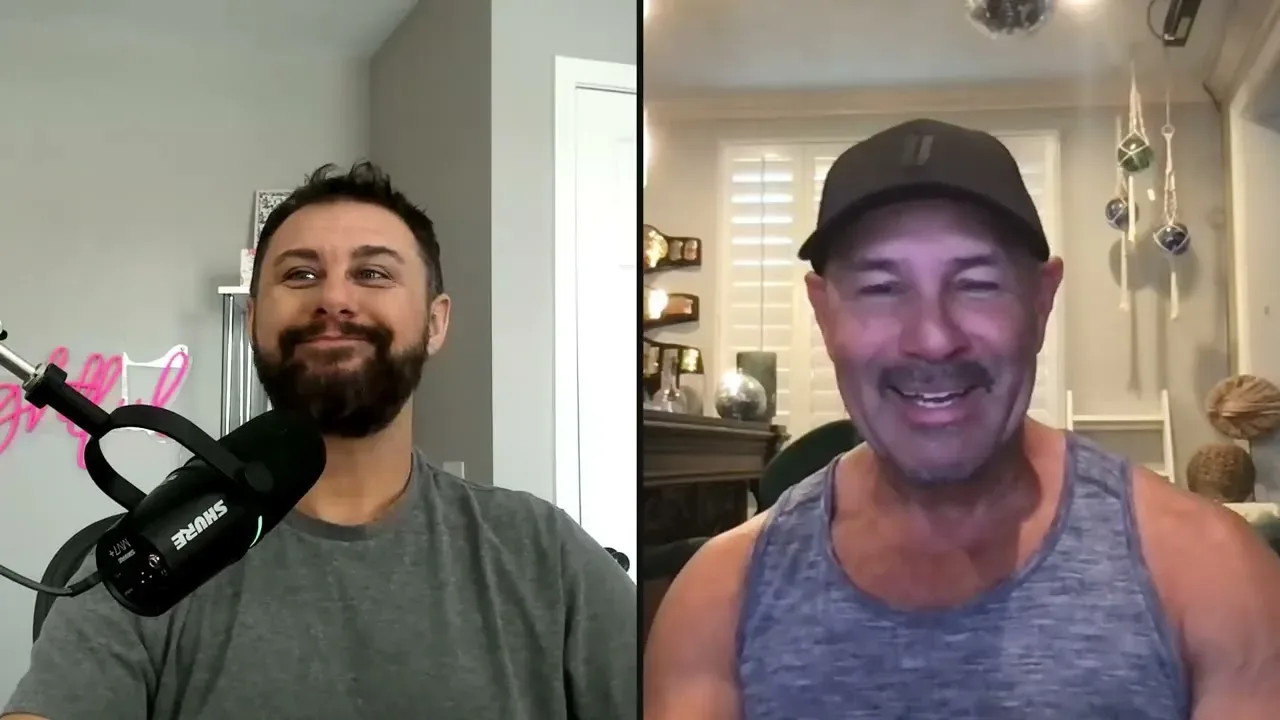
Chavo Guerrero has built a career that reaches well beyond the ropes. While his name is synonymous with one of professional wrestling’s most important families, Guerrero has also become a familiar presence in film and television production, bringing wrestling knowledge to projects that need convincing in-ring action, safe physicality and believable arena environments.
That dual experience has given Guerrero a distinctive perspective on a question that can sound simple but is anything but: Is it harder to teach an actor how to wrestle, or to teach a professional wrestler how to act?
For Guerrero, there is no universal answer. Every performer brings a different foundation, and the skills required for wrestling on camera do not automatically translate to the demands of a scripted film or television set. In some situations, he believes an actor may actually be easier to guide through a wrestling sequence than a seasoned wrestler is to guide through a dramatic production.
“It varies on the wrestler just like it varies on the actor,” Guerrero said. “Sometimes it’s easier for me to have an actor that I can teach how to wrestle in that scene as opposed to have a wrestler act. Sometimes, sometimes it is.”
For more background on this topic, read Shane Haste Says KENTA Win Cemented His Confidence as GHC Heavyweight Champion.
Guerrero compared the disciplines to “apples and oranges,” stressing that similarities between the two forms of performance can be misleading. Both professional wrestling and screen acting involve character work, movement, timing and an ability to hold an audience’s attention. Yet the structure, language and priorities of each environment differ substantially.
Inside a wrestling ring, wrestlers operate with instincts built through repetition: listening to an opponent and a crowd, managing their body position, working around a referee, timing impact and shaping the pace of a match. On a set, performers have to work within camera placement, lighting, sound, blocking, continuity and the stop-and-start process of filming. A wrestler can be outstanding on live television and still need guidance when a director calls for a quiet background sequence, a precise mark or movement that must be repeated exactly across multiple takes.
Ryan Nemeth and LA Knight Offered an Easy Transition
Guerrero pointed to Ryan Nemeth and LA Knight as examples of wrestlers whose existing familiarity with entertainment production made the process much smoother. The two were involved in material created for a planned fourth season of GLOW, the wrestling-themed series that ultimately did not air after the COVID-19 pandemic shut down production.
Nemeth, in particular, came into the situation with experience making his own short films and working within the Hollywood space. That background, combined with his wrestling knowledge, meant Guerrero did not need to spend time teaching the fundamental expectations of a screen production.
“Ryan created his own short films and he’s in the Hollywood space,” Guerrero said. “That was a no brainer, a guy that already knows wrestling and already knows Hollywood. It was like, okay guys, I want you to do this. Great, no problem. It was like a day off.”
That kind of crossover skill is valuable for any wrestling-related production. A performer who understands both the physical language of a match and the technical necessities of a set can respond quickly to instructions, adjust the scale of their movements for the camera and avoid problems created when a scene needs to be reset or altered. It also allows the coordinator to focus less on basic set etiquette and more on making the wrestling itself look authentic and safe.
LA Knight’s participation in the unrealized GLOW work is another reminder of the years he spent developing his abilities before becoming one of WWE’s most recognizable personalities. His success has been fueled by charisma and microphone skills, but Guerrero’s recollection shows that Knight was also able to step into a production environment and handle instructions efficiently.
The abandoned fourth season of GLOW remains one of the more notable television projects disrupted by the pandemic. Guerrero’s comments do not change that outcome, but they offer a glimpse at work that was underway and at the wrestlers who were prepared to contribute to it.
Lance Archer’s Film-Set Lesson
Guerrero also shared a very different example involving Lance Archer during work on Disclosure Day. Archer’s wrestling responsibilities were not the issue. Guerrero described the in-ring portion as “piece of cake.” The challenge came from a basic but crucial difference between the rhythms of a wrestling show and a film set.
During one sequence, Guerrero was in the ring as the referee while Archer was performing in the background. The production was filming dialogue involving actors elsewhere in the scene, which meant the wrestling portion had to be carried out without the usual crowd noise and without loud impact sounds.
When Steven Spielberg called action, Archer initially stopped and asked what they were supposed to do. Guerrero instructed him to continue the sequence, explaining that “action” meant the performance had begun even if the wrestlers could not hear the audio cues normally associated with a match.
“Go, go, go. Let’s go. We’ve gotta do the movement,” Guerrero recalled telling Archer.
The take had to be stopped so Guerrero could clarify the expectation. He did not put the blame on Archer, however. Instead, Guerrero said he had assumed a wrestler with extensive television experience would already understand the procedure, when that assumption was unfair in a setting governed by an entirely separate workflow.
“Look man, when they say action, whether there’s noise or no noise, you go,” Guerrero said he told Archer. “That’s my fault, I should’ve told you that. I just assumed you knew that. That’s totally on me. I will learn next time and explain to them next time.”
The story illustrates why Guerrero sees the two professions as distinct even when the scene itself centers on a wrestling ring. Television wrestling is produced with its own established shorthand. Wrestlers are used to reacting to audible entrances, audience responses, commentary, referee communication and the real-time energy of a live event. A film set may remove many of those signals entirely.
In the sequence Guerrero described, roughly 200 people had to pantomime their reactions and motions because dialogue was being captured elsewhere. The wrestlers could not simply conduct a normal match. Any noise from the ring could interfere with the spoken lines being recorded, forcing Guerrero to reconsider how every movement was staged.
Making Wrestling Look Real While Keeping It Quiet
That requirement can be especially complicated because wrestling is designed to create sound. The ring itself produces noise when wrestlers run, land or hit the ropes. Slams create impact, boards can make audible contact beneath the canvas, and the crowd’s reaction is normally part of what sells the action. For a quiet film setup, those familiar components can become obstacles.
Guerrero explained that he was not choreographing loud slams in that moment. He also had to control running patterns and account for the sounds created by the boards. Rather than allowing wrestlers to move freely around the ring as they might in a standard match, he had to keep their activity nearer to the side in ways that could reduce the noise and protect the dialogue being filmed.
Those are production-specific adjustments most wrestlers do not have to consider in their normal careers. They demonstrate why a wrestling coordinator’s job involves more than arranging a convincing lockup, suplex or pinfall. The coordinator must understand safety, camera angles, actor comfort, the director’s needs, the sound department’s limitations and the way a scene will be assembled in editing.
Guerrero summarized the divide clearly: what he teaches actors is not necessarily what works when training wrestlers, and the lessons he uses in wrestling training do not automatically apply to acting. The two crafts overlap, but they require different types of preparation.
Guerrero’s Expanding Hollywood Role
Guerrero’s observations carry weight because he has repeatedly worked at the intersection of the two industries. His role in Hollywood has allowed him to help productions preserve the credibility of wrestling while also helping wrestlers and actors adapt to the unique mechanics of a set.
He also revealed that he assisted with rewrites for The Iron Claw, the film centered on the Von Erich family. That work further reflects the range of contributions Guerrero can make to wrestling-related storytelling. Authenticity in a film is not limited to the look of a hold or the sound of a crowd. It can extend to dialogue, character detail, match presentation and the unspoken culture surrounding the business.
For wrestlers exploring opportunities in acting, Guerrero’s examples provide a practical lesson. Experience in front of a live crowd is valuable, but it does not replace an understanding of blocking, silence, continuity or the importance of waiting for a director’s instruction. Likewise, actors entering a wrestling scene need more than athletic ability; they need to learn how to move safely and communicate physically in a ring.
The strongest performers in either world may be those willing to learn the rules of the other. Guerrero’s work with Nemeth, Knight and Archer shows that the transition can range from nearly effortless to unexpectedly educational. The ring may be familiar, but once cameras, sound crews and scripted scenes take over, it becomes a very different workplace.
In pictures
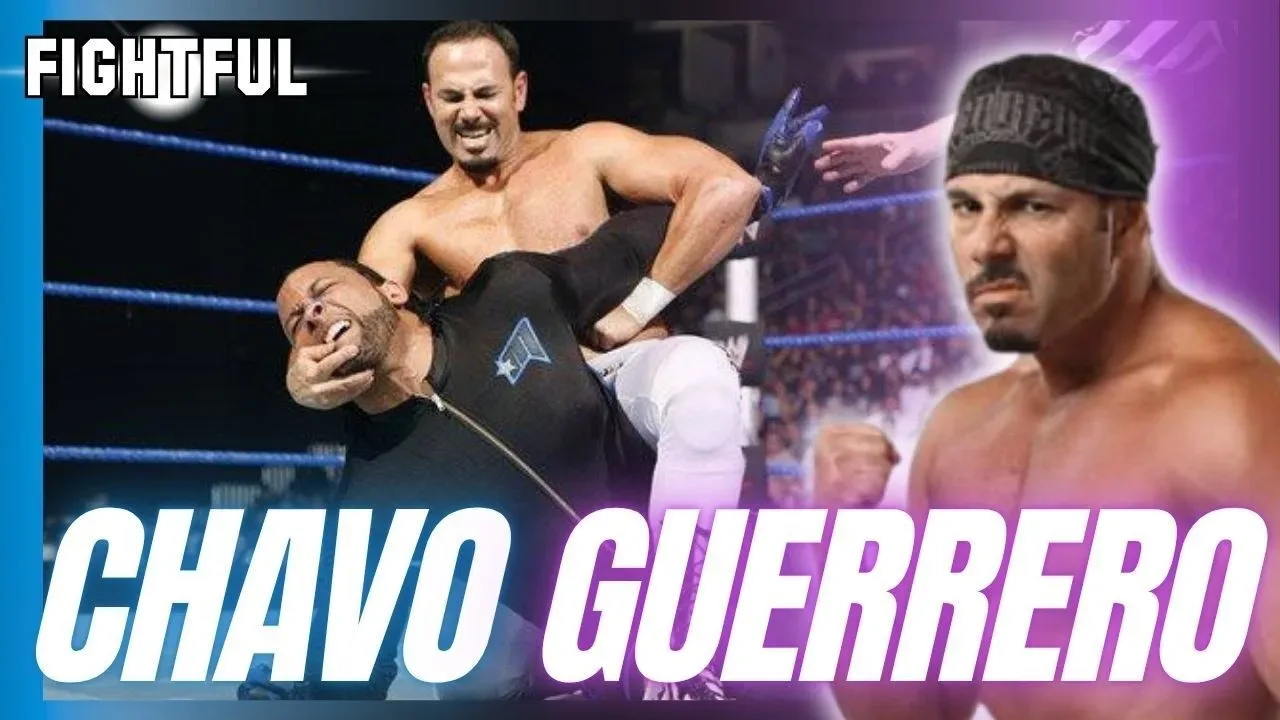

Darryl Polo
Darryl Polo is a passionate wrestling fan covering WWE, AEW, TNA and beyond. He loves great rivalries, breakout stars and the moments that keep fans talking long after the bell. How we work.