
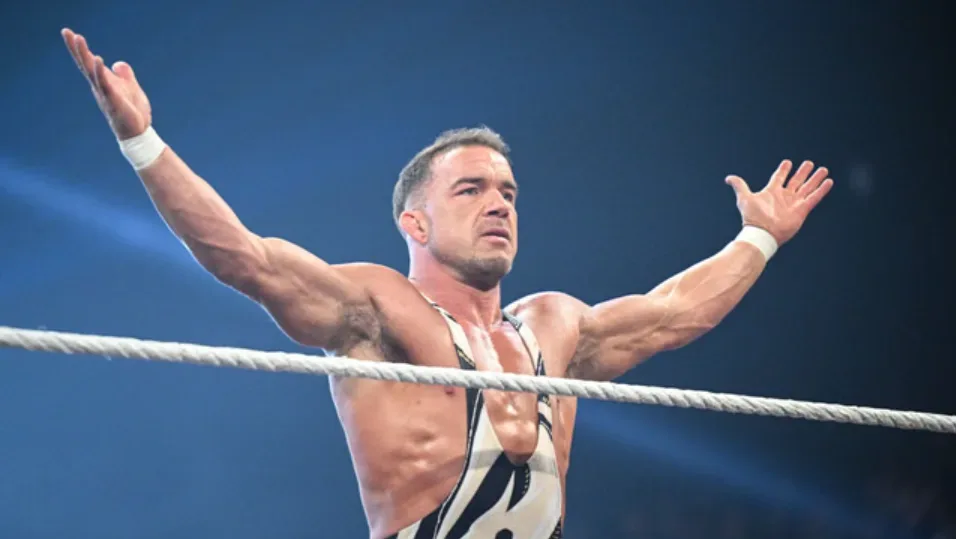
Chad Gable has spent years developing into one of WWE’s most versatile performers, combining an elite amateur wrestling foundation with technical precision, athletic explosiveness, comedy instincts and an increasingly forceful edge. But as Gable explained in a recent interview with Complex Graps, some of the most valuable lessons of his WWE career took a long time to fully understand.
Gable specifically pointed to advice from Randy Orton, a WWE locker-room leader he has worked alongside for roughly a decade. The message was not necessarily about adding another move or reinventing his style. Instead, it centered on a more difficult part of becoming a complete performer: recognizing what is truly needed in a match and what can be left out.
“Randy Orton’s given me so much advice about the things that are necessary and the things that aren’t necessary,” Gable said. “That’s another one of those things that took me a long time to turn into that knowledge and wisdom. He’s probably been telling me that stuff since I got called up on the main roster and it maybe took me ten years to finalize realize it now and put it into practice. So, just being smart with the way you do or don’t do things in the ring.”
It is a revealing assessment from Gable, whose career has required consistent adaptation. His background in amateur wrestling gave him a legitimate and deeply rooted base that few WWE talents can match. Before entering professional wrestling, Gable competed at a high level in amateur wrestling and represented the United States at the Olympic Games. That experience naturally informed much of his early WWE presentation, from suplex-heavy offense and mat work to his credibility in grappling exchanges.
For more background on this topic, read Chad Gable Wants Every Intercontinental Title Defense To Feel Capable Of Changing WWE’s Landscape.
However, professional wrestling asks for a different type of control. A wrestler can be technically gifted and physically intense, yet still need to learn how to make every moment matter. Orton’s advice, as Gable described it, appears to have helped clarify the importance of economy: knowing when to accelerate, when to pause, when to emphasize a reaction and when doing less makes the action more effective.
Orton’s influence and the value of restraint
Orton’s own career offers a clear example of the philosophy Gable described. Across his lengthy tenure at the top level of WWE, Orton has been known for an unhurried in-ring rhythm, an ability to make signature moments feel important and a knack for controlling a match without constantly chasing spectacle. That is not to say Orton lacks explosive offense. The RKO remains one of WWE’s most recognizable finishing moves precisely because of the way it can appear suddenly. Yet much of the impact comes from the timing around it.
For Gable, putting those concepts into practice meant translating a decade of advice into lived experience. He acknowledged that Orton had likely been sharing those lessons from the time Gable first reached the main roster, but wisdom in wrestling is often accumulated gradually. A talent can hear guidance many times before finding the confidence, perspective and appropriate role to make it part of their own performance.
That evolution has been visible in Gable’s work. He remains capable of the rapid-fire athletic sequences that have long made him stand out, but he has also become increasingly deliberate in how he presents his character and builds tension. Whether working as a sympathetic underdog, a boastful antagonist or a championship-level competitor, Gable has shown a stronger understanding of when a look, a pause or a shift in body language can carry as much weight as a complicated sequence.
The lesson also applies beyond mechanics. Being “smart” about what to do and not do in the ring can mean preserving the value of a big move, choosing the right moment to display vulnerability or allowing an opponent’s strengths to breathe. It can mean trusting the audience to follow the story rather than attempting to force every reaction through constant activity.
The Undertaker encouraged Gable to reveal more intensity
While Orton’s advice helped Gable focus on efficiency and judgment, The Undertaker pushed him in a different direction. Gable said that guidance received while he was in AAA helped bring out a side of his personality that had been restrained for a long time.
“Also, the stuff that Undertaker told me in AAA, that he had to pull out of me,” Gable said. “To let some of my real nature from amateur wrestling and my competitive nature come out in what we do. I think I’d been hiding that for a long time, being very reserved. I can be a very intense person, obviously.”
Gable connected that intensity directly to the demands of his amateur wrestling career. Elite amateur competition is built on discipline, pressure and confrontation. Athletes train over long periods for short, unforgiving contests in which every position matters. The competitive mindset required to succeed in that environment does not simply disappear after moving to sports entertainment, even if a performer initially chooses not to show all of it on screen.
“When you’re amateur wrestling to the level and degree that I did for that long, there’s a level of intensity and anger and things that come out when it needs to,” Gable continued. “I don’t think I ever let that out until he finally convinced me to do that. That’s been a big help to access that as far as what we do.”
The Undertaker’s role in that process is particularly notable because few figures in WWE history carry greater credibility as mentors. Throughout his career, The Undertaker was widely recognized as a respected locker-room presence as well as one of the promotion’s defining stars. Gable’s comments suggest the Hall of Famer saw something authentic in him that could be used more directly in his wrestling persona.
Rather than asking Gable to abandon the traits that made him distinctive, The Undertaker encouraged him to draw more openly from his real competitive nature. That distinction matters. WWE characters can become more compelling when they are anchored by recognizable elements of the performer behind them. For Gable, the intensity developed through years of amateur wrestling could give his work a sharper edge when the situation called for it.
Two lessons that work together
On the surface, Orton’s and The Undertaker’s advice may sound like different ideas. One is about restraint and identifying the necessary parts of a match. The other is about accessing emotion, aggression and competitive fire. In practice, they complement each other.
Professional wrestling is at its best when performers know not only what they feel, but how and when to express it. Gable’s description of his development points to that balance. An intense competitor does not need to be at maximum volume every second of a match. Conversely, a technically sound and measured wrestler cannot always remain emotionally detached if the story demands a more visceral response. The challenge is selecting the right moments.
That is where the advice from Orton and The Undertaker can meet. Orton’s lesson gives Gable a framework for pacing, purpose and efficiency. The Undertaker’s lesson gives him permission to bring a deeper, more genuine intensity to the material. Together, they can help turn a skilled athlete into a more rounded storyteller.
Gable’s comments also underline the value of a WWE environment in which younger or less experienced main-roster talent can learn from wrestlers with different strengths. Orton represents sustained excellence over an extraordinary run at the highest level. The Undertaker represents an unmatched legacy of character work, presence and psychological storytelling. Gable, meanwhile, brings an amateur pedigree and a willingness to examine where his own presentation can grow.
Gable’s continuing championship chapter
Elsewhere in the interview, Gable discussed his current Intercontinental Championship reign, another indication of his standing in WWE’s ongoing landscape. The Intercontinental Championship has historically been associated with performers who can deliver in high-pressure matches while carrying a major part of weekly programming. For Gable, holding the title places further focus on all the elements he discussed: in-ring intelligence, emotional range, credibility and the ability to make each defense feel significant.
His reflections do not frame development as something that ends when a wrestler wins a championship or reaches the main roster. Instead, Gable’s experience shows how growth can continue over many years. Advice given at the beginning of a run may only make complete sense after a performer has experienced different partnerships, character shifts, setbacks and major opportunities.
Ten years after first sharing a WWE locker room with Orton, Gable says he has finally begun to apply a key lesson from the veteran in a meaningful way. At the same time, he credits The Undertaker with helping him unlock a more intense element of himself. Those influences have come from two very different WWE icons, but both have contributed to the version of Chad Gable now competing at the championship level.
For Gable, the next stage is not merely about showing what he can do. It is about knowing exactly when to do it—and allowing the competitive fire that powered his amateur career to emerge when the moment demands it.

Darryl Polo
Darryl Polo is a passionate wrestling fan covering WWE, AEW, TNA and beyond. He loves great rivalries, breakout stars and the moments that keep fans talking long after the bell. How we work.