
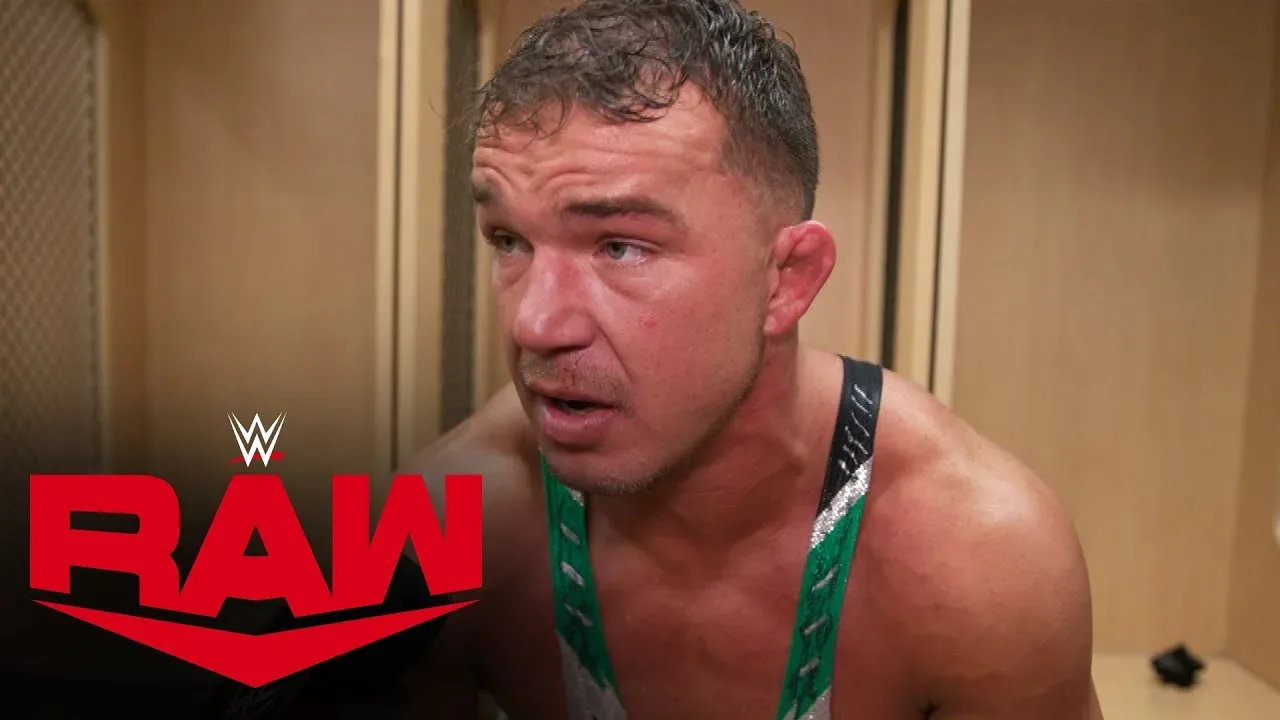
Chad Gable’s Intercontinental Championship reign is built around a simple ambition: make viewers believe the title can change hands whenever he puts it on the line.
Since capturing the championship at SummerSlam in August, Gable has made the Intercontinental Title a centerpiece of his WWE schedule. His defenses against Rey Mysterio and Dragon Lee have drawn considerable praise, while also giving Gable a setting that he feels has allowed his in-ring work to expand beyond the shorter matches he was frequently given in the past.
For Gable, the difference is not merely the presence of championship gold. It is the combination of more time, more pressure, and a clearer reason for audiences to emotionally invest in every near fall. He wants an Intercontinental Title match to carry the feeling that something major could happen at any point, regardless of who is standing across the ring from him.
That philosophy has been especially apparent in his recent work. A match with Dragon Lee in Mexico gave Gable a highly invested crowd and an opponent audiences could realistically see leaving with the championship. That reaction is central to what Gable wants his title reign to represent: competitive matches where the challenger is credible enough that fans cannot dismiss the possibility of an upset.
For more background on this topic, read Danhausen Teases Possible Fortnite Connection Ahead of Fortnitemares.
More Time, More Stakes, More Of Chad Gable
Gable explained that carrying the Intercontinental Championship has opened the door for him to show deeper layers of his game. Before winning the title, he was often asked to deliver in compact television bouts that required an immediate pace and a quick impact. Those matches could be impressive, but they did not always leave room for the full progression of a longer championship contest.
“To that point, I think what is special about it now is the fact that I’m getting a little bit more time to do what you’re saying. In the past, it may have been what many call sprint matches where they’re five minutes or six minutes or seven minutes, you’re trying to just put on the absolute best that you can in that short time. It’s possible, you can put on awesome matches.”
Gable’s point reflects the challenge of consistently performing on weekly WWE programming. Short matches demand urgency. Wrestlers have to establish personality, tell a story, create momentum shifts, and deliver memorable offense in only a few minutes. Gable has long been regarded as someone capable of thriving in that environment, particularly because of his amateur wrestling foundation, explosiveness, and ability to transition quickly between technical exchanges and high-impact sequences.
However, title matches offer another dimension. They can breathe. They allow wrestlers to build momentum over time, establish a challenger’s strategy, sell the physical toll of the contest, and make late-match escapes feel increasingly dramatic. For a performer with Gable’s technical range, that additional time can create opportunities to showcase more than a rapid burst of offense.
“But now, since your point I have a championship, I think I’m getting able to do that over the course of 12-15 minutes, sometimes even more. That is allowing people to see that there are even deeper levels to what I’m capable of. There’s more on the line, there’s stakes.”
Those stakes are a major part of the presentation Gable is pursuing. A strong wrestling match can be appreciated on its own, but championship implications can transform how an audience reacts to it. Every submission attempt, every counter, and every pinfall has more weight when a title reign is on the line. Gable sees that added context as a key reason fans may be more invested in his current matches than they were in strong performances from earlier stages of his WWE career.
“Every match, not only can it be good, but it also feels important,” Gable said. “Maybe the ones in the past, they’re great matches, but there’s nothing at stake so people aren’t as invested as they might be now.”
The Intercontinental Championship’s Unpredictability
Gable’s stated goal is not to present himself as an unbeatable champion who overwhelms every opponent. Instead, he wants his defenses to create uncertainty. That requires challengers who feel capable of winning and matches structured in a way that gives fans reason to believe the finish could go either way.
The Dragon Lee match offered a clear example of that approach. Gable noted how strongly the Mexico crowd responded to the possibility of Lee winning the Intercontinental Championship. The atmosphere mattered because it showed that audiences were not simply watching a showcase for the champion. They were emotionally invested in the challenger’s chance to break through.
“I mean, that crowd in Mexico was as invested as I’ve ever had a crowd with Dragon Lee. I think what I lend to this title, or what I’m trying to lend to this title is the fact that I want to give these guys opportunities and create these situations where it could happen any night.”
That is an important distinction for any championship program. A title defense becomes more compelling when the challenger enters it with a legitimate path to victory. The reigning champion still needs to look strong, but the match is heightened when the audience can imagine a different result. Gable is actively seeking that response, rather than relying on the assumption that his reign will continue until a larger event or a predetermined marquee opponent arrives.
“The kind of matches we have, the title could change hands any night,” Gable said. “Those are the opponents I want, I want people to believe in them to that degree, that we’re on the cusp of something special every time I defend the championship.”
The Intercontinental Championship has often been a title associated with wrestlers seeking to prove themselves in the ring, and Gable’s comments point toward a reign designed to honor that competitive identity. A defense against a veteran such as Rey Mysterio carries one kind of prestige and challenge. A defense against Dragon Lee creates a different kind of excitement, built around the possibility of a dynamic younger competitor seizing a defining career moment. Both matchups can serve the same overall purpose if viewers see either challenger as a real threat.
A Reign Defined By Opportunity
Gable repeatedly returned to the idea of providing opportunities. In practice, that means choosing challengers with enough ability and credibility to push him into the type of match where the outcome feels uncertain. It also means embracing the responsibility of being the champion asked to deliver when those opportunities arrive.
That approach can elevate both sides of a title program. Challengers benefit from entering meaningful, competitive championship matches rather than serving as placeholders. The champion benefits from overcoming opponents who have been presented as dangerous and capable. Most importantly, the title itself benefits when audiences understand that a defense is not a formality.
Gable’s reign has already been associated with acclaimed matches, and he believes the foundation is now in place to make the Intercontinental Championship consistently feel special. His focus is on preserving the tension that made the defenses against Mysterio and Dragon Lee resonate: the sense that fans are witnessing a contest that matters and that one decisive moment could alter the championship picture.
“Trying to do something special with this one and I think we’re getting there.”
There is also a broader value in Gable framing the championship this way. WWE’s weekly schedule provides numerous opportunities for titles to be defended, but the frequency of those matches can reduce their impact if the audience believes the outcome is obvious. Gable is pushing against that possibility. He wants viewers to approach a defense with genuine anticipation, understanding that a challenger has a chance and that the champion must earn every successful retention.
That does not mean every title match needs to produce a new champion. Rather, it means every match needs to create enough doubt that a title change feels possible. The suspense is what allows the closing stretch to land. It is what makes a crowd react to a near fall or a narrowly escaped submission. And it is what can make an eventual championship change, whenever it happens, feel like the culmination of an ongoing competitive standard rather than a sudden shift without foundation.
For Gable, the Intercontinental Championship is offering a platform to display his ability in longer matches while also helping shape the kind of stakes he wants attached to the title. His objective is clear: showcase the depth of his in-ring work, give formidable opponents real opportunities, and make fans believe that the championship could be won on any given night.
If Gable continues to accomplish that, each defense will carry the kind of uncertainty he is seeking. The champion may retain, but the audience should never feel entirely certain that he will.

Darryl Polo
Darryl Polo is a passionate wrestling fan covering WWE, AEW, TNA and beyond. He loves great rivalries, breakout stars and the moments that keep fans talking long after the bell. How we work.