
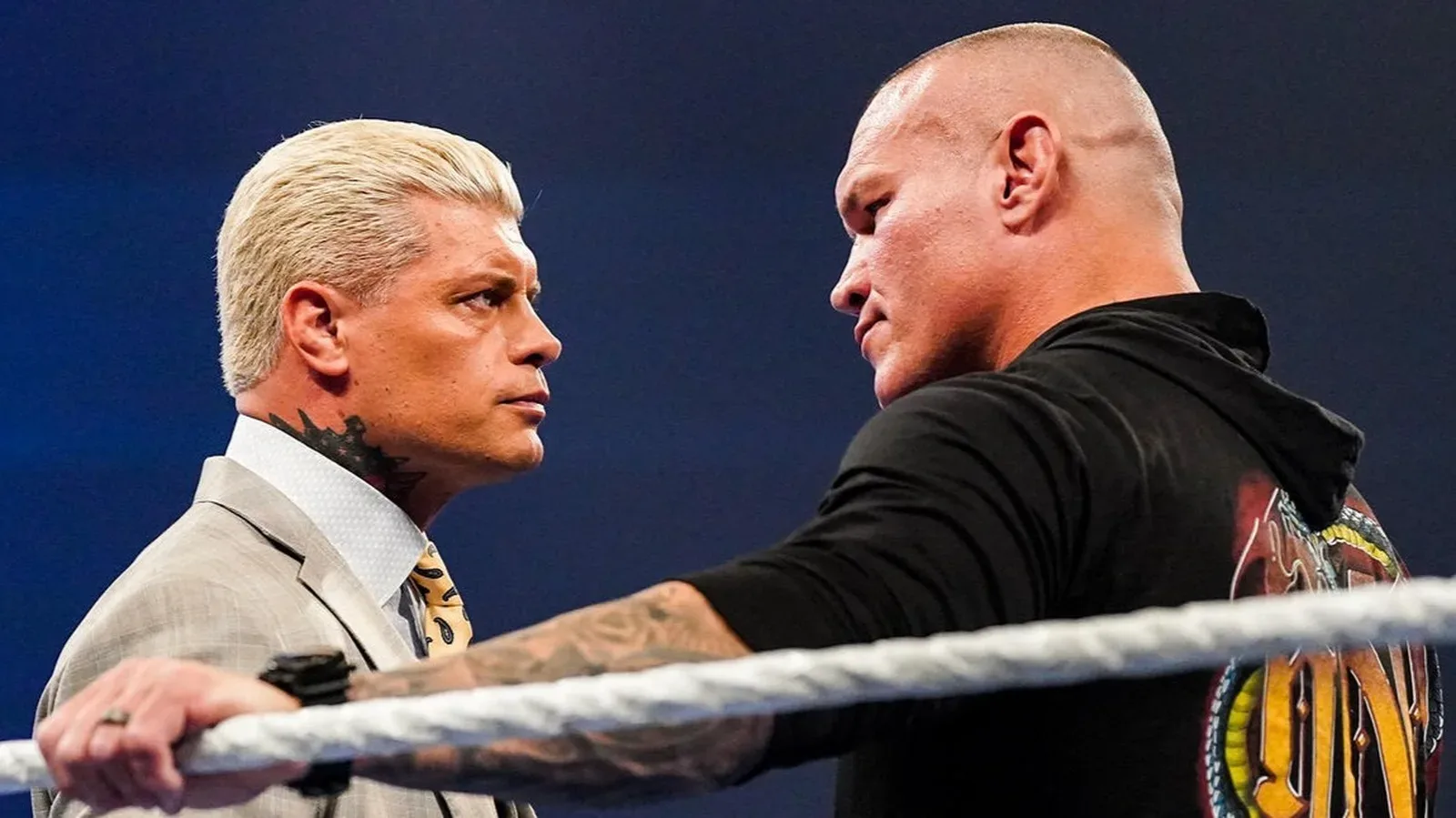
Randy Orton and Cody Rhodes have each scored a major victory in their increasingly bitter WWE rivalry, but the conflict between the former allies appears far from settled. With a potential third match still unannounced, the two rivals have recently taken different approaches in sit-down interviews with Michael Cole on WWE SmackDown.
Bully Ray weighed those appearances against one another and came away more convinced by Orton’s presentation. Speaking on Busted Open Radio, the WWE and TNA Hall of Famer praised the conviction, body language, and escalating intensity Orton displayed during his exchange with Cole.
“When Randy Orton spoke to Michael Cole the other night, I believed him. There was conviction,” Bully Ray said. “His body language. The way he asked his rhetorical questions. The way he answered for Michael Cole. The way he got up out of his seat and got right in Cole’s face. The way he asked him, ‘Do you really think?’ I loved Randy Orton last Friday night on ‘SmackDown.’”
Orton’s interview added to an already personal rivalry
The feud has moved beyond a standard competitive disagreement. Rhodes and Orton are presented as former friends whose history now gives every confrontation an additional edge. Their respective victories have also prevented either man from claiming a decisive advantage, leaving the rivalry in a 1-1 deadlock.
For more background on this topic, read IShowSpeed Reflects on WrestleMania 42 Appearance: ‘I’m Actually Living a Dream’.
Rhodes earned his win at WrestleMania 42, where he successfully retained the former Undisputed Championship. That result also stopped Orton and Pat McAfee from achieving their stated goal of making Orton a 15-time World Champion by any means necessary.
Orton answered that loss last month at Sunday Night’s Main Event. After targeting and manipulating Rhodes’ softer side, Orton picked up a singles victory over him. The result changed the tone of the story. Rhodes had proven he could survive Orton on the WrestleMania stage, but Orton then demonstrated that he could beat Rhodes directly in a major singles setting.
That split record makes the sit-down segments especially significant. Neither wrestler currently has an unquestioned claim to superiority based on results alone. The verbal side of the feud, including how each man frames the other’s motivations and weaknesses, has become an important part of the ongoing struggle.
For Bully Ray, Orton’s interview succeeded because it did not feel detached from the emotions established by the rivalry. He pointed to the specific choices Orton made during the conversation with Cole: the rhetorical questions, the manner in which he responded, and the physical decision to rise from his chair and confront Cole at close range. Those details, in Bully Ray’s view, made Orton’s anger register as authentic.
Bully Ray wants a greater shift from Rhodes
Rhodes’ own sit-down interview aired on the September 18 edition of SmackDown. Bully Ray did not dismiss Rhodes’ recent work outright, noting that the most recent Friday night was a good one for the WWE star. Even so, he felt Orton’s interview carried more force when the two were compared side by side.
“I wished I would have seen more from Cody,” Bully Ray said. “Now, ‘SmackDown’ last Friday night was a very good night for Cody. But between the two of them, I feel it a lot more from Randy...There’s going to have to come a time where Cody stops acting like Cody, and loses his temper or his control. Or there’s a shift in his demeanor. Not whispering in somebody’s ear with an F-bomb.”
The critique is less about Rhodes needing to abandon his identity entirely and more about the rivalry demanding a different emotional response. Orton has worked to draw out the vulnerability behind Rhodes’ usual composure, and Bully Ray believes the next progression should be a visible change in how Rhodes handles the pressure.
Rhodes has often been defined by a heroic, controlled presence. That is central to the persona Bully Ray referred to as “QB1 of WWE.” But Orton’s methods have centered on testing whether that control can be broken. In that context, a simple verbal jab or a private insult may not carry the same impact as Rhodes openly losing his temper or showing a more confrontational edge.
Bully Ray’s point was that Rhodes has more emotional range available within this story. The suggestion was not that Rhodes has lacked stakes in the rivalry, but that the audience may need to see the conflict alter him more visibly. Orton’s victory at Sunday Night’s Main Event gives that idea additional weight, because Rhodes is no longer speaking from the position of having won the only match that mattered.
The contrast is central to the next chapter
Orton’s interview approach was built around intimidation and certainty. He did not merely state his case; he pressed Cole with questions and physically changed the atmosphere of the conversation. That posture fit an opponent who has already shown a willingness to exploit Rhodes’ emotional side.
Rhodes, by comparison, remains at a crossroads in the story. He can continue to meet Orton as the resilient, measured figure audiences recognize, or the rivalry can push him toward the shift Bully Ray described. With the series tied, either direction could shape the meaning of a possible trilogy encounter.
There is also a difference between being angry and allowing anger to change a wrestler’s decision-making. Orton’s past actions in this feud have made emotion a focal point, and Rhodes’ response could determine whether he is able to regain momentum. If Rhodes becomes too consumed by the personal issues between them, Orton may be able to use that against him. If Rhodes shows a sharper edge while maintaining focus, he could demonstrate that Orton has not succeeded in taking control of the rivalry.
That tension is why Bully Ray’s comparison matters. His assessment was not simply that one interview was better than another. It was an argument that Orton’s performance more clearly communicated where he stands and what he is willing to do. Rhodes, in Bully Ray’s opinion, has yet to reveal an equally strong next step in his own emotional journey.
No trilogy match has been announced
As of press time, WWE has not announced a third match between Rhodes and Orton. Their current record makes another meeting the logical unresolved piece of the feud, but no date, event, or stipulation has been made official.
Until that happens, their separate conversations with Cole provide a window into the rivalry’s direction. Orton has made his position clear through the kind of conviction Bully Ray singled out. Rhodes now faces the question of whether his next response will remain within the boundaries of his familiar heroic demeanor or reveal the loss of control Bully Ray believes this feud requires.
For now, the competitive record remains even: Rhodes won at WrestleMania 42, and Orton won at Sunday Night’s Main Event. The score is tied, the animosity remains intense, and the next move has not been announced. If WWE does bring the two former friends together again, the contrast between Orton’s menacing certainty and Rhodes’ search for a more forceful response could be just as important as the result in the ring.
In pictures

Darryl Polo
Darryl Polo is a passionate wrestling fan covering WWE, AEW, TNA and beyond. He loves great rivalries, breakout stars and the moments that keep fans talking long after the bell. How we work.