
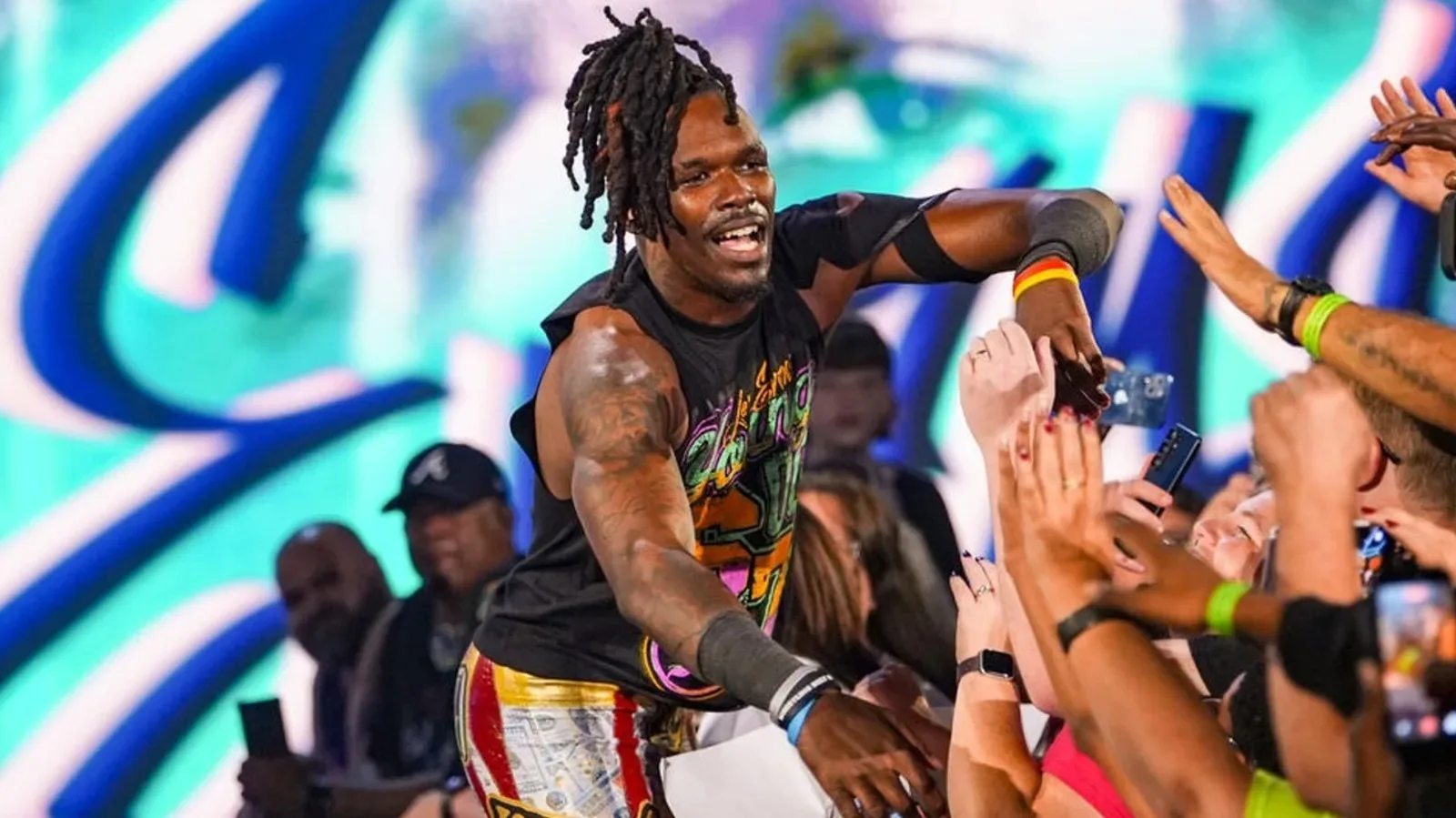
Je’Von Evans produced one of the most dramatic visuals of WWE Money in the Bank, but Bully Ray believes the moment that mattered most for the young star came before his punishing fall onto an ambulance.
Evans was among the six competitors in the Men’s Money in the Bank Ladder Match, joining Penta, CM Punk, Trick Williams, Bron Breakker and Kevin Owens. Penta ultimately won the match, but Evans’ performance remained a major talking point because of the physical punishment he absorbed and the urgency he brought to his confrontation with Breakker.
At one stage, Evans was wheeled away from ringside, only to return in an ambulance. The sequence set up a memorable revenge spot against Breakker, as Evans emerged from the vehicle and attacked him with a barrage of punches. Later in the match, however, Breakker regained control and threw Evans from the top of a ladder onto the ambulance in a brutal closing chapter to Evans’ night.
While the ladder-to-ambulance fall was the more immediately spectacular stunt, Bully Ray argued that Evans’ attack after returning in the ambulance was the more valuable piece of wrestling storytelling. In his view, it revealed an intensity that could help define Evans as a babyface moving forward.
For more background on this topic, read Drew McIntyre Says Russell Crowe Discussed Potential WWE Team-Up and WrestleMania Appearance.
Bully Ray Focuses on Evans’ Intent Against Bron Breakker
Discussing the Money in the Bank match on Busted Open, the WWE Hall of Famer singled out the moment where Breakker looked toward the driver’s side of the ambulance before Evans forcefully opened the door. Breakker was sent flying, and Evans then jumped out and began throwing punches.
Ray said that was the point at which he connected most with Evans. Rather than centering his praise on the physical danger of the ambulance fall, he emphasized the feeling behind Evans’ response. The punches, he felt, carried enough anger and purpose to make the audience understand the stakes of Evans’ issue with Breakker.
“There was so much intent behind those fists flying,” Ray said. “We talk about the art of the run-in, or we talk about making everything mean something. I felt Je’Von Evans in that moment, more than I felt him in the entire match.”
That distinction is important in a match format built around increasingly risky stunts. Money in the Bank ladder matches are designed to create major highlight-reel moments, and Evans certainly had one when Breakker sent him crashing onto the ambulance. But Ray’s assessment was that the fightback gave Evans something a stunt alone cannot automatically provide: a clear emotional identity.
The attack also came after Evans had been taken out of the action, making the return more effective. He did not simply reappear to perform another move. He came back looking focused on Breakker, immediately creating the sense that the beating he had endured had made the rivalry more personal.
Why the Punches Mattered More Than the Fall
Ray’s comments were rooted in a familiar principle of wrestling psychology: a babyface’s comeback has to make fans believe the wrestler is fighting from the heart, not just moving from one planned sequence to the next. He maintained that Evans’ fists did exactly that.
“A babyface can only rely on his fists,” Ray said. “That’s all a babyface needs at the end of the day is his fists.”
For Ray, the effectiveness was in Evans’ presentation rather than the complexity of the physical spot. Evans looked determined, and the punches appeared convincing enough to communicate genuine frustration. That made the audience investment in the sequence stronger than it would have been if Evans had merely returned to execute a flashy move.
Ray also returned to the idea that “less is more,” saying Evans’ punching combination made him believe in the performer more than any other spot in the match. It was not a dismissal of the danger involved in the ambulance sequence. Instead, it was an argument that the emotional follow-through surrounding a stunt can have more long-term value than the stunt itself.
That is especially relevant for Evans, whose athleticism and willingness to take risks can naturally draw attention. Big bumps can establish toughness and create viral moments, but they do not necessarily tell viewers who a wrestler is. A fired-up, well-timed fightback can do that in a matter of seconds.
In this case, Breakker’s role was equally important. His reaction to the ambulance door helped set up Evans’ return, and Evans’ attack worked because it was directed at a specific opponent who had already been presented as a major physical threat. The confrontation gave Evans the opportunity to show defiance against a powerful rival rather than simply survive the match’s chaos.
Breakker Still Had the Final Word at Money in the Bank
Evans’ burst of offense did not change the immediate outcome of his night. Minutes after absorbing the punches, Breakker threw him from the top of the ladder onto the ambulance. The fall was a harsh visual and underlined the power advantage Breakker continued to hold in their conflict.
The attack also did not end when the premium live event did. On the following episode of WWE Raw, Breakker continued his assault by spearing an already injured Evans. That follow-up kept the issue active and reinforced the physical toll Evans had taken at Money in the Bank.
From a storyline standpoint, Evans being left battered by Breakker can make his earlier fightback even more meaningful. He did not overcome the larger and more destructive opponent in one night. Instead, he showed he could answer adversity with aggression, only to be overwhelmed again. That structure gives the rivalry a foundation: Evans has shown courage and spirit, while Breakker has shown he remains capable of inflicting overwhelming damage.
The result is a situation where Evans does not need to be defined solely by being on the receiving end of punishment. The ambulance fall was unquestionably a major part of the match, but Ray’s perspective is that the punches prevented Evans from becoming only the wrestler who took the dangerous bump. Before Breakker put him through another devastating sequence, Evans made a statement with the way he fought back.
A Valuable Lesson for a Rising WWE Performer
Ray’s takeaway was less about criticizing high-risk spots and more about identifying what turns those moments into meaningful character development. Evans had the athletic feat and the dramatic fall. What stood out to Ray was that he also found a short, simple window to convey anger, toughness and determination.
That combination can be essential for a young wrestler trying to establish a lasting connection with the crowd. Fans may remember a major fall, but they are more likely to emotionally invest when they see a wrestler’s resolve in the moments before and after it. Evans’ ambulance return gave him that kind of opportunity.
Money in the Bank was won by Penta, but the match produced significant material for several of its participants. For Evans, the key question coming out of the event is not only how much punishment he endured. It is whether the intensity he showed against Breakker becomes a more consistent part of his on-screen identity.
Bully Ray clearly believes it should. In his eyes, Evans’ most important contribution was not the impact of landing on the ambulance. It was the conviction he displayed when he stepped out of it, targeted Breakker and threw punches that looked like they mattered.
In pictures

Darryl Polo
Darryl Polo is a passionate wrestling fan covering WWE, AEW, TNA and beyond. He loves great rivalries, breakout stars and the moments that keep fans talking long after the bell. How we work.