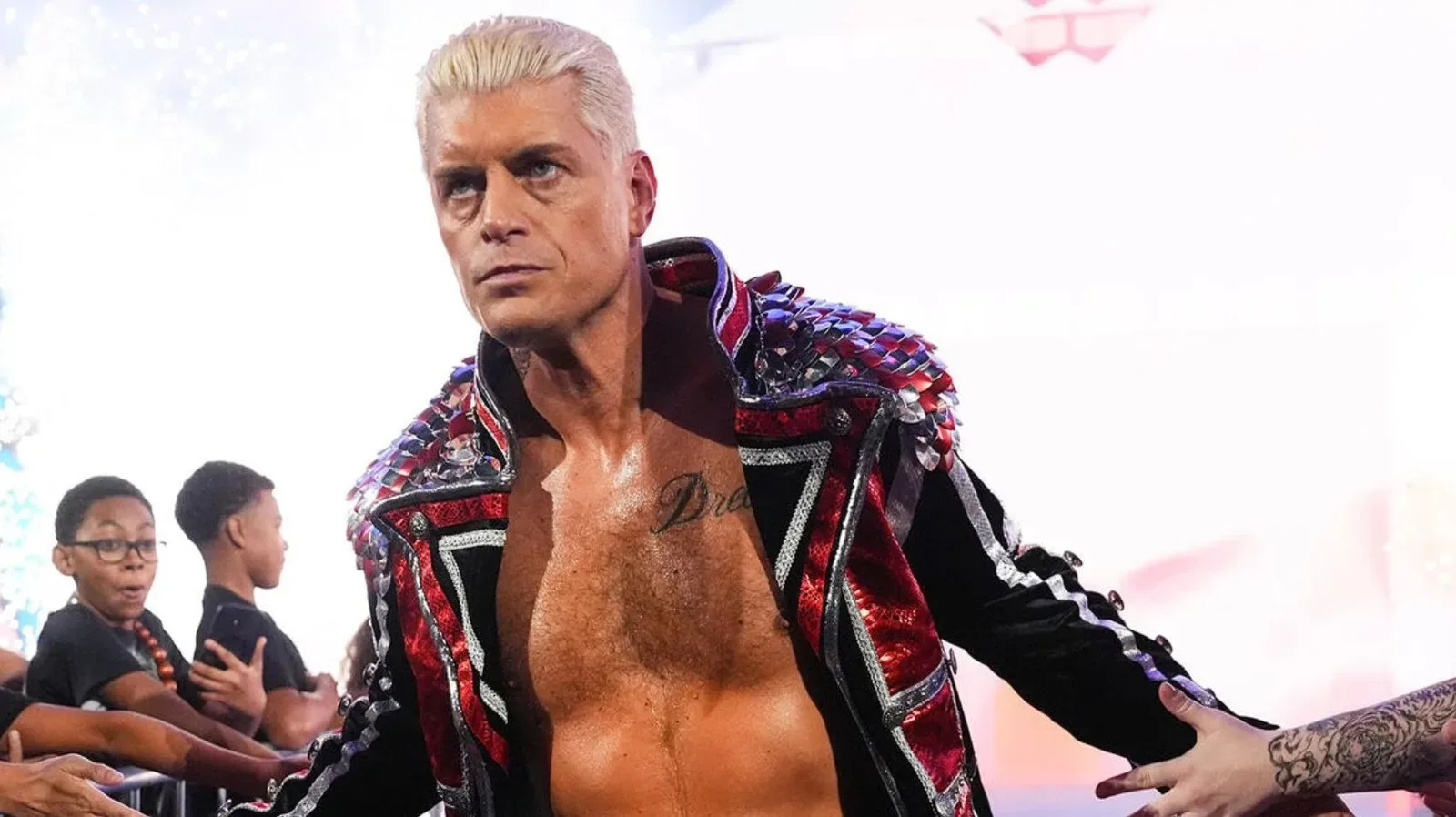
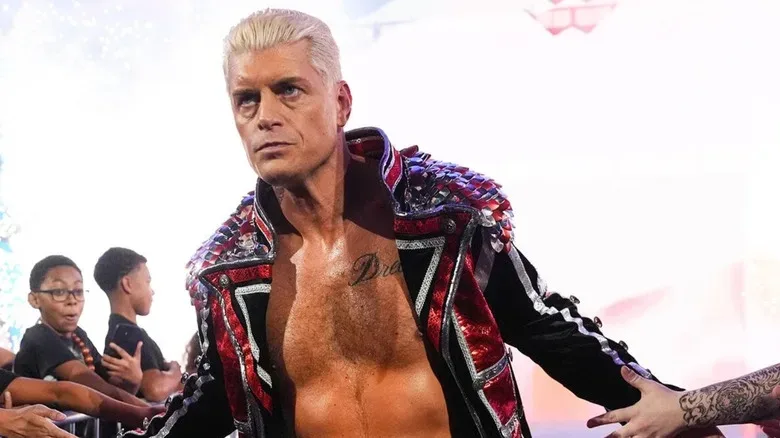
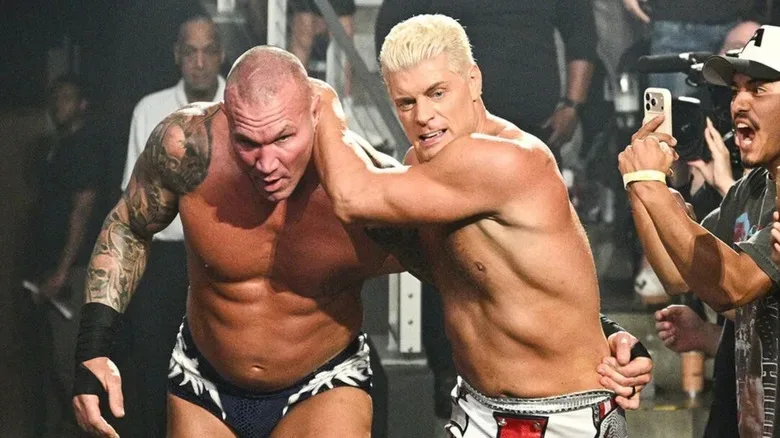
Cody Rhodes will have a major opportunity to address the WWE Universe on SmackDown after his decision not to punt Randy Orton at Sunday Night’s Main Event, and Bully Ray believes the explanation cannot be vague.
Rhodes has occupied WWE’s top tier since returning to the company at WrestleMania 38. His comeback journey, pursuit of the championship, and subsequent reigns as Undisputed WWE Champion made him one of the defining central figures of the era. But with recent storyline developments prompting growing debate among viewers, Bully Ray argued that Rhodes is approaching a pivotal point in his relationship with the audience.
Speaking on Busted Open Radio, Bully Ray said Rhodes is in danger of losing support if he does not immediately give fans a convincing reason for refusing the opening to punt Orton in the head.
“In my eyes, he’s this close to losing fans,” Bully Ray said. “He’s this close. Tiny bit, little bit. So, Cody’s gotta do something and say something.”
For more background on this topic, read Wade Barrett Details 125 Hours of Commentary Work for WWE 2K26.
The concern is not necessarily that Rhodes has already lost the crowd. Rather, it is that an element of uncertainty has entered the conversation around a wrestler who has spent years being presented as one of WWE’s most dependable heroic figures. The scheduled sit-down interview on SmackDown now carries more weight than a routine storyline explanation. It is a chance for Rhodes to define what motivated his choice and remind fans why they should continue to stand behind him.
The Randy Orton Decision Needs an Answer
The central issue is straightforward: Rhodes had an opportunity to use one of Orton’s most dangerous signature tactics against him, but chose not to do it. In wrestling storytelling, a hesitation in that kind of moment can be read in multiple ways. It can represent mercy, loyalty, fear, indecision, or a deliberate refusal to cross a personal line.
For a babyface, refusing to use a vicious tactic can be entirely consistent with the character. But that only works when the audience understands the stakes and believes the motivation. Without that clarity, the decision risks looking less like moral conviction and more like a contrived hesitation designed to prolong a feud.
Bully Ray’s position is that Rhodes needs to make the audience feel the difference. The American Nightmare must explain why he did not punt Orton, why that decision matters to him, and why fans should interpret it as strength rather than weakness.
That is particularly important because Orton is not just any opponent. The two are closely connected in WWE history through Legacy, the faction that also included Ted DiBiase Jr. Their careers have taken radically different paths since then, but their shared past creates an added personal layer whenever they are placed opposite each other. If Rhodes’ restraint came from their history, respect for Orton, or a belief that he is unwilling to become like his rival, SmackDown is where he can establish that point.
Bully Ray Compares the Moment to Rhodes’ Most Powerful Babyface Image
Bully Ray contrasted Rhodes’ current position with one of the most memorable moments of his WWE return: his Hell in a Cell match while competing with a severely injured pectoral muscle. The visual of Rhodes removing his robe and revealing the extent of the injury became an enduring symbol of toughness and commitment. He wrestled despite the obvious physical damage, creating a moment that reinforced his standing as a resilient, sympathetic babyface.
“Cody Rhodes is far away from the night he took off his robe in Hell in a Cell,” Bully Ray said. “He’s as far away from that moment in time as he’s ever been. That moment when he takes off the robe and he shows the world how screwed up his pec [was]... and the fact that he had no business wrestling, but he kept on trucking. ‘This is what I’m willing to do for you.’ From there, to him not punting Randy in the head? Night and day.”
The comparison highlights why this latest development has created such a split response. In the Hell in a Cell scenario, Rhodes’ character was clear through action. He endured pain because he refused to quit. Fans did not require a long explanation to understand the emotional message. The presentation itself told them that Rhodes was willing to sacrifice for victory and for the people supporting him.
The Orton situation presents the opposite challenge. Rhodes’ action—or lack of action—has not yet been fully defined. Until he speaks, viewers are left to decide for themselves whether he acted out of compassion, uncertainty, lingering loyalty, or something else entirely. That ambiguity is what makes the SmackDown interview so significant.
Questions About a Potential Cody Rhodes Turn
The discussion also raised a familiar question whenever a major WWE babyface begins to draw a more mixed reaction: should Rhodes turn heel?
Rhodes has previously stated during another chapter of his career that he would not turn heel, a stance that has long followed him whenever fan reactions become more divided. His present WWE character has been built around perseverance, family legacy, and the goal of completing a story that once appeared out of reach. A villainous shift would represent a dramatic departure from that foundation.
Still, a full heel turn is not the only way to evolve a character. Rhodes could remain a babyface while becoming more forceful, more confrontational, or more willing to challenge the expectations placed upon him. He could also use the audience’s uncertainty as a storyline point without necessarily abandoning the values that have defined his WWE run.
Bully Ray suggested a possible direction in which Rhodes puts the decision back on the fans. Instead of simply asking to be cheered, Rhodes could openly acknowledge the shifting reaction and demand that the WWE Universe decide what it truly wants from him.
“Tell them, ‘I’m giving you a week,’” Bully Ray said. “To the 15,000 people in this arena tonight, I’m giving you a week. To the millions that are at home watching on USA, I’m giving you a week... Do you love me, or do you hate me? I’ll be back in this same spot next Friday.’ It’s an interesting twist. ‘Make up your mind.’”
That approach would not require Rhodes to become a villain overnight. It would, however, allow him to directly address the tension around his character. It could turn the audience reaction into part of the story rather than leaving it as background noise.
Fans Are ‘Teeter-Tottering’ on Rhodes
Bully Ray noted that extended time at the top of the card can create unique pressure for any performer. WWE’s leading stars are expected to keep stories fresh, maintain crowd investment, and navigate the constant scrutiny that comes with being the face of a promotion. That environment can lead to second-guessing, and Bully Ray wondered whether Rhodes may be getting caught in that kind of uncertainty.
At the same time, Bully Ray stressed that Rhodes should pay attention to the fans who are wavering, not simply the strongest critics or the loudest defenders. He pointed to callers who have expressed that it is becoming harder for them to stay fully invested in Rhodes.
“What about fans who are calling in who are kind of like, teeter-tottering on Cody right now, and we got a lot of them this week,” Bully Ray said. “We got a lot of people who were like, ‘Aw, man. It’s becoming a struggle to continue to be a Cody fan.’”
Those are the fans Rhodes most needs to reach on SmackDown. The viewers who have already rejected him may not be easily persuaded, while his most devoted supporters will likely remain loyal regardless. The larger question is whether Rhodes can regain the confidence of people in the middle—fans who still want to connect with the American Nightmare but need the story to give them a compelling reason.
A strong promo does not necessarily mean Rhodes needs to apologize or explain every detail. It means he needs to establish a clear emotional truth. If he did not punt Orton because he refuses to become the kind of man who would use that move, he must say it with conviction. If he did it because his history with Orton made the decision impossible in that moment, he must make that history feel meaningful. If there is another motivation altogether, WWE will need to reveal it in a way that creates anticipation rather than more confusion.
A Defining SmackDown Segment for the American Nightmare
Rhodes has recovered from difficult moments before. His WWE journey has been defined by setbacks, pressure, and the ability to make fans believe in his pursuit of a larger goal. But the response to the Orton angle suggests that conviction alone may not be enough this time. The audience wants direction.
As Bully Ray and Dave LaGreca discussed, many fans may have already begun making up their minds. That is exactly why the upcoming interview matters. Rhodes has a chance to explain his actions, reassert his identity, and prove that his refusal to punt Orton was not hesitation without purpose.
Whether the segment leads to renewed support, a sharper edge in Rhodes’ presentation, or an even deeper divide between the American Nightmare and parts of the WWE Universe remains to be seen. What is clear is that SmackDown has become a crucial moment for one of WWE’s biggest stars. Rhodes needs to make fans understand him—and, just as importantly, make them want to believe in him again.
In pictures
Darryl Polo
Darryl Polo is a passionate wrestling fan covering WWE, AEW, TNA and beyond. He loves great rivalries, breakout stars and the moments that keep fans talking long after the bell. How we work.