
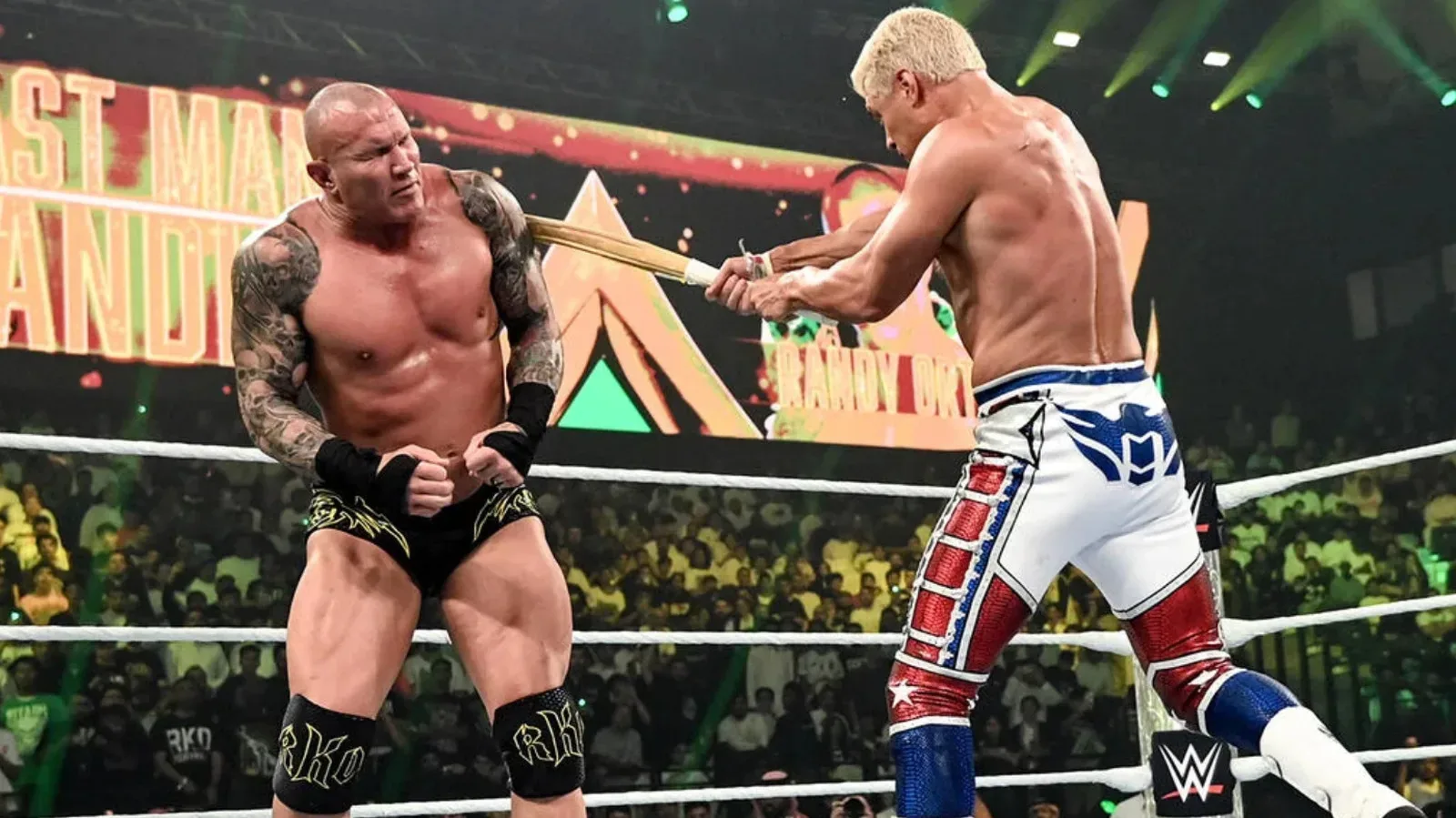
Cody Rhodes and Randy Orton’s bitter WWE rivalry reached its stated conclusion at Crown Jewel, where Rhodes defeated Orton in a Last Man Standing Match and left his longtime ally unable to answer the referee’s count. It was a decisive ending to a conflict built around friendship, legacy, betrayal, and the difficult bond between two of WWE’s most established names.
For WWE Hall of Famer Bully Ray, however, the setting and stipulation did not entirely match the scale of the story. Speaking on Busted Open Radio, Ray said he expected WWE to take the Rhodes-Orton feud to a larger-feeling final destination, suggesting that the program had enough personal history behind it to merit a different type of blowoff.
“It just didn't sound right or feel right to have a blow-off in Saudi with this story,” Ray said. “It sounds like the blow-off would happen at something a bit more major than Crown Jewel. My thing was in the WWE, it seems like the blow-off of all blow-offs is Hell in a Cell, which if they wanted to, they probably could have gotten to.”
Ray’s comments do not take away from the result itself. A Last Man Standing victory is designed to establish a clear winner, and Rhodes did exactly that by leaving Orton down for the count. In storyline terms, the match gave Rhodes the final word in a feud that forced him to confront someone who had been both a mentor and a trusted partner at different points in their shared WWE history.
For more background on this topic, read Seth Rollins Says He Still Has Not Truly Main Evented WrestleMania.
Still, the broader question raised by Ray is an understandable one: when a rivalry is rooted in a long relationship and family history, does the closing match need an equally specific identity?
Why the feud carried unusual emotional weight
Rhodes versus Orton was not simply a battle between two major stars competing for position. Their connection provided WWE with a more layered foundation than the usual competitive rivalry. Orton was associated with Rhodes from Cody’s early years in WWE, while Rhodes’ family legacy has long been central to how audiences view his career and motivations.
That legacy also gave Orton an especially personal avenue to attack. Dusty Rhodes was not just Cody’s father; he remains one of the defining figures in professional wrestling history and a central part of Cody’s identity. When Orton became involved in a story tied to Cody’s past and his relationship with Dusty, WWE had material that could be used to make the feud feel generational rather than merely contemporary.
The Last Man Standing stipulation naturally complemented the hostility. It is a match designed to remove ambiguity. There are no pinfalls or submissions to debate, and there is no escape once the fight begins. One competitor remains standing and the other cannot. For a rivalry centered on a complete breakdown of trust, it made sense as a vehicle for a definitive finish.
Ray’s point was less about whether Last Man Standing can be an effective conclusion and more about whether the event itself was the ideal place for the last chapter. Crown Jewel is a major WWE event, but Ray believed the story’s importance could have justified a match presentation more commonly associated with WWE’s most enduring and brutal feuds.
Hell in a Cell was Ray’s preferred direction
Hell in a Cell has historically been treated as one of WWE’s most consequential environments. The enclosed structure is synonymous with rivalries that have moved beyond standard rules and ordinary match conditions. It is a setting that signals finality, confinement, and escalation, all themes that would have fit a conflict between Rhodes and Orton.
Both men have experience inside Hell in a Cell, though they have never met one another in that structure. That alone would have made the match feel new within their respective bodies of work. More importantly, a Cell match could have emphasized the idea that neither man had an easy way out of the confrontation.
Ray pointed to a recent example of the stipulation being used as a true culmination point: CM Punk and Drew McIntyre’s third and final showdown in 2023. That bout took place inside Hell in a Cell and featured McIntyre being left bloodied by a toolbox. The match was framed as the ultimate escalation after a deeply personal rivalry, an approach Ray felt could have been applied to Rhodes and Orton.
There is a practical storytelling appeal to that argument. A Cell match does not just add weapons or spectacle. At its best, it tells viewers that every standard means of settling an issue has failed. For Rhodes and Orton, whose feud was driven by years of familiarity and a very personal fracture, the visual of locking both men inside the structure could have carried immediate symbolic value.
That does not mean the story required Hell in a Cell to work. WWE has used Last Man Standing matches for major conclusions many times, precisely because the stipulation can convey the same sense of exhaustion and finality. But Ray believes the Cell’s history as WWE’s signature feud-ending setting would have elevated the perceived magnitude of the payoff.
The Texas Bullrope Match connection
Ray also offered a more specialized alternative, one that would have directly tied Orton’s conflict with Cody Rhodes to Orton’s past with Dusty Rhodes. In 2007, Orton defeated Dusty in a Texas Bullrope Match, a bout presented as the end of Dusty’s WWE in-ring career.
That piece of history makes the Texas Bullrope stipulation particularly notable in the context of a Cody-Orton program. A bullrope binds the competitors together, removing the possibility of creating meaningful distance from an opponent. In a rivalry where one of the key ideas is that Rhodes wanted to make Orton answer for what he had done, the stipulation could have served as a direct expression of that premise.
“What if they would have gotten to the blow-off match that Randy ended Dusty's career on, which would have been the Texas Bullrope Match?” Ray said. “And Cody's promo is ‘You're attached to me now. You can't run away this time, and I guarantee I'm gonna kick your head off.’”
The proposal is compelling because it is not just a call for a more violent or more unusual match. It is a call for a stipulation chosen specifically for the characters involved. A Texas Bullrope Match would have invited WWE to acknowledge the Orton-Dusty history in a concrete way while allowing Cody to reclaim a painful part of his family’s past.
It also would have changed the emotional emphasis of the finish. Last Man Standing focuses on endurance: who can survive enough punishment to rise before the count of 10? A bullrope match, by contrast, would center on forced proximity. Rhodes and Orton would be physically connected, making it impossible for either competitor to retreat, reset, or avoid the other man’s anger.
For a character like Orton, who has long been defined by patience, calculated opportunism, and sudden cruelty, being tied to Cody could have been a particularly effective dramatic device. For Cody, it could have supplied a clear verbal hook: this time, Orton could not evade the consequences of his actions or the weight of the Rhodes legacy.
A conclusive result, even with debate over the presentation
Ultimately, WWE chose Crown Jewel and Last Man Standing, and Rhodes emerged as the winner. The result provides the feud with a clean conclusion: Orton could not get back to his feet, while Rhodes could. That is a meaningful outcome in a program involving two stars whose shared past made every escalation feel more personal.
Ray’s assessment is instead a discussion of presentation and potential. In WWE, the destination of a feud can influence how its final chapter is remembered just as much as the finish itself. A Hell in a Cell match would have leaned on WWE’s most recognizable blowoff stipulation. A Texas Bullrope Match would have leaned on the uniquely personal history between Orton and the Rhodes family. Last Man Standing offered a different kind of decisiveness.
Each option carries a distinct storytelling language. The Cell says there is nowhere left to go. The bullrope says there is nowhere left to run. Last Man Standing says only one man can still stand after the damage is done.
Rhodes’ Crown Jewel victory ensured that he was the man standing at the end of this chapter. Whether WWE’s decision becomes viewed as the ideal final stage for the rivalry may remain open to debate, but Ray’s suggestions underline just how much history was available to the company when it came time to close the book on Rhodes and Orton.
In pictures

Darryl Polo
Darryl Polo is a passionate wrestling fan covering WWE, AEW, TNA and beyond. He loves great rivalries, breakout stars and the moments that keep fans talking long after the bell. How we work.