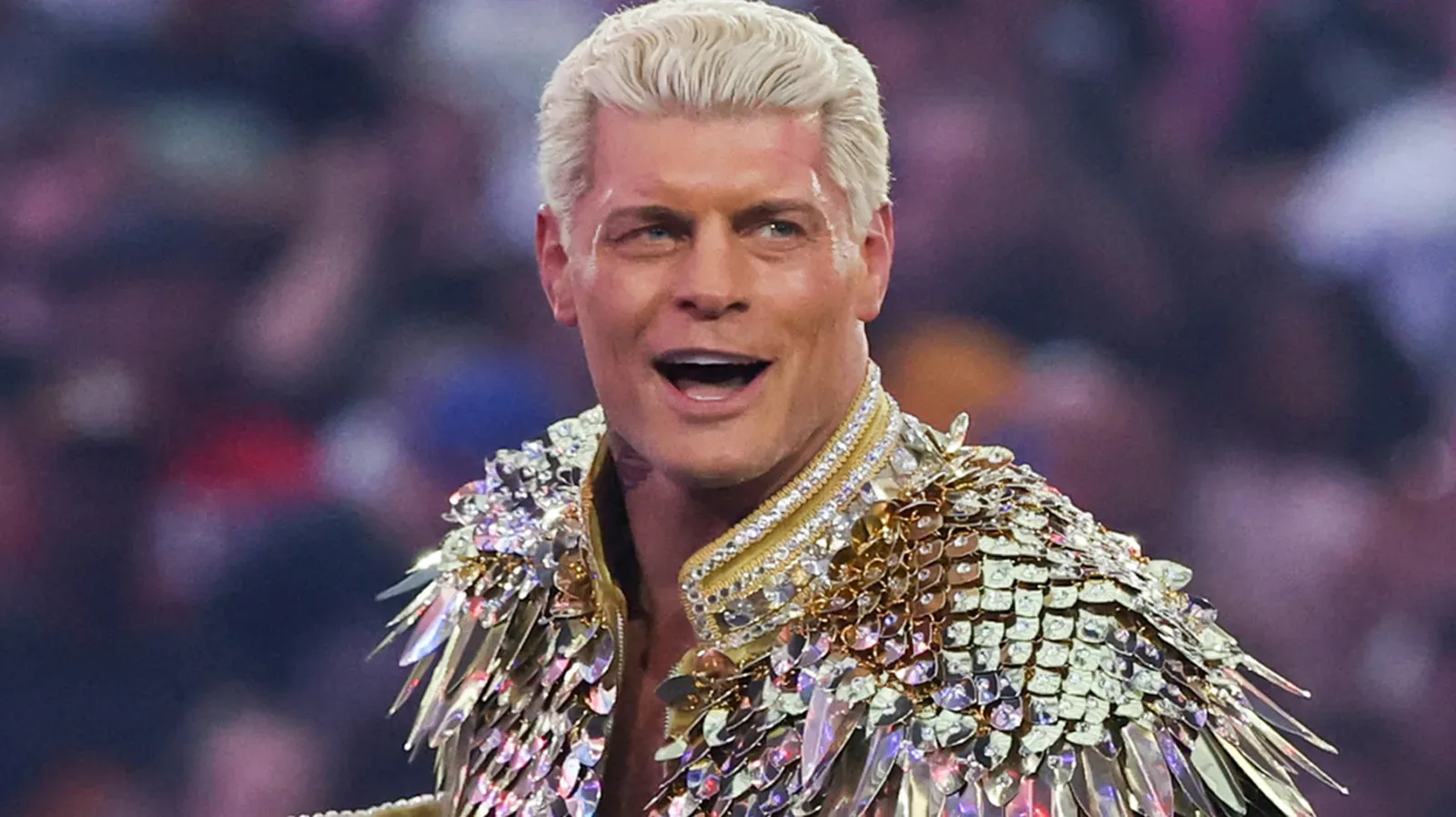
Cody Rhodes’ measured response to Randy Orton on the fallout edition of WWE SmackDown has drawn a pointed critique from WWE Hall of Famer Bully Ray.
Rhodes entered the latest chapter of his conflict with his former Legacy associate following a bitter defeat at Sunday Night’s Main Event. Cody had an opportunity to punt Orton in the head, but stopped himself from doing so. That hesitation immediately gave Orton the opening he needed, as “The Viper” struck with a low blow and followed it with an RKO to defeat Rhodes.
On SmackDown, Rhodes sat down for a roughly four-minute interview with Michael Cole. He remained composed, said he would stay “uncompromised,” and promised that the next time he stood face-to-face with Orton, he would make a different decision. The televised portion of the segment closed with Cody maintaining his calm exterior. After the cameras had stopped rolling, however, Rhodes whispered to Cole that he would “kick his f***ing head off.”
Bully Ray believed the contrast between the violent nature of Cody’s issue with Orton and Rhodes’ presentation during the interview created a major problem for the segment. Speaking on Busted Open Radio, Ray said he did not feel the emotion that the story called for from the former Undisputed WWE Champion.
For more background on this topic, read Raj Dhesi Details Acting Transition Following Strong Son Premiere at TIFF.
“What we just heard, to me, everything about it was polished and soulless,” Ray said. “There was nothing believable about it. I did not buy into it. I did not feel it.”
Bully Ray Wanted Cody Rhodes To Look More Affected
Ray’s issue was not simply that Rhodes wore a suit for the sit-down discussion. The WWE Hall of Famer made clear that he did not need Cody to abandon his familiar presentation or suddenly appear in jeans and a T-shirt. Instead, he wanted signs that Rhodes had been shaken by what had happened at Sunday Night’s Main Event.
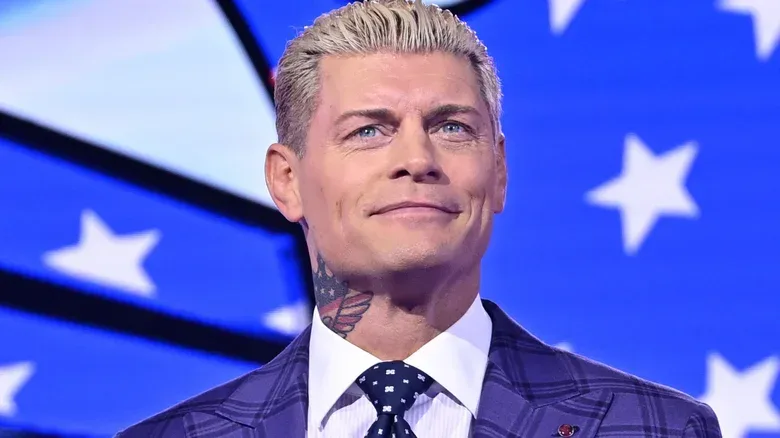
To Ray, every detail of Cody’s appearance and delivery was too carefully controlled for a man who had just passed up the chance to incapacitate an enemy, then paid for that choice by losing the match. He singled out the pristine lighting and polished elements of Rhodes’ wardrobe as visual choices that made the interview feel overly manufactured rather than raw.
“When I see the perfect lighting, when I see the cufflinks perfect, when I see the fold in the tie perfect, when I see the chain on the tie perfect, and when I see the way the cuff comes up above his ankle and the socks and the shoes, please give me something that ruins your appearance a little bit,” Ray said.
The central point of Ray’s criticism was that the story required a more human reaction. Orton had taken advantage of Cody’s conscience and then used that hesitation to label him a good man instead of a “killer.” Rhodes had been presented with a defining choice and, in Ray’s view, should have looked as though he was struggling with the consequences of making it.
Rather than a calm declaration that he would remain uncompromised, Ray wanted to see Cody questioning himself and the circumstances around him. He suggested an interview in which Rhodes became briefly frustrated with Cole, loosened his tie, stood up, or otherwise allowed the audience to see the anger beneath the polished exterior.
“If Cody would have gotten upset, if he would have actually came out of himself for a minute and took it out on Michael,” Ray said. “‘What the hell, Michael. What’s going on around here? I’ve done this and I’ve done this.’ If he would have undid his tie a little bit like, ‘Come on, Michael, give me some answers. What am I doing wrong? What am I not seeing?’”
Ray also proposed that Cody could have pulled himself back after an emotional outburst, apologizing to Cole while acknowledging that the situation had left him heated. That kind of escalation and restraint, Ray argued, would have made Rhodes feel less like a finely rehearsed public figure and more like a man pushed toward an uncomfortable edge.
The Dusty Rhodes Comparison
In explaining the type of reaction he hoped to see, Ray invoked Cody’s late father, Dusty Rhodes. “The American Dream” was known for emotionally charged promos and a lived-in presentation when a rivalry became personal. Ray recalled Dusty appearing visibly worn down in comparable situations, with circles under his eyes and a difficult time organizing his thoughts because an opponent had gotten under his skin.
That was not a call for Cody to imitate Dusty’s speaking style or duplicate his father’s character. Cody Rhodes has built a distinctly different persona in WWE, one that is often defined by his tailored suits, deliberate words, and aspirational image. But Ray felt the emotional principle still applied. A feud that reaches the point of a potential punt kick, a low blow, and an RKO should leave a visible mark on the babyface involved.
For Ray, the desired shift was modest but important. Cody did not need to become disheveled beyond recognition, change his wardrobe, or abandon the traits that have helped define “The American Nightmare.” He simply needed an element of disorder. The character’s restraint could still be intact, but it should appear to be under pressure.
“I wanted to see him being a human being that was questioning what the hell was going on,” Ray said.
That observation cuts directly to the central theme of the Rhodes-Orton program. Orton has positioned Cody’s morality as a weakness. Rhodes had the opportunity to use a devastating punt, declined to do it, and was immediately punished. Orton then framed the moment as proof that Cody is fundamentally too decent to make the ruthless decision necessary to finish him.
Rhodes’ SmackDown interview presented the opposite response. Rather than panic or second-guess himself on camera, Cody insisted that he would not compromise who he is. His post-show message to Cole, though, indicated that the anger Orton seeks to provoke may be building below the surface.
What Cody’s Restraint Means In The Randy Orton Rivalry
The question now is whether WWE intends for Cody’s calmness to be a strength, a flaw, or both. Orton’s assessment of Rhodes as a good man rather than a killer is designed to challenge the champion-level intensity associated with Cody’s biggest WWE battles. The former Legacy partners share a history that makes the issue more personal than a standard rivalry: Orton was once the established star and mentor-like figure in the group, while Rhodes was a younger wrestler searching for his place.
Now, the dynamic has changed. Cody has become one of WWE’s defining stars, while Orton has embraced the role of the calculating veteran who knows exactly which emotional buttons to press. The Sunday Night’s Main Event finish gave Orton tangible evidence for his argument. Cody had the chance to act without restraint, did not take it, and lost because of it.
On television, Rhodes’ promise to make a different choice next time suggests he understands that Orton’s tactics cannot go unanswered. Yet his decision to call himself “uncompromised” keeps the story from becoming a straightforward descent into vengeance. Cody is not necessarily saying that he will become Orton. He is saying that he may be prepared to meet him with greater force while retaining the moral identity Orton is trying to exploit.
Ray’s critique is that this idea needed to be communicated with more volatility. A controlled Cody promising consequences may establish resolve, but a visibly conflicted Cody would better show the cost of Orton’s manipulation. In Ray’s eyes, the audience needed to see that the low blow and RKO did more than cost Rhodes a match. They needed to see that Orton’s words had gotten into his head.
A Deliberate Contrast Between Image And Emotion
There is also an argument that the pristine Cody Rhodes presentation is part of the current story. Rhodes has long been portrayed as an exceptionally polished top star, from his entrance gear to his carefully chosen language. Orton’s objective may be to crack that image, forcing Cody to reveal a more dangerous and less predictable side.
The off-camera remark to Cole offered a glimpse of that possibility. On the broadcast, Cody was deliberate and composed. Once the show was no longer on the air, he was far more explicit about what he intends to do to Orton. That split can be read as an early indication that Rhodes is still trying to keep himself in check, even as his patience reaches its limit.
Whether that approach lands will likely depend on how WWE follows the segment. If Cody continues to speak calmly while Orton’s attacks become more personal, the pressure on the character will only grow. If he eventually snaps, the earlier restraint could become part of the payoff. If the emotional shift never arrives, however, Ray’s criticism that the feud lacks visible life from its protagonist may continue to resonate.
For now, Orton has the victory, the psychological advantage, and a claim that Cody Rhodes cannot bring himself to be a “killer.” Rhodes has answered that he will make a different choice when the moment returns. The unresolved issue is not whether Cody is angry. His words to Cole made that clear. It is how much of that anger WWE will allow “The American Nightmare” to show before he and Orton meet again.
In pictures
Darryl Polo
Darryl Polo is a passionate wrestling fan covering WWE, AEW, TNA and beyond. He loves great rivalries, breakout stars and the moments that keep fans talking long after the bell. How we work.