
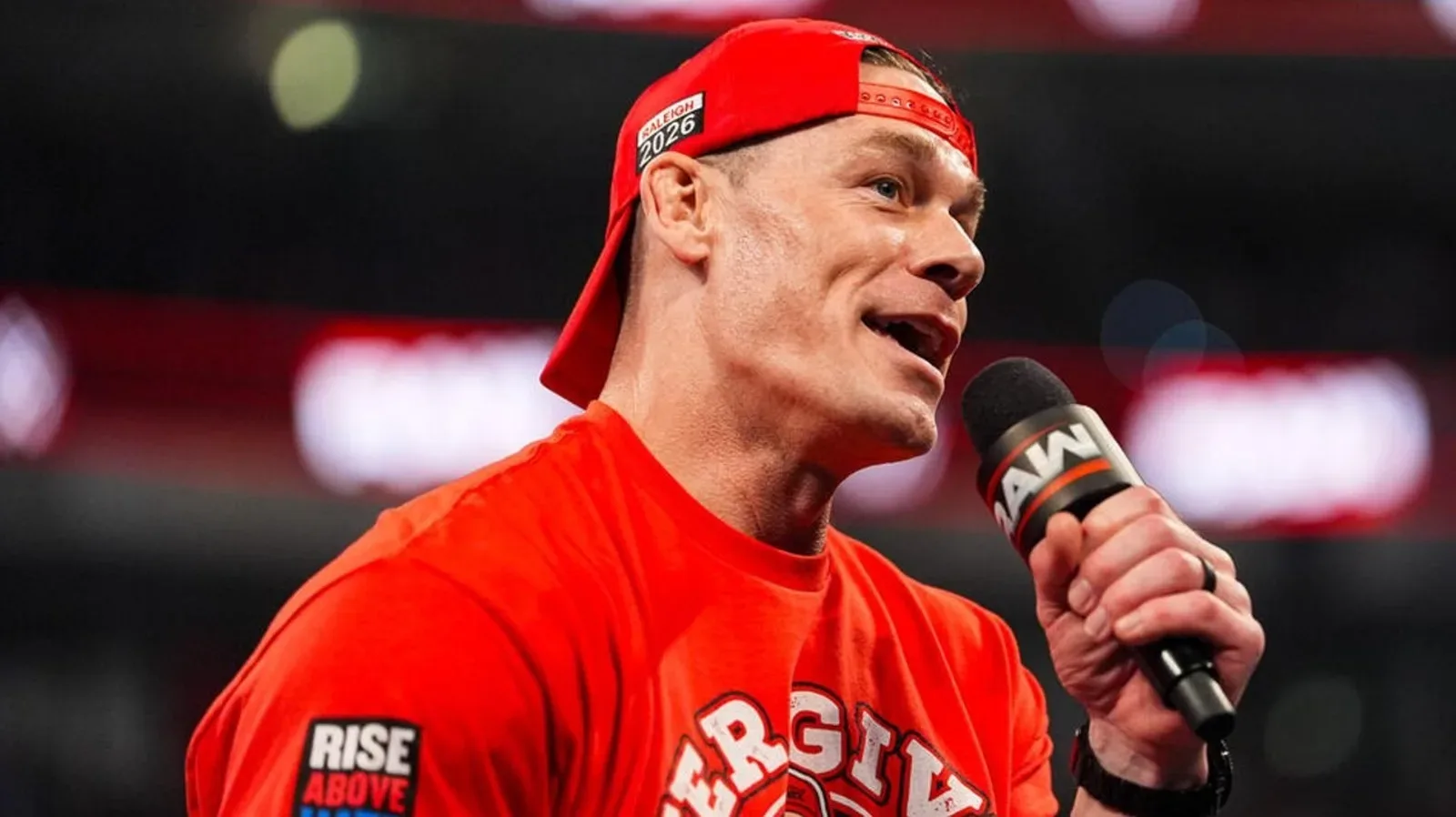
Bully Ray has examined the audience dynamic behind John Cena’s recent WWE Raw segment with Liv Morgan and Becky Lynch, arguing that the sequence sent the live crowd conflicting messages at the exact moment WWE had created an opportunity to elevate its Women’s World Champion.
Cena appeared on Raw to promote the John Cena Classic and invited Morgan to take part. The invitation carried added weight because Cena used his promo to recognize Morgan’s journey, her ability, and the support she has earned from fans who have seen her potential. Cena also drew a parallel between Morgan’s rise and his own, noting that neither performer was handed a straightforward path to the top.
For Bully Ray, that was a meaningful setup. Cena’s endorsement was not merely an announcement about tournament participation; it was a major WWE figure publicly validating Morgan as a champion and a performer worthy of standing alongside him. The complication, in Ray’s view, came when Lynch entered the scene and immediately took aim at Morgan.
Lynch accused Morgan of holding back fellow Judgment Day members Roxanne Perez and Raquel Rodriguez. She also argued that Morgan’s accomplishments would not have been possible without the group around her. The confrontation gave the segment a clear issue between Lynch and Morgan, but Ray felt the timing made it harder for the audience to know how it was expected to react.
For more background on this topic, read Kelani Jordan Retains NXT Women’s Title After Disqualification Against Kendal Grey.
Cena’s Endorsement Changed the Crowd Equation
Speaking on Busted Open, Bully Ray stressed the importance of Cena personally selecting a talent for a featured moment. In his view, WWE performers understand the significance of that type of endorsement, and the audience recognizes it as well.
“The boys know, the guys and the gals know, that if John handpicks you, he thinks highly enough of you to bring you out to share the ring with him,” Ray said.
Ray’s point was that Cena’s presence can influence how viewers receive another WWE star. Even if Morgan is not universally beloved by every section of the audience, Cena’s decision to call her out and speak positively about her gives fans a reason to offer respect. A Cena endorsement, particularly in a moment designed to spotlight a champion, can establish that the person beside him belongs on that stage.
Morgan’s role in the segment was therefore unusually layered. As Women’s World Champion and a member of Judgment Day, she arrived with an established character identity and alliances. Yet Cena’s words invited the crowd to look at her through a different lens: as a competitor who fought for her place and achieved enough to be included in the John Cena Classic.
That does not automatically require fans to abandon every prior perception of Morgan. It does, however, give them a strong emotional cue. Cena was effectively asking the audience to acknowledge her in-ring credentials and her climb to the top. Ray felt that cue was powerful enough that it needed room to land before the direction of the segment changed.
Why Becky Lynch’s Arrival Created Conflicting Signals
In Ray’s assessment, Lynch’s interruption immediately pushed against the goodwill Cena had just established. Lynch did not simply arrive to add another voice to the occasion. Her message was centered on diminishing Morgan, questioning the independence of her success, and criticizing her impact on Perez and Rodriguez.
Ray argued that this put the crowd in an awkward position. The audience had just watched Cena choose Morgan, praise her, and connect her career path to his own. Then Lynch, another major WWE name, entered to challenge the very idea that Morgan deserved the approval Cena had offered.
“So here’s John calling out Liv. We have a moment,” Ray said. “We can at least respect Liv for her in-ring talents as a champion because John is acknowledging it, and then all of a sudden, Becky Lynch [appears], it’s like, ‘How dare you?’”
The issue for Ray was not simply that Lynch insulted Morgan. Wrestling promos regularly involve stars challenging one another’s credentials, especially when championships and rivalries are involved. His criticism centered on the order of events and on the relative force of the messages being delivered. Cena had just made Morgan’s recognition the focus of the segment. Lynch’s entrance redirected that focus into an argument over whether Morgan deserved the recognition at all.
Ray suggested that fans were less inclined to immediately join Lynch in criticizing Morgan because Cena had placed Morgan in a position of respect. Cena’s stature made that endorsement especially difficult to dismiss. If the audience accepts Cena’s judgment in the moment, a performer arriving afterward to reject it risks appearing to be disrupting something fans have been encouraged to value.
“John selected this girl,” Ray said, framing the crowd’s likely perspective. “John’s a bigger star than you, and here you come out to” tear her down.
Interpreting the Unresponsive Crowd
Ray connected that sequence of cues to what he described as an unresponsive crowd during Lynch’s remarks. Rather than reading the reaction only as a statement about Lynch or Morgan individually, he viewed it as a consequence of the segment’s construction.
From the audience’s perspective, Cena had already defined the emotional starting point. Morgan was supposed to be appreciated for what she had accomplished, at least for that moment. Lynch then asked the crowd to pivot quickly into rejecting Morgan’s standing and accepting a far harsher assessment of the champion.
That is a challenging turn to make, particularly when the person who set the first tone is John Cena. A live audience can react strongly when it is given a simple choice or a clear emotional direction. It can become quieter when two major figures are offering opposing instructions before the first one has fully played out.
“Thus, the crowd being unresponsive because they’re not going to cheer for Becky and everything that she’s saying about burying Liv because John just put Liv over and chose her to be in the Classic,” Ray said. “Do you want to talk about confusing an audience?”
Ray’s reading emphasizes the difference between conflict and confusion. Conflict is essential to a wrestling program: rivals need reasons to oppose one another, and champions need challengers who can question their legitimacy. Confusion occurs when the intended reaction is less clear because a segment asks viewers to emotionally invest in two incompatible ideas at once.
In this case, Cena’s invitation suggested that Morgan had earned an important measure of respect. Lynch’s argument was that Morgan had relied too heavily on Judgment Day and was now preventing other members from reaching their own potential. Both ideas offer material for a story, but Ray believed they were presented too close together for the crowd to process cleanly.
The Judgment Day Question Remains Central
Lynch’s comments also placed Judgment Day at the heart of the confrontation. By naming Roxanne Perez and Raquel Rodriguez, Lynch did more than challenge Morgan personally. She framed Morgan as a champion whose leadership and success may be coming at the expense of the people around her.
That accusation gives Morgan a substantial issue to answer. Morgan can point to her championship status and the path that got her there, while Lynch can continue to question whether that status is truly hers alone. Perez and Rodriguez are also directly implicated by Lynch’s claim that Morgan is holding them back.
But the Cena element made the segment about more than the internal dynamics of Judgment Day. Cena’s words placed Morgan’s personal perseverance front and center. His comparison between his own difficult climb and Morgan’s journey gave her a level of validation that Lynch then sought to dismantle.
That contrast may ultimately be the key to understanding why Ray found the audience response so notable. The segment contained a potentially strong disagreement: whether Morgan should be viewed primarily as a self-made champion or as a beneficiary of Judgment Day. Yet it opened with Cena affirming Morgan’s resilience and worthiness before Lynch could advance the opposite case.
A Lesson in Segment Framing
Bully Ray’s critique was not a rejection of placing Cena, Morgan, and Lynch in the same storyline space. Instead, it focused on how the scene framed its central characters and how quickly the intended emotional direction shifted. Cena’s endorsement was presented as a major moment for Morgan. Lynch’s interruption then challenged the foundation of that moment rather than allowing it to stand on its own.
For Morgan, the Raw appearance created both an endorsement and an immediate challenge. She was selected for the John Cena Classic by one of WWE’s defining figures, while Lynch used the same segment to cast doubt on her accomplishments and her treatment of Judgment Day. For Lynch, the confrontation established her willingness to say what Cena did not, even if that meant going against the crowd’s initial inclination to respect Morgan.
Whether WWE intends the uneasy reaction to become part of the story remains to be seen. What is clear from Ray’s analysis is that Cena’s approval carried enormous influence over the room. Once he publicly elevated Morgan, any performer attempting to cut her down had to contend not only with Morgan’s fans or Judgment Day’s supporters, but with the credibility Cena had just placed behind her.
That is why Ray saw the Raw exchange as a lesson in audience management. WWE had a straightforward emotional hook in Cena recognizing Morgan. By adding Lynch’s immediate criticism, the segment gained tension but, in Ray’s view, lost clarity. The result was a crowd that had been encouraged to respect Liv Morgan one moment and asked to accept Becky Lynch tearing her down the next.
In pictures

Darryl Polo
Darryl Polo is a passionate wrestling fan covering WWE, AEW, TNA and beyond. He loves great rivalries, breakout stars and the moments that keep fans talking long after the bell. How we work.