
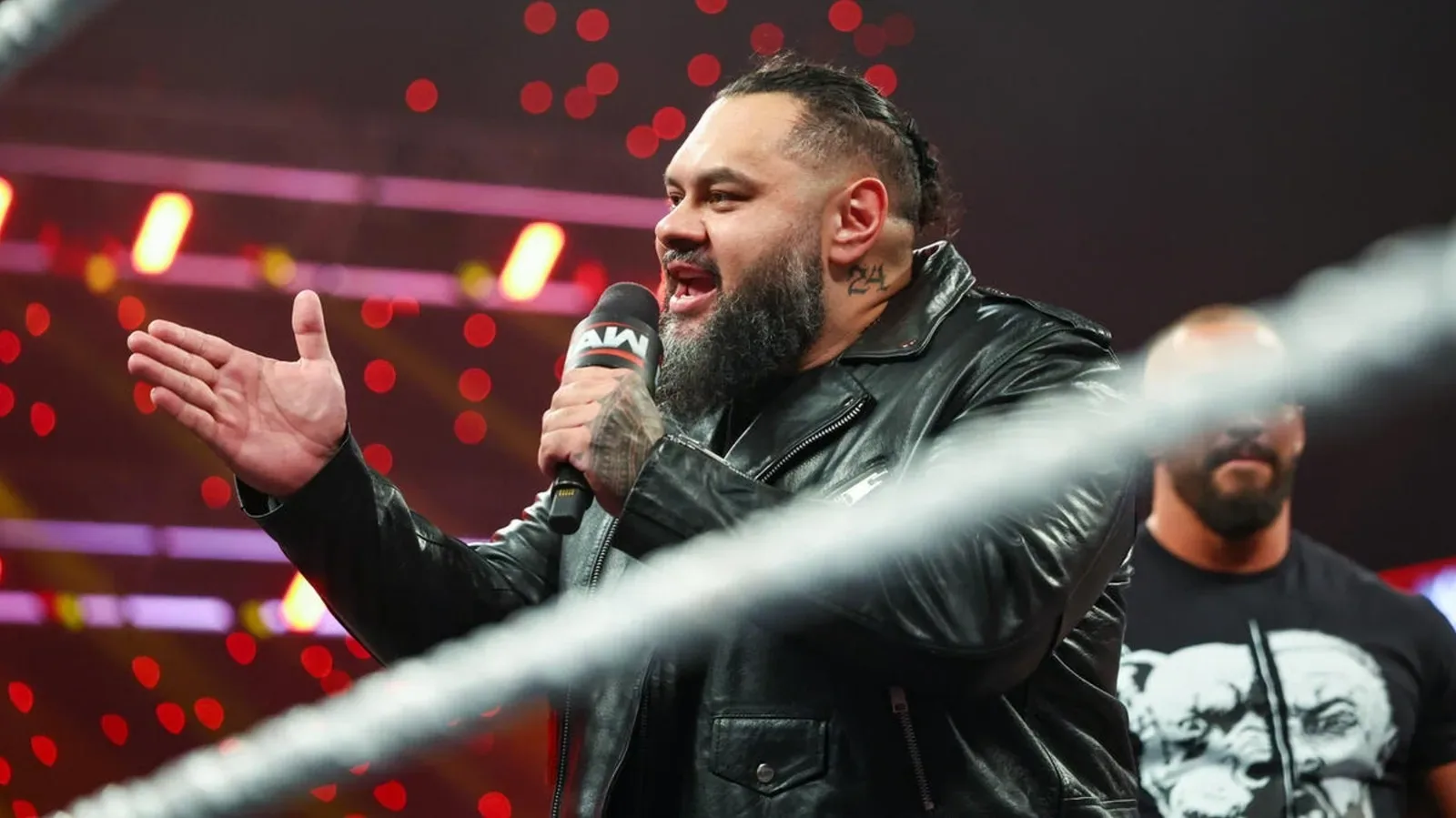
Bronson Reed has opened up about the bicep injury that took him out of WWE action earlier this year, describing it as a freak occurrence while also acknowledging that the demanding training he had been doing beforehand may have contributed to the wear on his body.
The Australian powerhouse suffered a torn bicep during a match on WWE Raw. It was a significant setback for a performer whose presentation has long been built around explosive power, physical intimidation and the ability to move with surprising speed for his size. Reed has since returned to WWE television looking visibly lighter, and he believes the changes made throughout his recovery could ultimately make him a more durable and better-conditioned competitor.
For Reed, the injury was not something he can point to as the result of one clearly reckless moment in the ring. Instead, he sees it as the kind of issue that can emerge after years of placing enormous demands on the body through both professional wrestling and serious strength training.
“It was just a freak accident,” Reed said. “Like, it might have been wear and tear from over time. I'd done a lot of powerlifting in my time, and right before my bicep getting injured, I was sort of going for a record of a new bicep curl and just doing some crazy lifts, and it's probably stuff that I have changed now in the way that I work out and the way that I concentrate on my muscles.”
For more background on this topic, read WWE EVOLVE Results: Harlem Lewis Retains, Skylar Raye Sets Women’s Title Challenge.
A Freak Injury With Potentially Long-Term Lessons
Reed’s assessment underlines the balancing act facing WWE wrestlers, particularly those whose style depends on size and strength. Wrestlers are expected to train for appearance, athletic performance, conditioning and injury prevention while also absorbing the physical punishment that comes with matches, travel and a full-time television schedule. For an athlete with Reed’s power-based approach, maintaining strength has always been central to the job.
However, Reed’s comments suggest that his time away prompted him to reconsider how he pursues that strength. Chasing a personal bicep curl record and performing unusually intense lifts may not have directly caused the tear, but he believes those efforts could have added to the accumulated stress in the arm before the injury occurred.
That does not mean Reed views heavy lifting as inherently unsafe, nor does he believe every injury can be avoided through a perfect training plan. The uncertainty is part of what made the situation frustrating. In wrestling, an injury can occur during a major maneuver or a hard-hitting sequence, but it can also happen during something that appears routine.
“You can do something completely crazy and be completely safe, or you could just be in the ring literally running around, walking around or whatever and do something,” Reed said. “So, it's fate a lot of the time.”
It is an honest description of the unpredictability performers face. Wrestlers spend years learning how to fall, protect themselves and work safely with opponents, but preparation cannot eliminate every risk. The physical nature of the profession means that even a carefully planned match can change in an instant, especially when the body has been subjected to repeated strain over time.
For Reed, the response has been to take what he can from the experience. Rather than simply trying to return to the exact routine he followed before the injury, he has adjusted the way he works out and the way he focuses on individual muscle groups. That approach reflects a broader goal beyond recovering from one torn bicep: protecting his ability to perform consistently once he is back in the WWE ring.
The Challenge of Rebuilding Strength After Surgery
While getting cleared to return is a major milestone after any serious injury, Reed explained that the process was far more involved than simply waiting for the affected arm to heal. The most difficult part of his rehabilitation was regaining strength in the bicep that had been torn.
Reed was able to preserve one important part of his fitness during the early stages of recovery. Even while his right arm was unusable following surgery, he continued doing cardio work. That allowed him to maintain his conditioning to a degree, but cardiovascular fitness could not prevent the obvious effects that surgery and inactivity had on the injured arm.
“I couldn't even feel anything in my right arm after surgery,” Reed said. “So, like, it naturally lost like half an inch to the other arm. So I think strength was probably the hardest thing to rebuild back. Whereas the first six weeks or so when I couldn't use my right arm at all post-surgery, I was still doing cardio and stuff like that.”
The detail illustrates the specific challenge presented by a bicep tear. Reed could continue working to keep his engine running, but an arm that could not be used normally was inevitably going to lose muscle and strength. Restoring that strength is especially important for Reed because his in-ring offense and overall physical identity are tied so closely to force and explosiveness.
The recovery also required patience. Cardio can be maintained through modified workouts, but rebuilding an injured arm cannot be rushed without risking another setback. Reed’s account makes clear that the rehabilitation involved dealing not only with the physical limitations of the injury, but also with the visible imbalance between his arms and the gradual process of getting the affected side functioning at full capacity again.
That process can test any athlete’s resolve, particularly a wrestler accustomed to training at a high level and performing in front of a live audience. Reed had to accept a period in which he could not use his right arm at all, then work through the steps needed to regain the strength that had been lost. His return therefore represents more than a simple resumption of ring activity; it is the result of reconstructing a foundational part of his athletic game.
A Leaner Bronson Reed Could Mean Greater Stamina
One of the most noticeable aspects of Reed’s WWE return has been his changed physique. He came back looking much lighter than he did before the injury, a transformation that naturally drew attention given his previous emphasis on mass and raw power.
Reed believes that the physical change may offer a meaningful in-ring benefit. While his size has always been a major advantage, carrying less weight could improve his stamina and allow him to sustain his pace for longer stretches. That could be particularly valuable in extended matches, where conditioning becomes increasingly important as fatigue sets in and a wrestler must still execute with timing, balance and impact.
For Reed, becoming lighter does not necessarily mean abandoning the traits that made him a dangerous WWE presence. The goal appears to be finding a more effective balance: retaining the power necessary for his offense while improving the endurance that can help him remain effective deeper into a match.
That is a potentially important development for his future. Reed’s athleticism has often stood out because he can move quickly despite his larger frame. Additional stamina could further expand what he is able to do in the ring, whether that means maintaining pressure over longer contests or having more energy available for the explosive moments that define his style.
Looking Forward After Time Away
Reed’s injury served as an unwelcome interruption, but his perspective on the experience is focused on adaptation rather than regret. He has identified areas of his workout habits that he has changed, maintained his cardio where possible during recovery, rebuilt the strength in his right arm, and returned with a leaner look that he feels could improve his performance.
There remains no guaranteed formula for preventing every injury in professional wrestling. Reed himself has emphasized that the sport can be unpredictable, with a problem arising during an ordinary moment just as easily as during an extreme feat of athleticism. Still, his response demonstrates the value of adjusting after a setback instead of treating a return as a simple matter of picking up where things left off.
As he continues his WWE run, Reed will carry the lessons of the injury into both his training and his in-ring work. The bicep tear forced him to confront the difficulty of losing strength in a crucial arm and the frustration of being unable to use it after surgery. It also appears to have led to a new approach that places greater emphasis on sustainable preparation and conditioning.
For Reed, the objective now is clear: preserve the physical power that makes him formidable while ensuring he is equipped to perform at a high level for longer. His return has already revealed a different-looking Bronson Reed. The next test will be how that revised training approach and improved endurance translate when WWE competition demands everything from him again.
In pictures

Darryl Polo
Darryl Polo is a passionate wrestling fan covering WWE, AEW, TNA and beyond. He loves great rivalries, breakout stars and the moments that keep fans talking long after the bell. How we work.