
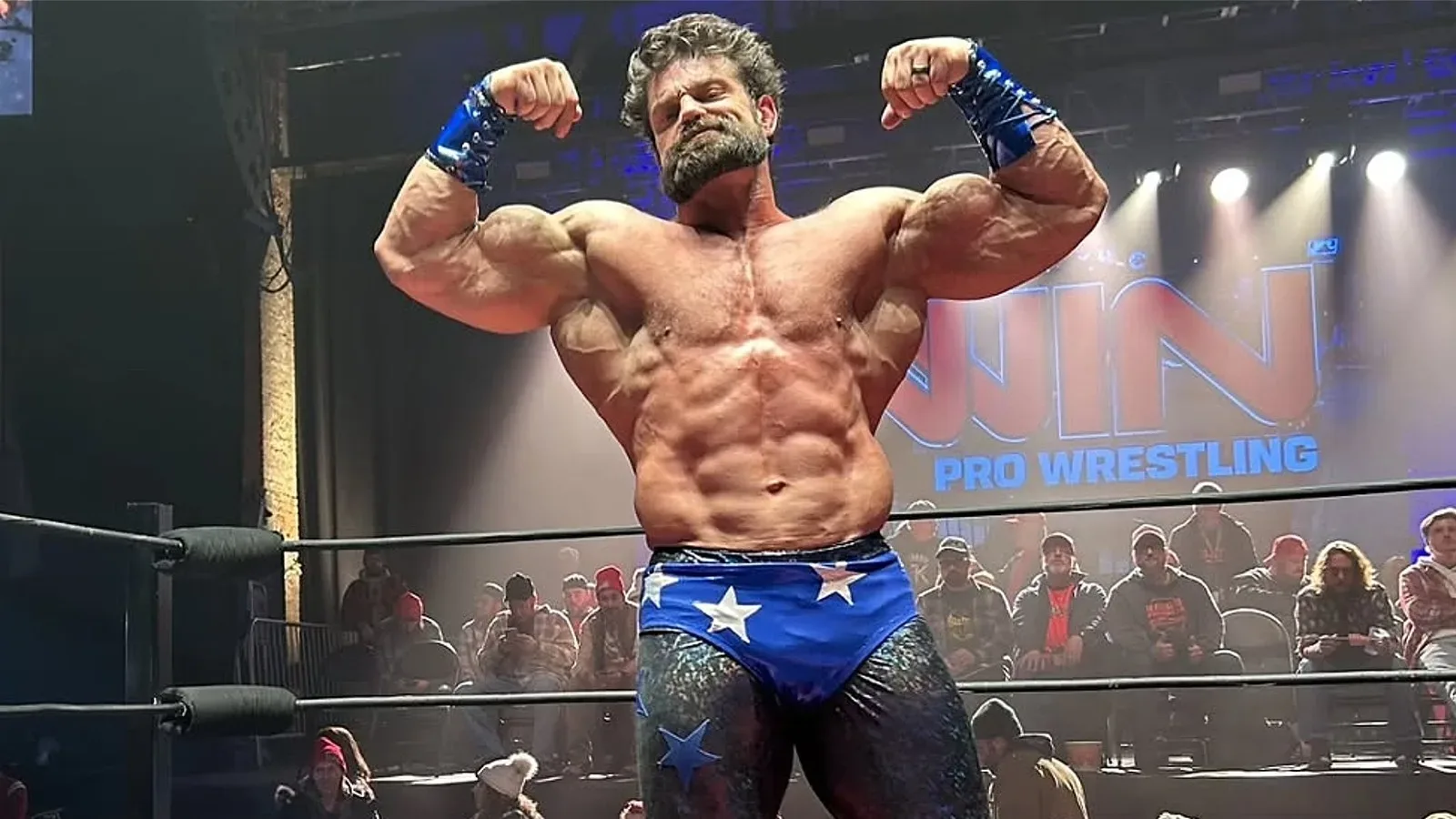
Brian Cage’s work in professional wrestling has always been built around a presentation that is difficult to overlook. The AEW wrestler’s imposing physique, explosive athletic ability and larger-than-life visual presence have made him a natural fit for wrestling television, and those same traits recently helped take him into a major Hollywood production.
Cage, Lance Archer and Chavo Guerrero appeared in Steven Spielberg’s Disclosure Day, which was released earlier in 2026. The wrestlers are featured in the movie’s opening sequence, giving Cage an opportunity to perform in a project led by one of cinema’s most recognized directors. In discussing the experience, Cage explained that the path to the role was not a direct one, but it eventually came together through a connection that Guerrero helped create.
Speaking on No But Seriously Though, Cage said that Guerrero was instrumental in getting him considered for the job. Cage and Guerrero had initially been scheduled to work together on a television production, though that project was postponed. During the delay, Guerrero suggested Cage as someone who could suit the needs of Spielberg’s film.
That recommendation proved significant. Guerrero has developed substantial experience in entertainment work outside the ring, frequently serving as a wrestling coordinator, performer and bridge between the wrestling business and film or television productions. For Cage, the introduction led to an audition process and then to the unexpected realization that Spielberg himself had taken notice.
For more background on this topic, read Brawling Birds Officially Join United Empire at AEW Collision Grand Slam France.
“Somebody else pointed out that Brian Cage worked for Steven Spielberg before John Cena or the Rock,” Cage said on No But Seriously Though. “Chavo kind of helped me get the job.”
Cage recalled his reaction after learning that Spielberg had seen his material and liked what he brought to the screen. The moment carried obvious weight for a wrestler who had been selected to represent the distinct visual identity of a professional wrestler in a Spielberg-directed production.
“I go, ‘Oh, s**t! Steven Spielberg’s watching my stuff?’” Cage said. “He saw me and went, ‘Oh! That’s what a pro wrestler looks like. I need that guy in my movie.’”
The comment speaks directly to what Cage’s casting represented. Wrestling performers have long crossed into movies and television, often playing fighters, bodyguards, athletes and other physically intimidating roles. But a film sequence centered on wrestling needs performers who can do more than simply appear imposing. They need to move convincingly, understand timing, react to an opponent, work safely and create the sense of competition that audiences associate with the sport. Cage’s background made him a natural candidate for that assignment.
Spielberg also apparently gave Cage a meaningful degree of input when it came to the on-screen opponent. Cage said the director is a wrestling fan and allowed him to choose who he would work with for the scene. Cage selected Archer, another established wrestler whose size, athleticism and hard-hitting style made him a logical counterpart.
Archer’s involvement gave the sequence a matchup between two performers accustomed to working at a high physical level. Both men have extensive experience in major-ring environments, and both have built reputations around power-based offense and intimidating presentations. That kind of familiarity is valuable on a film set, where a wrestling scene has to look authentic while also being adapted to camera placement, production timing and the director’s specific visual requirements.
The choice also ensured that Cage would be working with someone he could trust. Professional wrestling is built on cooperation even when the action is designed to appear violent, and that trust becomes especially important in an unfamiliar production setting. A cinematic sequence may involve multiple takes, altered pacing and technical limitations that do not exist in a live wrestling match. Having another experienced wrestler across the ring can help preserve both safety and credibility.
A Wrestler’s Look Reaches Hollywood
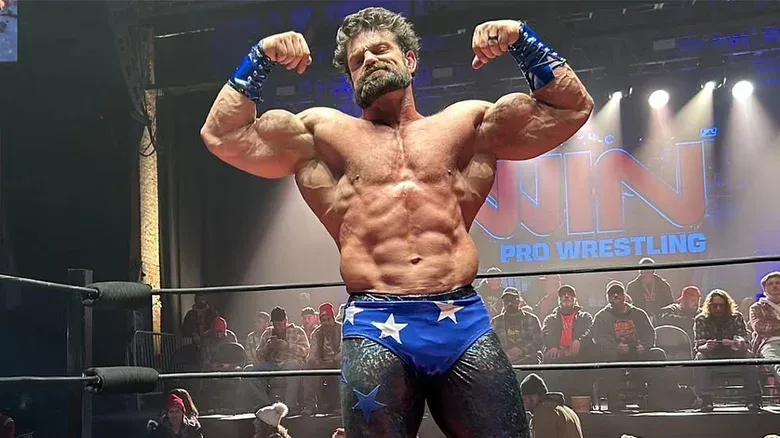
Cage’s remarks highlight a recurring reality for wrestlers pursuing roles outside the industry: casting can begin with the immediate impression a performer makes. In wrestling, Cage’s look has been a central part of his identity for years. He combines a bodybuilder-like frame with the ability to perform moves normally associated with lighter competitors, a contrast that has helped define his persona through stops across several promotions and, more recently, AEW.
That presentation is especially useful in a film environment where a director may need a performer to register quickly on screen. A wrestling scene, particularly one placed near the beginning of a movie, has to establish its energy and visual language in a short amount of time. Cage’s account suggests that Spielberg saw a performer who instantly communicated what the sequence required.
For Cage, the project is another example of how wrestling careers can create opportunities beyond weekly television and live events. The wrestling industry has supplied Hollywood with stars for generations, from performers who transition full-time into acting to wrestlers who take selected roles while continuing to compete. Not every role needs to be a leading part to be meaningful; a memorable appearance in a high-profile film can introduce a wrestler to viewers who may not follow wrestling programming.
The presence of Cage, Archer and Guerrero in Disclosure Day also underscores the value of specialized wrestling talent on productions that want to depict the sport. Modern audiences are familiar with wrestling’s physical vocabulary, and a sequence can lose impact if it is performed by actors without the necessary movement, timing or ring awareness. Bringing in active or veteran wrestlers gives filmmakers people who understand the details that make a match feel real, from footwork and selling to the rhythm of crowd-facing performance.
Cage’s Interest in More Screen Work
The Spielberg collaboration does not appear to have reduced Cage’s interest in taking on additional acting opportunities. During the same conversation, he discussed the kinds of projects that would appeal to him in the future. One role he would have enjoyed was appearing as a Wolverine variant in Deadpool & Wolverine, a film that used multiple versions and interpretations of familiar characters.
While that specific possibility did not happen, Cage made clear that he would welcome even a smaller opportunity within the Marvel Cinematic Universe. The idea fits naturally with his interest in physical roles and action-driven appearances. Comic-book films often rely on stunt performers, athletes and combat-trained talent to give fight scenes impact, and Cage’s abilities would translate comfortably to that setting.
He also mentioned interest in participating in a fight scene with action star Jet Li. That aspiration reflects the type of cinematic work Cage appears most drawn to: projects where physical performance is a major part of the role. Wrestlers bring a particularly useful skill set to action filmmaking because they are trained to tell stories through movement while making controlled impact look dramatic. The best wrestling performers also understand how to use facial expressions, posture and body language to communicate character, qualities that can be effective even in a brief screen appearance.
There is no indication that Cage is stepping away from wrestling for an acting career. Rather, his comments present Disclosure Day as a notable experience and an opportunity he would be happy to build upon. The film gave him a chance to work with Spielberg, share the screen with Archer and take part in a sequence designed around the world he knows best.
What the Appearance Means for AEW’s Cage
For AEW viewers, Cage’s film involvement adds another layer to a career already defined by versatility. In the ring, he has worked as a powerhouse, a high-flyer for his size and a competitor able to fit into both singles and faction-based stories. Away from the ring, the Spielberg project demonstrates that his strengths can be applied in a very different medium.
His story also reinforces Guerrero’s continuing importance as a resource for wrestlers looking to explore entertainment opportunities. Guerrero’s work has placed him in a unique position to connect the practical demands of film and television with the specific skills of professional wrestlers. In this case, a postponed television job ultimately led Cage toward a feature-film appearance in the opening of Disclosure Day.
Cage’s takeaway from the experience is simple but significant: a chance recommendation, an audition and the right visual fit put him in front of Spielberg. From there, he was able to select Archer as his opponent and help bring a wrestling sequence to the screen with performers who knew exactly how to make it work.
For a wrestler whose career has been built on standing out, the role offered a very different stage on which to do exactly that.
In pictures

Darryl Polo
Darryl Polo is a passionate wrestling fan covering WWE, AEW, TNA and beyond. He loves great rivalries, breakout stars and the moments that keep fans talking long after the bell. How we work.