
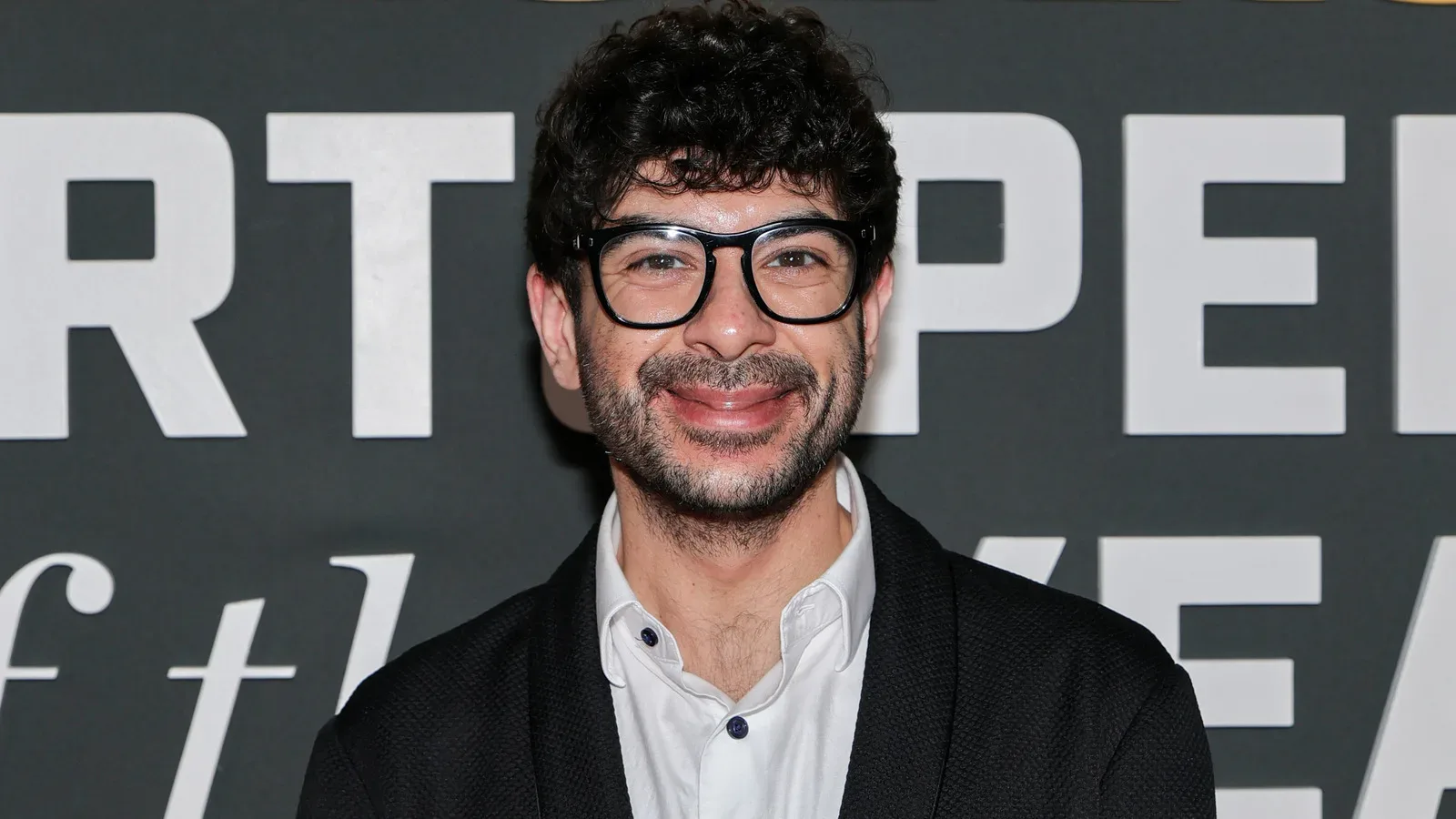
Brian Cage has offered a strongly positive assessment of Tony Khan’s leadership in AEW, describing the company president as an exceptionally supportive figure who wants wrestlers to enjoy their work and feel valued inside the promotion.
Speaking on the No But Seriously Though podcast, Cage reflected on Khan’s reputation as a personable and optimistic executive. The former FTW Champion said Khan’s kindness can occasionally make him seem more like a friend than a traditional boss, but Cage made clear that he views that approach as rooted in genuine concern for the talent.
“Tony’s a really nice guy, and sometimes I feel like too nice, like he should be more people’s boss than people’s friends. But he’s a good guy,” Cage said.
Cage’s comments add to a long-running discussion around Khan’s management style. Since AEW launched, wrestlers from different eras and positions on the roster have regularly spoken about the promotion offering performers a voice in their presentation and creative direction. Khan has also received public praise from major names including Sting and Toni Storm, both of whom have spoken favorably about their experiences working under the AEW banner.
For more background on this topic, read Skydance Unveils Leadership Plan for Warner Bros. Discovery Deal, With No Mention of AEW.
For Cage, however, the most meaningful example of Khan’s character came at a highly uncertain point in his own career. Cage recalled suffering a torn biceps injury around the time he was being brought into AEW. The situation was especially significant because, as Cage explained, the deal had not yet been countersigned. In practical terms, that left him without the security of a fully completed contract while he was facing surgery and a potentially lengthy recovery.
Rather than walking away from the agreement, Cage said Khan reassured him that AEW would still move forward with signing him and would support him through the process.
“Even when I got signed and I tore my bicep, like WWE would have just rescinded my contract and like [said], ‘Get the heck out of here.’ They [AEW] hadn’t even countersigned yet. So technically, I wasn’t even under contract, and he’s like, ‘Don’t worry, get the surgery. We’re going to sign you. We’re going to pay you. We’ll take care of you. Just when you’re ready, let us know.’”
That experience clearly remains important to Cage. A serious injury can change the direction of a wrestler’s career immediately, particularly when it occurs during a transition between companies or before an anticipated contract has been formally completed. Cage said Khan’s response provided a level of reassurance that went beyond simply waiting for him to return to the ring.
The account also helps explain why Cage believes Khan has the best interests of AEW’s wrestlers at heart. In an industry where performers often work through physical punishment, uncertainty and short-term career windows, a decision to honor an arrangement after an injury can carry considerable personal and professional weight.
Cage did not limit his praise to his own circumstances. He also pointed to Khan’s support for wrestlers and families connected to AEW in difficult moments, specifically mentioning the families of Brody Lee and The Briscoes.
Brody Lee, known outside AEW as Jon Huber, died in December 2020. AEW honored him with a special episode of AEW Dynamite, a widely remembered tribute that brought together members of the roster, Lee’s friends and his family. His son, Brodie Lee Jr., has remained part of the extended AEW family in appearances following his father’s death.
The wrestling world was also shaken by the January 2023 deaths of Jay Briscoe and his daughters, Gracie and Jayleigh Pugh, in a car accident. Khan and AEW publicly paid tribute to Jay Briscoe, while the company’s wrestlers and fans joined the broader industry in mourning the losses suffered by the Pugh family. Cage cited those situations as examples of Khan being there for people beyond the immediate demands of television, matches and business operations.
“Captain Positivity” was the phrase Cage used for Khan, an apt description of the public persona Khan has often projected as AEW’s president. Khan is known for speaking enthusiastically about the wrestlers on his roster, upcoming cards and the company’s accomplishments. Cage believes that optimism comes from a sincere desire to see the performers succeed and feel energized about being in AEW.
Still, Cage’s praise was not framed as a claim that Khan never gets frustrated. He acknowledged that he has seen Khan become angry, even if he considers confrontation to be something Khan would rather avoid.
“He’s an easygoing guy, and also he’s always Captain Positivity, but I’ve seen him lose it before. But I feel like he’d rather sway away from like confrontations,” Cage said.
That distinction is notable. Cage’s description presents Khan as a leader who generally prefers collaboration, encouragement and a positive environment, but who is not incapable of reacting when a situation reaches a breaking point. In any major wrestling company, the president must balance the personalities, ambitions and concerns of a large locker room while also overseeing weekly programming, contracts, travel, marketing and live events.
AEW’s roster has included wrestlers with vastly different levels of experience, from established veterans to developing talent still working toward greater television opportunities. Managing those competing goals can be challenging even under ideal circumstances. Cage’s takeaway was that Khan wants wrestlers to be enthusiastic about their roles and genuinely enjoy coming to work, rather than simply viewing the company as a place where they collect a paycheck.
Cage’s own AEW run has featured several different phases. He arrived with substantial credentials and a distinctive powerhouse style, competed in prominent matches, held the FTW Championship, and later aligned with the Mogul Embassy alongside Swerve Strickland and Prince Nana. He has also been part of the wider Ring of Honor landscape during AEW’s ownership of the brand, giving him experience across multiple environments connected to Khan’s wrestling operations.
While Cage did not present himself as speaking for every wrestler in the company, his story provides a personal explanation for his loyalty to Khan. The decision to stand behind him during his biceps recovery came before Cage had fully entered the company, making it a pivotal act of faith from the executive who would become his boss.
There is an important difference between a company leader being popular and a company leader earning trust during a difficult moment. Cage’s recollection centered on the latter. He was not simply praising Khan’s personality; he was describing an instance in which Khan’s assurances had direct consequences for Cage’s recovery, financial stability and ability to begin his AEW career on a secure footing.
As AEW continues to evolve, Khan’s leadership style will remain a major point of interest. The company has grown from a new national promotion into a major presence on the professional wrestling landscape, and that growth brings greater pressure, more personalities and more scrutiny. Cage’s perspective suggests that, behind the public business and creative decisions, Khan’s personal approach to talent remains one of the qualities wrestlers notice most.
For Cage, that approach can be summed up simply: Khan may be almost too nice at times, and he may prefer to keep confrontations to a minimum, but he has shown a willingness to support wrestlers when it matters. That is why the AEW star continues to describe his boss as “Captain Positivity.”
In pictures

Darryl Polo
Darryl Polo is a passionate wrestling fan covering WWE, AEW, TNA and beyond. He loves great rivalries, breakout stars and the moments that keep fans talking long after the bell. How we work.