
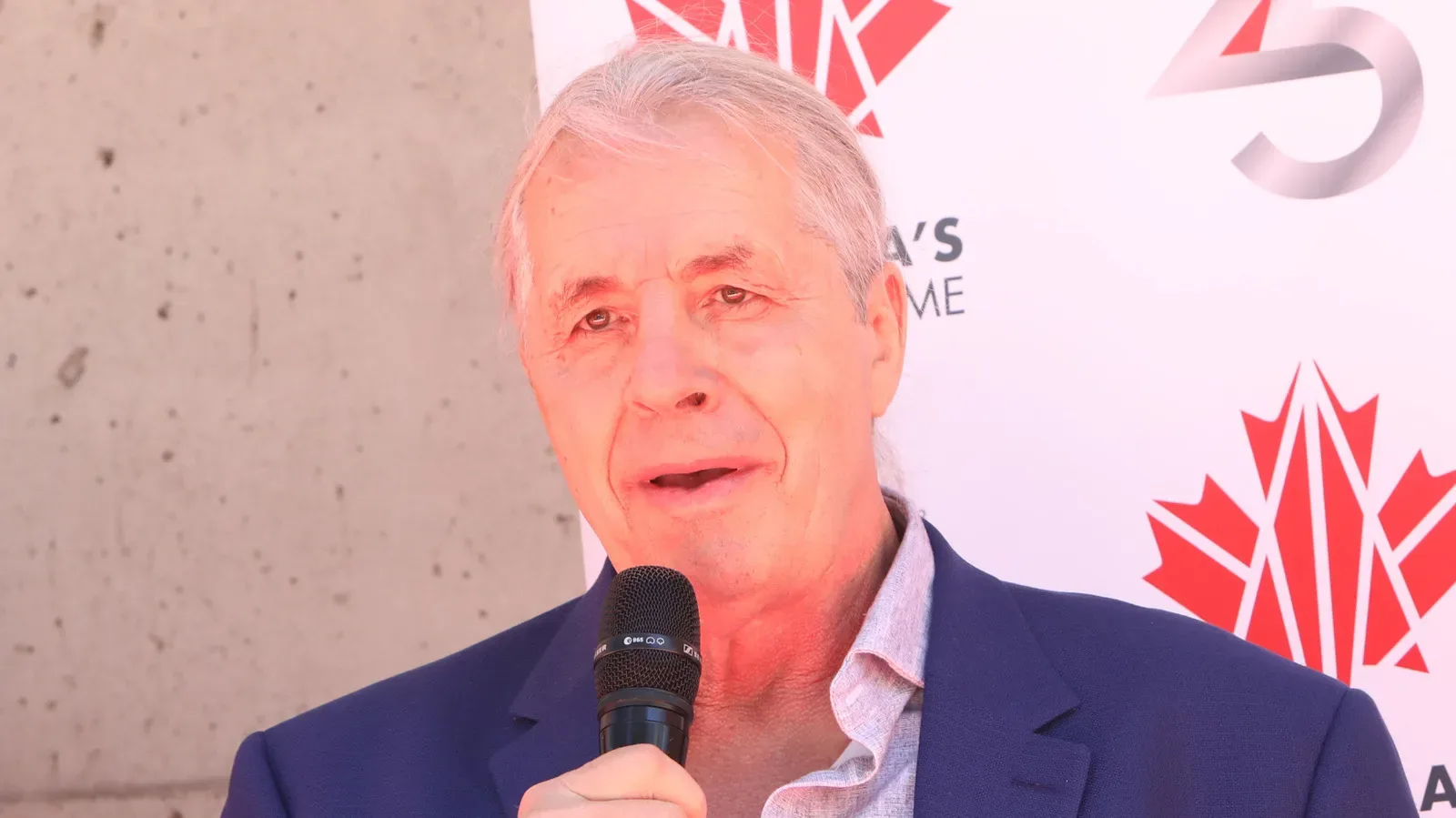
Bret Hart’s ascent to the WWE Championship in 1992 is now remembered as one of the defining turning points of his career and a major moment in WWE history. For Hart himself, however, the title change was not something he believed was waiting around the corner.
Speaking on the Johnny I Pro Show, Hart reflected on his surprise WWE Championship victory over Ric Flair at a live event in Saskatoon that fall. Even after his acclaimed SummerSlam 1992 match with Davey Boy Smith, Hart said he had not anticipated being selected as the man to take the company’s top prize from Flair.
“I didn’t see it coming,” Hart said. “Didn’t expect it. And it was just... it was, for sure, going to change my life, and for sure going to... it was finally going to give me that credit that I maybe never got from anywhere else.”
Hart had already established himself as one of WWE’s most respected in-ring performers by that point. His work as part of The Hart Foundation, followed by his rise as a singles wrestler, had made him a key figure on WWE programming. Still, Hart explained that winning the championship represented something bigger than simply receiving a new position on the card.
For more background on this topic, read Damian Priest Sees Judgment Day as a Future WWE Hall of Fame Faction.
For him, the title was validation. Hart said there had long been a sense that people could acknowledge his reputation as a skilled wrestler while still leaving room to question whether he truly belonged among the industry’s very best. Becoming WWE Champion, in his view, helped answer that question in a way that praise alone could not.
“I was kind of, I was always like ‘You hear Bret Hart’s a good wrestler, [but] is he really?’ I don’t know,” Hart said. “You know, it’s like I think... I always wanted someone to verify that I was actually any good.”
A Major Shift After SummerSlam 1992
Hart’s championship win came during a pivotal stretch of his career. His SummerSlam bout against Smith had elevated the profile of both men, with the match becoming a celebrated part of their respective legacies. The event demonstrated that Hart could thrive in one of WWE’s most prominent match settings, and it came at a time when his momentum was clearly building.
Even so, a strong performance at a major event and a WWE Championship victory were not necessarily the same thing. Hart’s comments underline just how uncertain the path to a top championship could feel, even for a wrestler who was gaining considerable momentum. A title reign could reshape a performer’s entire standing within the company, but it also created immediate comparison, pressure, and competition among the people who believed they might be next in line.
Hart’s win over Flair placed him in a completely different position. As WWE Champion, he was no longer simply a standout worker or a former tag team specialist who had found success on his own. He was now the wrestler entrusted with carrying WWE’s most visible championship. That distinction mattered deeply to Hart, particularly because he viewed it as recognition that he had earned through years of performance.
The surprise surrounding the result also remains notable. Championship changes can carry a different kind of weight when they happen away from the most heavily promoted television events. The Saskatoon live event gave Hart’s victory a distinctive place in WWE lore, while his recollection makes clear that the unexpected nature of the moment extended beyond fans. Hart himself was caught off guard by the decision.
Different Reactions Behind The Scenes
While Hart remembers the title victory as a life-changing professional achievement, he also recalled learning quickly that not everyone around him viewed the moment with the same enthusiasm. He said the range of reactions from fellow wrestlers was one of the aspects of the experience that surprised him most.
Hart remembered his brother Owen Hart as being especially happy for him. Owen’s reaction stood out to Bret as a positive and supportive one during a moment that carried obvious significance for the Hart family.
Other reactions were more complicated. Hart named Dynamite Kid, Tom Billington, Hulk Hogan, and Smith as wrestlers whose responses did not come across as celebratory. In Smith’s case, the reaction struck Hart particularly strongly because the two men had just shared such a major spotlight at SummerSlam and were also family through marriage.
“Maybe in his [Davey’s] case he was thinking ‘It could’ve been me, but they picked him,’” Hart said. “I could see it with Davey a little bit.”
Hart described Smith’s appearance after the title change as though “someone had shot him through the heart with a shotgun,” a vivid image that conveyed how deeply Smith seemed to feel the outcome. Hart did not present that reaction as difficult to understand. Instead, he suggested that Smith may have been thinking about his own chance to become WWE Champion and the possibility that the company had chosen Hart over him.
That perspective reflects the reality of a profession in which opportunity at the highest level is limited. Wrestlers can work closely together, share major matches, travel together, and in some cases become family, while still competing for the same limited number of career-defining roles. Hart’s championship victory was a personal triumph, but it may also have represented a missed opportunity in the eyes of people who believed they were capable of filling that role.
Hart On Competition In Wrestling
Hart said he was surprised by the responses from Billington and Hogan as well. He noted that he had believed Dynamite Kid would be happy for him, especially since Hart viewed Billington as being largely finished in that phase of his career. Hart also expected a positive reaction from Hogan.
“But Dynamite was kind of already over... I always thought he would’ve been happy,” Hart said. “Hogan was another one too. I always thought he would’ve been very happy... It just goes to show you that it’s a very competitive business with stuff like that.”
Hart’s reflection is not centered on assigning blame to any one person. Rather, he sees the varying reactions as evidence of the competitive nature of professional wrestling. Championship opportunities are not merely symbolic. They can determine a wrestler’s prominence, influence, earning potential, and long-term legacy. As a result, even a colleague’s success can stir disappointment for someone who wanted the same chance.
That competitiveness can be especially intense around the WWE Championship. The title has historically been the company’s clearest marker of who it believes can lead the promotion. For a wrestler to receive it can be interpreted as a major vote of confidence. For everyone else in the locker room, it can also be a reminder that the decision was made in favor of somebody else.
Hart’s account offers a candid look at the emotional side of a championship change that has often been discussed primarily through its historical importance. The win over Flair was the culmination of Hart’s rise, but the reaction around him was not universally simple or joyful. Owen Hart’s happiness provided a meaningful contrast to the disappointment or unease Hart sensed from others.
Validation At The Center Of The Moment
More than three decades later, Hart’s comments make it clear that the personal validation of becoming WWE Champion remains central to how he remembers the night. He did not see the title coming, and he did not assume that his SummerSlam success had guaranteed it. When the opportunity arrived, it confirmed for him that his work had been recognized at the highest level.
That does not mean Hart’s earlier accomplishments carried no value. By the fall of 1992, he had already built an accomplished career and developed a reputation that fans and peers could recognize. But the WWE Championship gave that reputation an official, undeniable stamp in Hart’s eyes. It was the kind of endorsement he had wanted after years of wondering whether others truly saw him as more than simply a good wrestler.
The story also helps explain why the win continues to resonate. Hart’s first WWE Championship was not merely a scheduled next step that he had long expected. It was an unexpected reward, a significant career transition, and a moment that revealed the intensely competitive emotions that can exist behind wrestling’s public celebrations.
For Hart, the victory over Flair changed his life. His recollection of the aftermath shows that it also changed the way he saw the people around him—and reinforced how much a championship can mean to everyone who believes they should have been the one holding it.
In pictures

Darryl Polo
Darryl Polo is a passionate wrestling fan covering WWE, AEW, TNA and beyond. He loves great rivalries, breakout stars and the moments that keep fans talking long after the bell. How we work.