
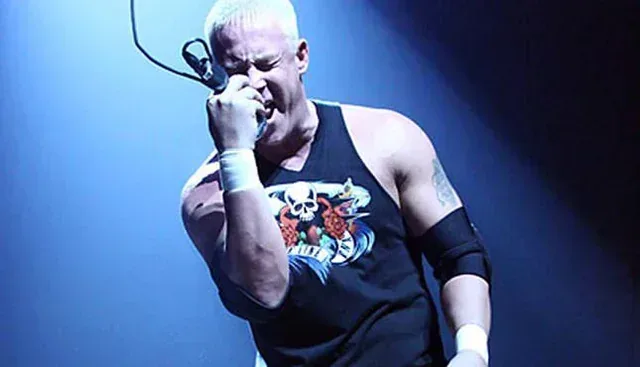
Ken Anderson’s run in WWE produced a collection of memorable calling cards. His booming ring introduction, the confident “Mr. Kennedy” persona, and his ability to make a microphone part of his presentation all helped him stand out. In the ring, Anderson also cycled through several signature maneuvers, including the Kenton Bomb, the Green Bay Plunge, and eventually the Mic Check.
Of those moves, Mic Check became the one most closely attached to Anderson. The maneuver fit his character, had a concise and recognizable name, and gave him a finishing move that could be used across a wide variety of opponents. Anderson recently explained that its development was influenced by a straightforward assessment from The Undertaker: the Green Bay Plunge was not a move he would be willing to take.
Speaking on Rewind, Recap, Relive, Anderson recalled a locker-room discussion involving JBL and The Undertaker. JBL praised the Green Bay Plunge and asked The Undertaker whether he would ever take the move. The answer made an immediate impression on Anderson.
“I remember being in the locker room, and JBL was like, ‘that’s a great finishing move. Taker, you ever going to take that move?’ Taker was like, ‘I’m not ever taking that move.’ It was like I already knew that you need to come up with something that everybody can take, know what I mean?”
For more background on this topic, read Becky Lynch Blasts Liv Morgan’s Judgment Day Influence, Questions Roxanne Perez’s Direction.
That exchange addressed a central issue in designing a finishing move for a WWE performer. A move can look spectacular and still be difficult to use as a long-term conclusion to matches if it cannot be safely or practically performed with wrestlers of different sizes, styles, and physical limitations. The biggest names on a roster, particularly veterans with extensive mileage, can become an important measuring stick. If a proposed move does not work for an opponent such as The Undertaker, it limits the situations in which it can be used.
The Green Bay Plunge had a distinct visual identity and reflected Anderson’s Wisconsin roots. But Anderson said the circumstances that led him to use it were unusual from the beginning. It was not necessarily conceived through a long, deliberate process of building the perfect universal finisher. Instead, he described it as something that came together at the last minute.
“The circumstances were the reason that I started doing the Green Bay Plunge were kind of different. It was just like a last minute thing.”
Once the need for a more adaptable alternative became clear, Anderson said the next step came through John Laurinaitis, widely known in wrestling as Johnny Ace. Laurinaitis suggested the flatliner, providing the basis for what would become Mic Check. Anderson then modified the idea, describing how he “took the toe” as the move developed into its own version rather than remaining simply a standard flatliner.
The move’s final identity came together through its name. Anderson recalled that Jim Ross asked what he was calling it. His reply connected the maneuver directly to the microphone-centered persona that had become inseparable from his television presence.
“And then we were coming up, trying to come up with a name for it and Jim Ross asked me, he’s like what are you (calling it) and I was like, Mic Check one, two, three. Mic Check.”
It was a simple answer, but it gave Anderson’s finisher an unusually clean connection to his character. A strong wrestling finisher is often more than the mechanics of the move itself. The best-known examples become extensions of a wrestler’s presentation: a phrase, image, taunt, or piece of personality that audiences can identify instantly. For Anderson, whose act prominently featured a microphone and a prolonged self-introduction, Mic Check accomplished that goal in a way the Green Bay Plunge could not entirely replicate.
A Practical Change With Character Value
Anderson’s recollection shows how several different influences can shape an in-ring move. The Green Bay Plunge had appeal, including its regional flavor and visual impact. Yet the question posed to The Undertaker highlighted the practical side of wrestling’s creative process. A finisher must account for more than a wrestler’s own athleticism or preferred style. It has to be considered from the perspective of the opponent receiving it, the timing of a match, and whether it can be used consistently on television, at live events, and against a broad range of talent.
The Undertaker’s response was therefore useful feedback, even if it was blunt. Anderson did not present it as a personal dispute or a rejection of his work. Instead, he described it as confirmation of something he already understood: a top finishing maneuver should be one that “everybody can take.” That is especially significant for a performer aspiring to work at the highest level of a major promotion, where potential opponents can range from smaller, quicker wrestlers to towering heavyweights.
Mic Check offered that flexibility. The name also gave commentary and audiences an easy verbal cue at the end of a match. Rather than requiring extensive explanation, the phrase immediately called back to Anderson’s established gimmick. His entrance persona was built around demanding attention and announcing himself with theatrical confidence. Naming the move Mic Check made the finisher feel like the final punctuation mark to that presentation.
The story also illustrates the importance of collaboration behind wrestling’s on-screen action. Anderson credited Laurinaitis with suggesting the flatliner concept and Ross with prompting the name that would stick. JBL’s question created the moment that forced the issue, while The Undertaker’s refusal gave Anderson a clear example of why he needed to evolve his offense. Even a move associated with one wrestler can come from a series of conversations involving producers, announcers, fellow performers, and veterans.
From the Green Bay Plunge to Mic Check
Anderson used multiple moves during his career, and that evolution is not unusual. Wrestlers often adjust their offense as their characters change, as they gain experience, or as they discover which moves best connect with a crowd. Some maneuvers serve as signatures that set up the finish, while others become situational highlights or are reserved for particular opponents. A performer can also retain aspects of earlier offense while refining the move that represents the ultimate end of a match.
In Anderson’s case, the transition was particularly logical because his persona had such a defined verbal component. The Mic Check name did not need a complicated backstory to work. “Mic check, one, two, three” is a familiar phrase, and it translated naturally into the world of Mr. Kennedy. The association was immediate enough that the move could be recognized as part of his act rather than merely another technique in his arsenal.
That type of branding matters in professional wrestling. Fans often remember finishers because of the moment surrounding them: the setup, the announcers’ call, the crowd reaction, and the connection to the wrestler performing it. A name that suits the character helps establish all of those elements. In Anderson’s case, the concept made particular sense because the microphone was not just an accessory. It was a defining element of how he introduced himself and interacted with the audience.
At the same time, Anderson’s comments offer a reminder that wrestlers need to balance creativity with safety and accessibility. A move may look ideal when used against one opponent but create problems with another. The ability to deliver a finisher credibly against different body types is a valuable asset, and it can determine whether a move has staying power. The Green Bay Plunge’s limitations in that respect pushed Anderson toward an option with broader potential.
The Undertaker’s Place in the Discussion
The Undertaker’s involvement in the story is notable because of his stature and the physical demands of his own lengthy career. When a veteran of his size and experience says he will not take a particular maneuver, that opinion naturally carries practical weight. Anderson’s takeaway was not that he needed to abandon individuality. Rather, it was that individuality had to be paired with a move opponents could realistically accept.
It also demonstrates how candid locker-room conversations can lead to meaningful creative decisions. JBL’s question was direct, and The Undertaker’s answer was even more direct. Anderson then used that feedback constructively. The result was the adoption of a move that became a major part of his in-ring identity.
Mic Check ultimately represented more than a replacement for the Green Bay Plunge. It was a refinement of Anderson’s overall act. The move was practical enough to broaden his options, but it was also specific enough to feel like his. With Laurinaitis providing the foundational suggestion and Ross helping spark the name, Anderson found a finish that aligned with both the realities of working a varied WWE roster and the larger personality he presented on screen.
For Anderson, the memory remains a concise lesson in wrestling’s constant need for adaptation. The Green Bay Plunge may have arrived through a last-minute circumstance, but the reaction it received from The Undertaker helped point him toward something more sustainable. Mic Check emerged from that process as a finisher with a clearer character connection and a broader range of use—one built not only to look effective, but to be taken by the opponents he might face.

Darryl Polo
Darryl Polo is a passionate wrestling fan covering WWE, AEW, TNA and beyond. He loves great rivalries, breakout stars and the moments that keep fans talking long after the bell. How we work.