
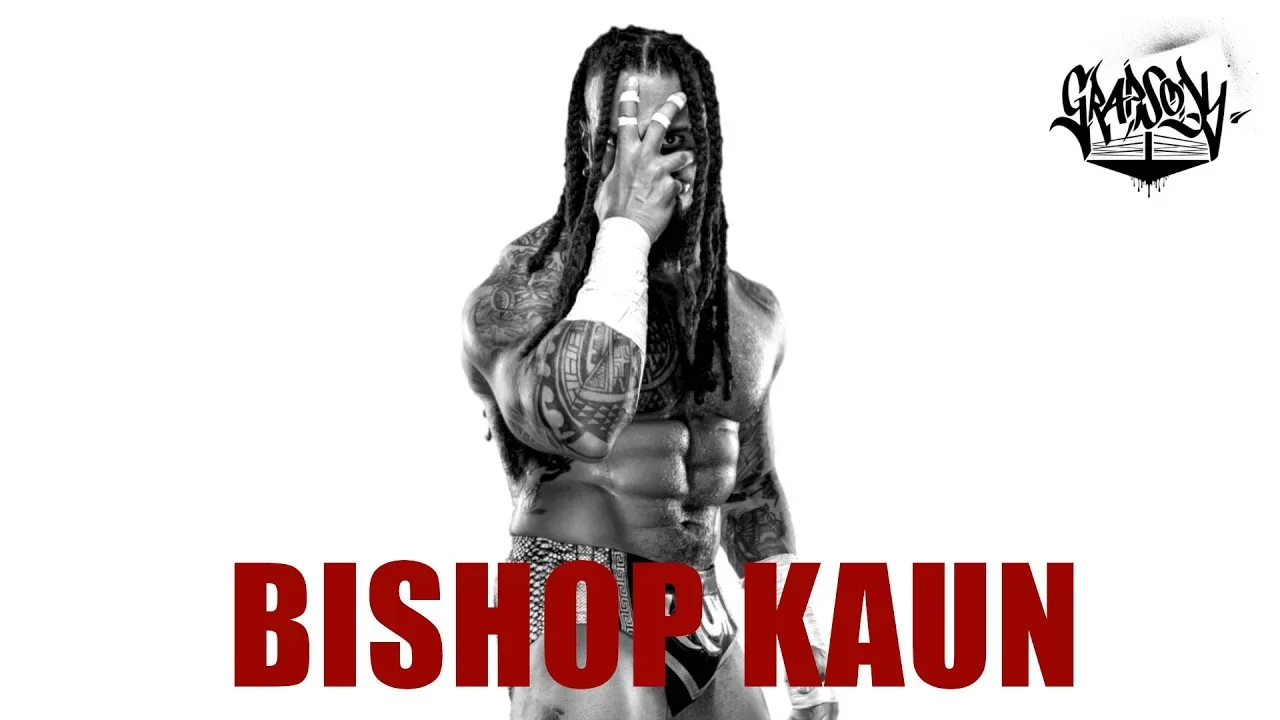
Bishop Kaun is making no secret of his ambitions beyond the trios division. While continuing his run with The Demand, Kaun has reiterated that he wants an opportunity to compete on his own in the AEW Continental Classic, arguing that the tournament can provide a valuable platform for wrestlers who have not regularly received singles showcases.
Kaun had previously expressed interest in entering the tournament and was not selected for the 2025 edition. That has not diminished his desire to be involved. Instead, he sees the Continental Classic as a setting where he could establish exactly what he can do when the focus is entirely on him, rather than on his role within a tag team or trios match.
Speaking about the possibility of taking part, Kaun described the Continental Classic as a unique test for performers looking to show their full range. In his view, the structure and attention attached to the tournament make it a particularly meaningful opportunity for talent seeking to break through as singles wrestlers.
“I feel like it’s one tournament where people can really truly showcase what they have and the abilities that they have,” Kaun said. “The first year, it was a nice test run. Everyone was super into it.”
For more background on this topic, read Bishop Kaun Praises The New Level Ahead Of AEW Trios Title Fight.
Kaun Wants New Faces Given a Singles Platform
Kaun’s argument is not simply that he should be included. He believes the Continental Classic could be especially effective as a vehicle for wrestlers who have had fewer chances to pursue singles momentum on AEW programming.
He noted that some competitors returned for the tournament’s second year after already receiving opportunities in the singles division. Kaun said he would prefer to see the field used to highlight performers whose abilities have largely been seen in multi-person matches rather than extended one-on-one competition.
“I think we should treat this, the Continental Classic, like people who don’t get singles opportunities and put them in this tournament,” Kaun said. “Let’s see how they do. Let’s see them get a run.”
That perspective speaks directly to Kaun’s own position. The Demand has given him a visible role in trios action, but he believes those matches only reveal portions of what he can offer. In tag team and trios wrestling, responsibilities are shared, match time is distributed, and individual stories can take a back seat to the unit’s collective presentation. Kaun wants a chance to carry the kind of individual stakes that come with tournament competition.
He acknowledged that his partner Toa has previously wrestled singles matches, while describing himself as more of an unknown quantity in that environment. Kaun’s point is not that he has been invisible, but that viewers have not consistently been given the chance to assess him through a sustained singles run.
“Me, I’m like an unknown,” Kaun said. “No one knows what I’m capable of. They see glimpses of it in these trios and tag matches.”
A Willingness to Take the Risk
Kaun’s comments were notable for their straightforwardness. He did not frame a Continental Classic entry as an automatic path to winning the tournament, nor did he suggest that participation alone would validate his goals. Instead, he said he wants the challenge itself, even if it means learning difficult lessons against high-level competition.
“Let me go swim with the sharks” was the central idea behind his pitch. Kaun wants to find out whether he can keep pace in a field designed to demand consistency, endurance, and the ability to make every match matter. That is the kind of uncertainty that can make a tournament opportunity compelling for a wrestler looking to move beyond a familiar role.
“Put me in the Continental Classic,” Kaun said. “Let me go fail. Let me go swim with the sharks. Let me see how I can keep up with these people or not.”
That willingness to accept the possibility of failure is important to his larger message. Kaun is not asking for a protected route around the challenges of the singles division. He is asking for the chance to meet those challenges directly. A tournament setting would place his performances under greater scrutiny, but it would also allow him to demonstrate the qualities that may not be fully visible in The Demand’s trios matches.
For Kaun, the desired outcome extends beyond a single appearance or one strong match. He has clear championship aspirations and wants to become a recognized singles contender. The Continental Classic, in his eyes, would be an important step toward proving that those ambitions are justified.
Singles Gold Remains the Goal
Although Kaun remains active alongside The Demand, he made clear that being part of a group does not remove his personal objectives. He wants singles championships and views that desire as a natural part of being a competitive wrestler.
“I want to be one of the best of all time,” Kaun said. “Like, I want singles gold. I want singles aspirations. Why wouldn’t we clamor for singles championships?”
Those comments do not signal that Kaun is turning away from The Demand or dismissing the value of trios wrestling. Rather, they outline a second goal running alongside his group commitments. He wants to continue contributing to the trios division while also testing whether he can translate his physicality, presence, and flashes of individual offense into a more sustained singles identity.
That balance is often difficult for wrestlers in groups. A successful unit can create regular opportunities and provide a strong on-screen foundation, but it can also shape how a performer is perceived. Kaun wants to ensure that he is not viewed only through the lens of a team. His call for Continental Classic inclusion is a request to be evaluated as Bishop Kaun, not solely as one member of The Demand.
Why the Continental Classic Matters to Kaun
The Continental Classic carries particular appeal because it emphasizes in-ring performance and repeated competition. For someone who feels he has only shown glimpses in tag and trios settings, that environment represents an opportunity to build a body of work rather than rely on a single breakout match.
Kaun’s proposal also presents a broader question about tournament selection. Should the field primarily feature established singles names, or should it create openings for wrestlers who are still trying to establish themselves in that role? Kaun clearly favors giving more space to the latter group. He sees the tournament as capable of doing more than reaffirming the standing of performers who already have substantial singles exposure.
There is no indication that Kaun has been announced for a future Continental Classic. His comments are a statement of intent: he wants the opportunity, he understands the caliber of competition he would face, and he is prepared to accept the results of that test.
For now, Kaun remains focused on his work with The Demand. But his message is unmistakable. He does not want his singles ambitions to remain theoretical, and he does not want viewers left to judge him only on brief moments within multi-person matches. He wants a place in a demanding AEW tournament, where he can either prove he belongs among the sharks or learn exactly how far he must go to reach them.

Darryl Polo
Darryl Polo is a passionate wrestling fan covering WWE, AEW, TNA and beyond. He loves great rivalries, breakout stars and the moments that keep fans talking long after the bell. How we work.