
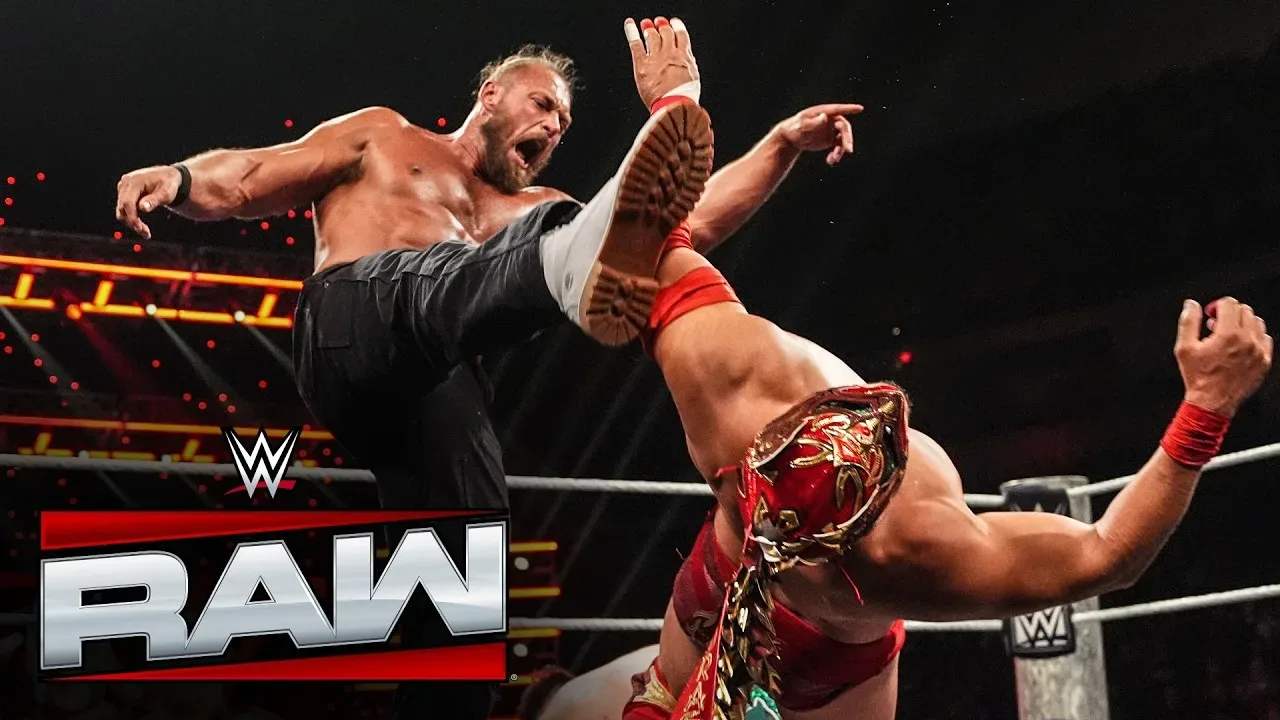
Big Cass has addressed speculation surrounding his standing in WWE, making it clear that he is approaching his latest run with a different mindset than the one he carried during his first tenure with the company.
Cass returned to WWE earlier this year and has become a recurring presence on WWE Monday Night RAW. His recent role has largely positioned him opposite popular babyfaces, including Dragon Lee and Rey Mysterio. That placement, combined with his win-loss record, has fueled outside discussion about what WWE may or may not have planned for him in the longer term.
Speaking on The Sal Licata Show, Cass responded directly to the idea that online reporting and fan conversation can determine his value to WWE. He said he had recently discussed the subject with Paul “Triple H” Levesque, whom he referred to as Hunter, and emphasized that he is not returning with demands about where he must be placed on a card.
“I’m coming back with the attitude of I’m here to do business,” Cass said. “I fell short of my own expectations as a professional the first time. I’m coming back to do business. I’m coming back to do things right.”
For more background on this topic, read Big Cass Says He Is at the Top of His Game in WWE Return.
It was a notably candid assessment from Cass, who did not frame his previous WWE departure as a case of being held back or improperly used. Instead, he placed responsibility on himself, saying he did not live up to his own standards as a professional during that earlier chapter.
That admission gives context to his current outlook. Rather than treating every match result, television segment or spot in the running order as evidence of his future, Cass said he wants to deliver fully in whichever assignment WWE gives him.
“Whatever the company needs is what they’re going to get out of me,” Cass said.
He expanded on that philosophy by saying he would bring the same effort whether he were asked to open a show, close a show, or work what is traditionally considered a “popcorn match” — a bout that takes place while some fans are still getting concessions or returning to their seats. The terminology can carry a negative connotation in wrestling, but Cass used it to illustrate his point: no position is beneath the effort he intends to bring to the job.
For a performer with Cass’ physical profile and prior television experience, that is a meaningful public message. WWE rosters are built around changing creative needs, television time, injuries, event schedules, title programs and the development of newer acts. A wrestler can have an important on-screen function without being placed immediately in a championship storyline or consistently collecting victories.
Cass Focuses on the Assignment in Front of Him
Cass repeatedly returned to the concept of doing the best possible work in the role available to him. He said WWE will receive “100%” from him regardless of where he is placed on a given episode of RAW.
That attitude is especially relevant to his current use as a foil for performers such as Dragon Lee and Rey Mysterio. Wrestlers who oppose established or rising babyfaces are often responsible for far more than simply taking a loss or moving on to the next match. They must make the conflict believable, present a credible obstacle, and help audiences invest emotionally in the eventual payoff. Cass’ size and presence make him naturally suited to that type of opposition.
His comments do not rule out ambition. Cass did not say he lacks interest in moving upward on the card, and he acknowledged that he is willing to see where the opportunity leads. However, he made a distinction between wanting more and allowing outside noise to dictate his approach to the work.
“I’m there to do the best that I can with what they’re giving me and what they see in me,” Cass said.
That approach places the immediate emphasis on dependability. In WWE, performers are often required to shift rapidly between roles, opponents and degrees of television exposure. Someone can be involved in a major angle one month and be part of a supporting program the next, only to be elevated again when creative circumstances change. Cass’ stated goal is to be ready for all of it rather than attaching his effort to one specific spot.
Pushback on Online Narratives
Cass also offered a blunt response to the broader culture of wrestling speculation. He described how people are consistently searching for a story and argued that negative coverage tends to generate more attention than positive updates.
While he did not dispute that fans and writers will continue to analyze booking, he made clear that those opinions are separate from the conversations taking place inside WWE. Cass said the judgments of people who do not work for the company are ultimately their own opinions.
His response was not an attempt to claim that all criticism is invalid. Instead, he explained that he does not plan to let it become the basis for his decisions or attitude. From his perspective, the only productive response is to work hard, fulfill the expectations established by WWE leadership and allow the results to develop over time.
That is a practical stance in an industry where booking discussions can change from week to week. Win-loss records are a visible part of wrestling television, but they do not always provide a complete picture of a talent’s internal role, presentation value or creative trajectory. Cass’ remarks suggest he is not interested in publicly litigating every development in his booking.
He specifically said he had spoken with Hunter about “the dirt sheets and everything,” signaling that he is aware of the conversation around him. But awareness and reaction are two different things. Cass’ stated response is to remain focused on performance rather than attempting to rebut every claim about WWE’s plans.
A Different Perspective on His WWE Return
The most significant part of Cass’ comments may be his recognition that this run represents an opportunity to show growth. His language consistently framed the return as a chance to handle his career differently, with a stronger commitment to professionalism and a willingness to accept the responsibilities placed in front of him.
“I’m here for the ride, baby,” Cass said, before adding that he intends to keep his head down, work hard and do the best he can with what is expected of him.
It is a simple message, but one that carries weight given the nature of a WWE comeback. Returning talent can arrive with expectations based on past accomplishments, former character presentations and old relationships with the audience. Cass is instead presenting his return as something that must be earned in the present tense. He is not asking viewers to judge him solely on what he was previously capable of doing; he is asking to be evaluated on the work he delivers now.
Elsewhere in the interview, Cass discussed feeling better than he has in several areas of his life. That sense of personal improvement appears connected to the professional outlook he described when discussing RAW. His comments conveyed a performer who believes he is in a position to make the most of a second chance, whatever form it takes.
For now, Cass remains a consistent part of WWE programming and a physically imposing adversary for RAW’s babyface contingent. Whether that evolves into a more prominent program, a longer rivalry, or another role entirely remains to be seen. Cass himself is not trying to force a prediction.
Instead, he has set out the standard he says he intends to meet: WWE can put him wherever it needs him, and he plans to give that position everything he has.

Darryl Polo
Darryl Polo is a passionate wrestling fan covering WWE, AEW, TNA and beyond. He loves great rivalries, breakout stars and the moments that keep fans talking long after the bell. How we work.