
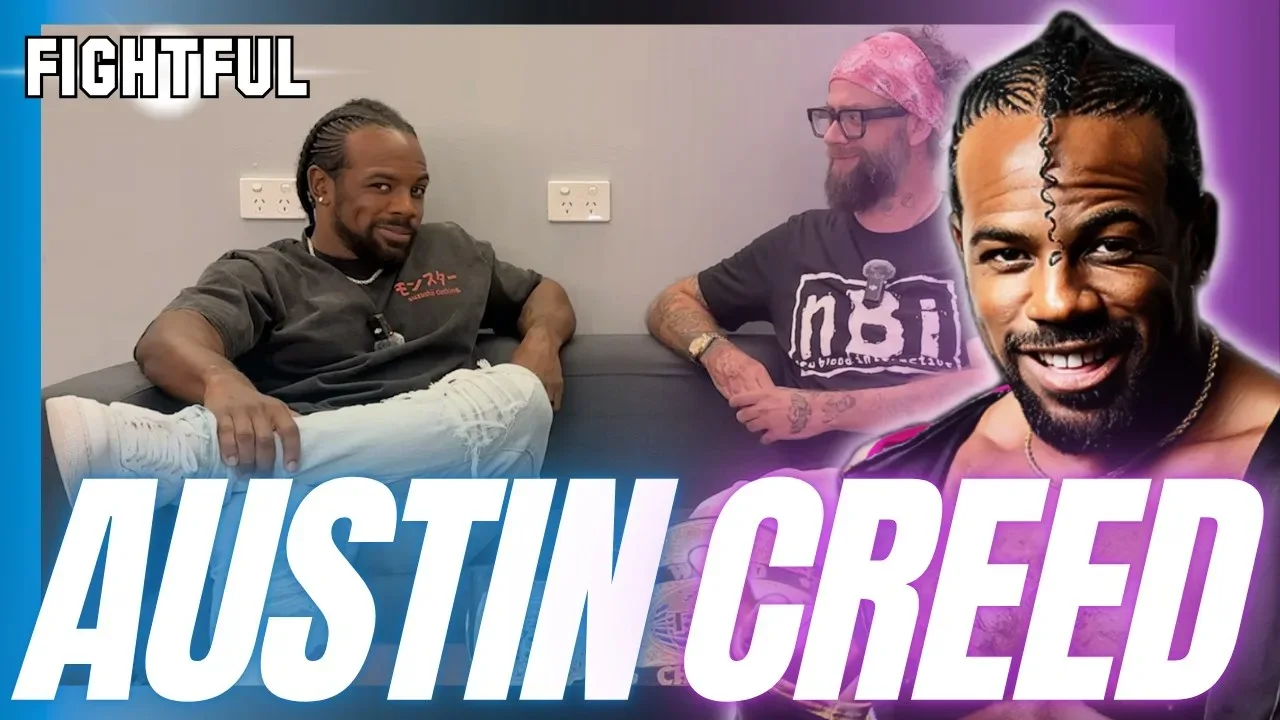
Austin Creed has offered his strongest indication yet that DaParty could eventually return in some form, though he stopped well short of announcing a new project or confirming that cameras are already rolling.
Speaking during a sit-down interview at PAX Australia, Creed was asked whether the gaming group could reunite now that its four core members are no longer signed with WWE. DaParty, which grew out of Creed’s UpUpDownDown gaming presence, brought together Creed, Adam Cole, Claudio Castagnoli, and Tyler Breeze for competitive games, banter, and the kind of long-running chemistry that made the group popular with wrestling and gaming audiences alike.
Creed, who is also known to wrestling fans as Xavier Woods, made clear that the current circumstances at least make the idea possible. He did not reveal whether a formal reunion has been planned, but he deliberately left the door open.
“None of DaParty members are currently signed with WWE, and that would lead me to believe that there is at least the chance that something will happen, that the chance of something to be created is available,” Creed said. “I will not confirm or deny. If anyone has been filming anything or if anyone has been creating assets for a new YouTube channel, I will not confirm or deny that. I will not.”
For more background on this topic, read Cody Rhodes Would Choose Guile’s Flat Top Over Bringing Back Stardust Face Paint.
The wording is notable. Creed did not simply dismiss the possibility as fan speculation. Instead, he framed the absence of WWE contracts among the group’s members as a change that creates room for a future project, while maintaining secrecy about whether anything is presently in development.
What DaParty represented for Creed and its audience
DaParty was more than a collection of wrestlers playing video games. Its appeal came from the familiarity between the personalities involved. Creed, Cole, Castagnoli, and Breeze had an established rhythm that viewers could recognize immediately, whether the group was playing a sports title, a fighting game, or something built around chaos and trash talk.
That shared history also made DaParty distinct within the wider UpUpDownDown environment. Each member brought a different style and sense of humor, but the group worked because its interactions felt rooted in genuine friendship rather than a newly assembled content collaboration. Fans regularly followed its gaming sessions for the personalities and reactions as much as the games themselves.
Creed’s comments at PAX Australia suggest he sees that chemistry as essential rather than accidental. Even as he considers the prospect of video-game content connected to his current environment in AEW, he believes a camera alone is not enough to recreate what made UpUpDownDown and DaParty successful.
Creed says AEW relationships come before gaming content
While the possibility of DaParty drew attention, Creed’s broader message was about taking time to establish real connections in the AEW locker room. He said he would like to be involved with video games in AEW, but he does not want to rush into producing content before developing rapport with the wrestlers around him.
“Being in the AEW locker room and being able to build these relationships with people that I don’t have them with, like the newer guys that I’m meeting, is a really cool process and through that process, I would hope that maybe, maybe there’d be a chance to do something with video games,” Creed said. “I don’t know for sure; I cannot say. But, that rapport with the locker room is first and foremost the most important thing for me.”
Creed explained that the community behind UpUpDownDown benefited from years of shared experiences. Many of the personalities who appeared on the channel had known one another through WWE developmental, independent wrestling, or extensive time traveling and working together. That familiarity allowed the content to feel natural and gave participants the freedom to joke, compete, and play off one another without needing to manufacture a dynamic for an audience.
He contrasted that history with the process of getting to know newer colleagues in AEW. For Creed, that process is a priority before pursuing a major gaming initiative involving the roster.
“Before I think about setting up a camera and getting people to play games and stuff, I want that rapport first,” Creed said. “I think UpUpDownDown worked because lots of people that were involved in it, I’ve known for six, eight, 12 years. You know, we were in developmental together, we were on the indies together.”
That perspective provides important context for what an eventual AEW gaming project might look like. Creed is not presenting it as an immediate launch or a guaranteed undertaking. Instead, he views it as something that could develop organically as he builds trust and familiarity with talent he did not previously know as well.
UpUpDownDown remains owned by WWE
Any discussion of Creed’s future in gaming also carries a major practical distinction: WWE owns the UpUpDownDown channel. The brand became closely associated with Creed because of his role in building its identity and appearing on its content, but the channel itself remains under WWE ownership.
As of this writing, UpUpDownDown has not been updated in roughly five to six months. That lack of recent activity has naturally invited questions about what could come next for Creed in the gaming space, especially with DaParty’s former members no longer under WWE contract.
However, a potential DaParty revival would not simply be a continuation of UpUpDownDown under a different banner. Creed’s playful refusal to confirm or deny whether anyone has been filming material or creating assets for a new YouTube channel signals that any future effort, if one materializes, could stand on its own. No launch, channel name, schedule, or participant announcement has been made.
The distinction matters because it leaves open several possibilities without confirming any of them. Creed and the other members could reunite for a new dedicated project, make occasional appearances together in another setting, or ultimately choose not to pursue a formal gaming venture at all. For now, Creed has confirmed only that the opportunity exists and that he recognizes why fans would want to see the group together again.
The potential appeal of an AEW-era gaming presence
Creed’s background makes him a natural figure to explore gaming-related content in AEW once the timing feels right. He has long been identified with video games both inside and outside wrestling, and his previous work demonstrated that gaming can provide another way for fans to see wrestlers’ personalities away from matches and promos.
That kind of material can be especially valuable in a locker room full of performers with varied interests and different levels of familiarity with an audience. A gaming series can create an informal setting where rivalries are put aside, friendships are highlighted, and fans are introduced to talents in a less scripted environment. Still, Creed’s comments underscore that he does not consider those benefits a substitute for genuine relationships.
His approach is also consistent with the reason DaParty connected in the first place. The group was not memorable merely because prominent wrestlers played games together. It was memorable because viewers could see the accumulated history between Creed, Cole, Castagnoli, and Breeze. Rebuilding that level of ease with a new group of people is not something Creed believes should be forced.
For AEW fans, the comments offer a reason to watch the space without treating a project as imminent. Creed has expressed interest in bringing gaming into his new locker-room setting, but he has placed relationship-building ahead of production plans. For DaParty followers, he has provided an equally intriguing answer: the group’s members are now in a position where a reunion is possible, and he is not denying that work may be happening behind the scenes.
Until Creed or the other members make a direct announcement, the future of DaParty remains uncertain. What is clear is that the concept is no longer restricted by WWE employment, while Creed remains focused on laying the personal foundation he believes any successful gaming project requires.

Darryl Polo
Darryl Polo is a passionate wrestling fan covering WWE, AEW, TNA and beyond. He loves great rivalries, breakout stars and the moments that keep fans talking long after the bell. How we work.