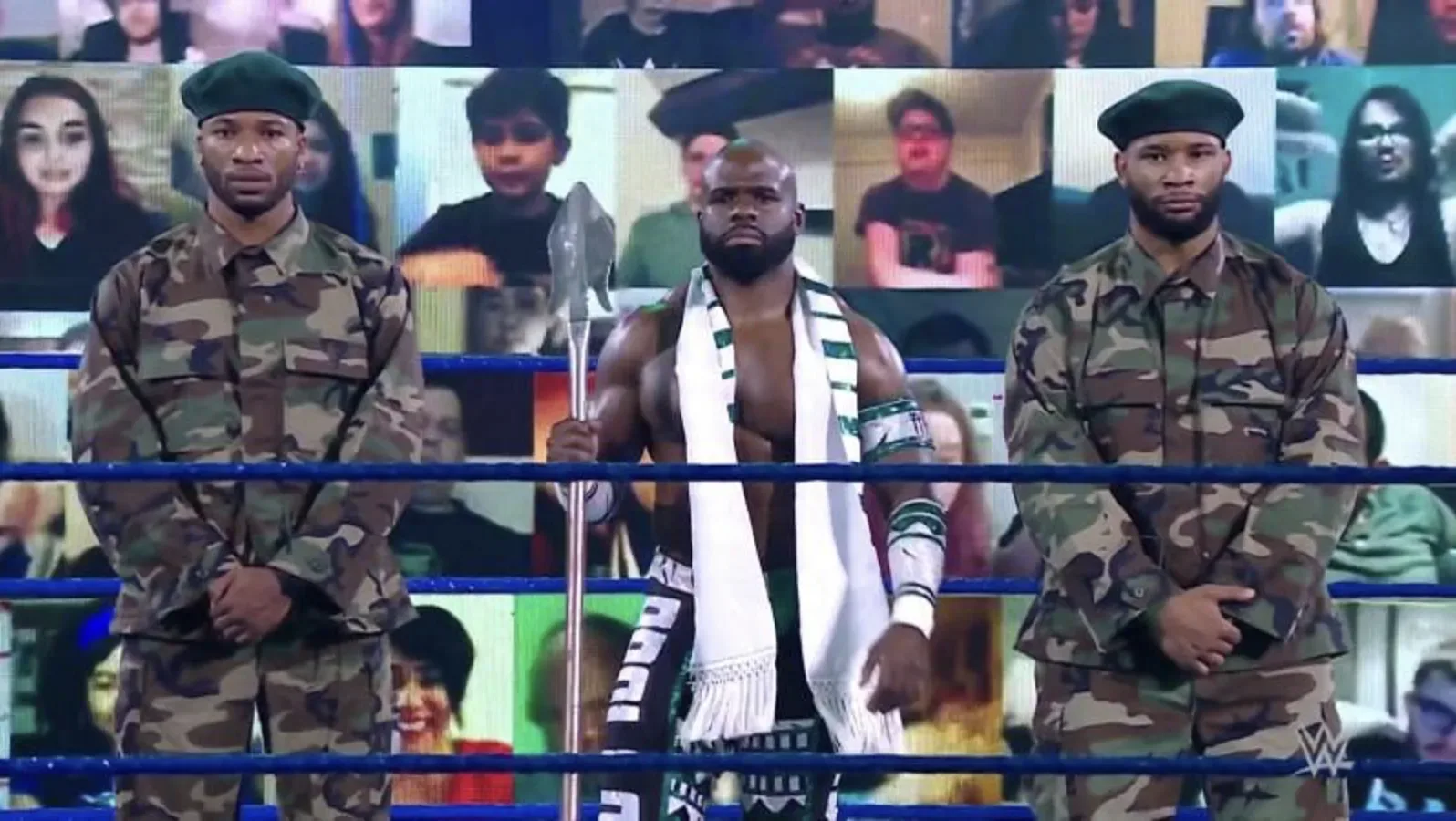
Apollo Crews has opened up about the rapid transformation of his WWE character in 2021, revealing that he was initially strongly opposed to using a Nigerian accent as part of the persona.
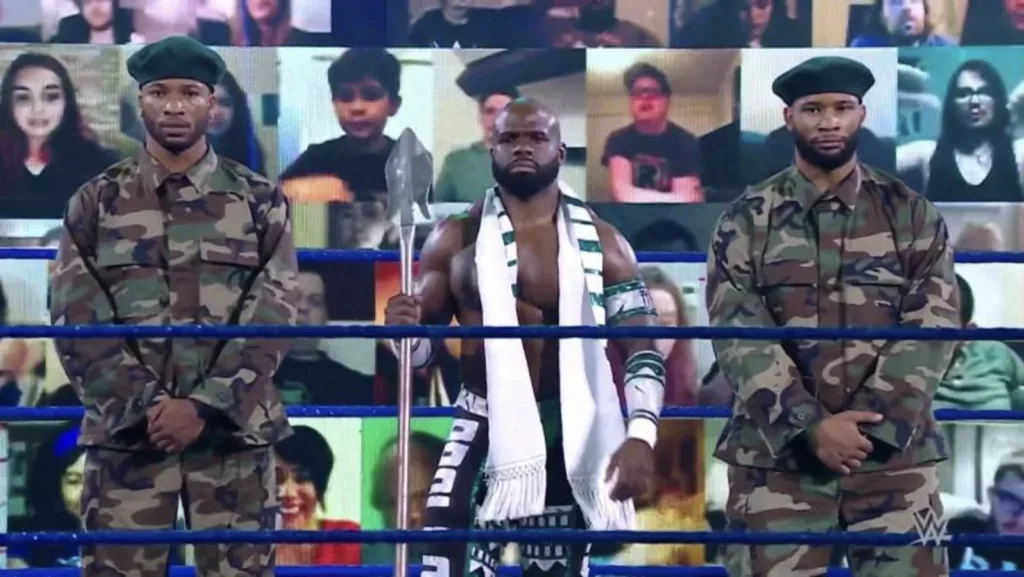
Crews, who had previously performed in WWE as an upbeat and athletic fan favorite after making his name as Uhaa Nation, shifted into a more aggressive role following his attack on Big E. The turn led to a character presentation that emphasized his Nigerian heritage and positioned Crews as a self-styled Nigerian prince. While the former Intercontinental Champion wanted to explore his family background on television, he said the accent that became central to the presentation was not part of his original pitch.
Speaking with Chris Van Vliet on Insight, Crews explained that the earliest inspiration behind the direction came from his interest in returning to his roots and helping viewers learn alongside him. He had spent a significant portion of his youth in Kenya, but said his connection to Nigerian culture had not been deeply developed while growing up despite his father’s traditional background.
“I grew up in Africa, down in Kenya, for a good amount of my life, but I didn’t have a lot of Nigerian… my dad is traditional, but I didn’t know much about Nigeria growing up,” Crews said. “The language wasn’t spoken to us. We had been there a few times, but it wasn’t something like, ‘You guys have to learn this culture.’”
For more background on this topic, read Apollo Crews Reflects on Knowing His WWE Release Was Coming Before the Call.
Crews said he saw an opportunity to educate himself while incorporating that journey into his on-screen work. The broad concept was influenced in part by Black Panther and the film’s Killmonger character, but his intent was not to immediately adopt an accent or create a broad imitation of Nigerian culture.
Crews Wanted To Explore His Heritage Differently
The WWE performer said his initial idea was to travel back into his family heritage, better understand Nigerian culture and bring the audience with him. However, the first major question raised after he presented the concept was whether the character would use a Nigerian accent.
That suggestion caught Crews off guard. He said it was not in his plan and that the version of the idea he had envisioned would have approached the subject differently. The accent also held personal significance for him, making the prospect of performing it for a national television audience particularly uncomfortable at first.
“I thought it would be interesting for me to go back and understand and learn Nigerian culture and bring the fans along for the ride,” Crews said. “I pitched the idea and apparently the first thing Vince said was, ‘Is he going to have an accent?’ That wasn’t something I was planning on doing. The idea that I had was to not portray it in this kind of way.”
Crews described having Nigerian-American friends as a child and recalled how he and his siblings would imitate the accent of their parents, including their father. But he did not anticipate using that voice as a major component of a wrestling persona in front of millions of viewers.
He said he pushed back against the direction and directly made his case against it to Vince McMahon. Ultimately, he was persuaded to proceed with the presentation. Rather than approach it halfway once the decision had been made, Crews committed himself to fully developing the character and drew on elements of his father’s personality as he did so.
“I was strongly against it at first because it didn’t make sense to me,” Crews said. “As a kid, I had a lot of Nigerian-American friends, so we would imitate our parents and do that accent a lot. My brother and sister would put on the accent to imitate my dad, but by no means did I think I would be doing it on TV in front of millions.”
Crews added that he spoke to McMahon and pleaded against the accent before accepting the assignment.
“Obviously, I was talked into it,” he said. “If I’m going to do it, I’m going to do it 100%. I used a lot of what my dad was like growing up, and I was able to immerse myself in this character.”
A Major Change Just Minutes Before Going Live
The first promo for the new persona brought another dramatic wrinkle. Crews said the original instruction was for him to speak normally throughout most of the segment and deliver only one line using the accent. That plan changed shortly before the show was set to begin.
With just 10 minutes remaining before going out, Crews was told that he would now be expected to do the entire promo with the accent. The late change left him stunned, but it also illustrated the kind of pressure performers can face on a live WWE broadcast.
“The first promo, I was going to do my normal accent now; he wanted me to do one line with an accent,” Crews said. “Ten minutes before the show started, they told me he wanted me to do the whole thing with the accent. I was like, ‘What? Are you kidding me?’ Ten minutes before.”
For viewers at home, a character transition can appear sudden but carefully planned. Crews’ account offers a different view of the process, with a defining element of his presentation being altered almost immediately before he headed through the curtain.
He emphasized that those types of last-second adjustments are part of an environment that is difficult to understand from the outside. WWE performers must often absorb revised creative direction, production changes and promotional instructions while preparing to perform live in front of an arena audience and television cameras.
“That’s what a lot of people will never understand,” Crews said. “The things that go on right before you go out the curtain. People don’t understand it unless they are in the situation. I’m not the only person that’s happened to, but it was ten minutes before.”
The Big E Rivalry Led To WrestleMania Gold
Although the character direction prompted mixed reactions, it gave Crews a prominent storyline opposite Big E. Their rivalry became one of the defining programs of Crews’ 2021 run, building from his heel turn into a championship feud over the Intercontinental Title.
Crews acknowledged that the response to the persona varied, but he also recognized that it made people take notice. In his view, the shift was so complete that he seemed to become an entirely different figure overnight. He was no longer simply Apollo Crews, the smiling powerhouse known for spectacular athleticism; he had become a more theatrical, regal and antagonistic presence with a distinctly different cadence and attitude.
“Some people loved it, some people hated it, but people were talking about,” Crews said. “Overnight, I became—I don’t know if it was a Prince or what it was—but I became this character with an accent and did a 360 on the character.”
The feud reached WrestleMania 37, where Crews challenged Big E for the Intercontinental Championship in a Nigerian Drum Fight. Crews defeated Big E in that match to win the title, marking one of the biggest singles accomplishments of his WWE career.
The WrestleMania victory also underlined the practical impact of the 2021 character overhaul. Even though Crews had reservations about how the concept was executed, the presentation placed him in a featured championship program and culminated with him leaving WrestleMania as Intercontinental Champion.
A Look At Creative Control And Performer Adaptability
Crews’ recollection reflects a familiar tension within WWE creative: performers can bring personal ideas and lived experiences into character discussions, but the final version seen on television can still evolve quickly once it enters the company’s larger creative process.
In this case, Crews’ desire to engage more directly with his Nigerian heritage remained part of the foundation. Yet the decision to make an accent a defining piece of the role changed the tone of the presentation in a way he had not originally wanted. His willingness to embrace the direction after his objections did not change the fact that he had voiced those concerns clearly.
The story also highlights the adaptability required of a live television performer. Being asked to substantially alter a promo less than 10 minutes before airtime is a challenge in any circumstance. Doing so while debuting a new character element, handling a sensitive connection to one’s own identity and working within a high-profile WWE storyline made the moment especially consequential for Crews.
For Crews, the Nigerian prince run remains a significant chapter in his WWE career: a creative reinvention he did not initially see unfolding that way, an intense rivalry with Big E, and a WrestleMania 37 Intercontinental Championship win that remains a major milestone.
In pictures
Darryl Polo
Darryl Polo is a passionate wrestling fan covering WWE, AEW, TNA and beyond. He loves great rivalries, breakout stars and the moments that keep fans talking long after the bell. How we work.