
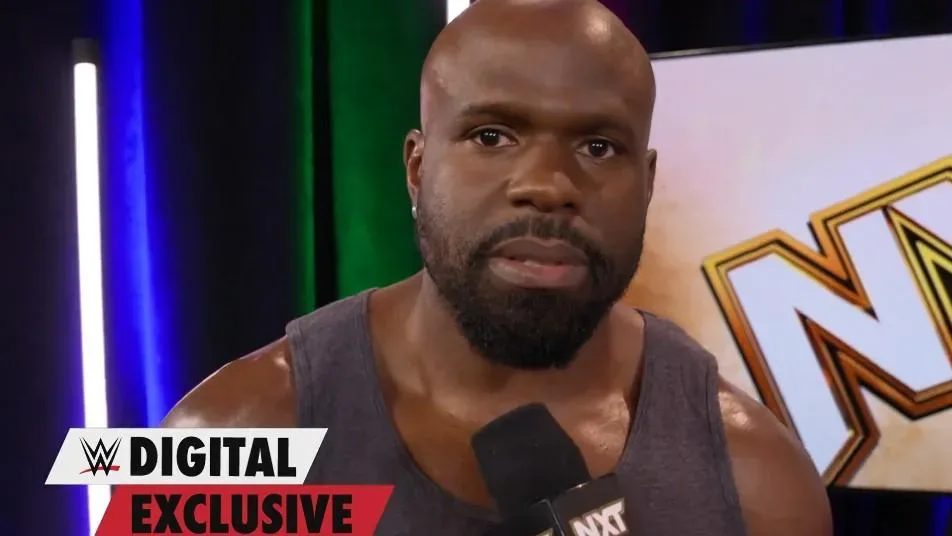
Apollo Crews has opened up about the final days of his WWE tenure, explaining that he had largely come to expect his release before he received the official call on April 24.
Crews, who previously competed as Uhaa Nation before joining WWE, spent 11 years with the company. While he remained active within the WWE system toward the end of that run, much of his in-ring work had shifted to WWE Main Event. He was also part of the Andre the Giant Memorial Battle Royal on the SmackDown episode held before WrestleMania.
In a conversation with Chris Van Vliet on Insight, Crews described the sequence of events following WrestleMania that made him believe a release was imminent. He had traveled to Las Vegas for WrestleMania-related appearances, a change from the prior two years when he did not take part in media or other WrestleMania activities.
That activity initially suggested that WWE still had plans for him during one of the company’s biggest weeks of the year. However, the message he received after returning home changed his outlook quickly.
For more background on this topic, read Jim Ross Honors Bill Dundee’s Wrestling Mind and Lasting Mid-South Legacy.
“I was at my son’s basketball practice, and I kind of had an idea because it was WrestleMania the week before, and I hadn’t been doing anything on TV. I got called in to do some appearances at WrestleMania. Two years before I stayed at home for both WrestleManias where I didn’t do media or any appearances. I was in Vegas for Mania, got home, and on Wednesday after Mania, I got a call from travel, and they said I’m not needed for SmackDown.”
Crews said that travel notification was the moment he made the connection. Rather than viewing it as a routine adjustment to a weekend schedule, he believed it was a clear indication that WWE was preparing to move on.
“In that moment, I instantly knew. ‘Friday, they’re going to call me and that’s going to be it.’”
That prediction proved correct. Crews said he went through the day as normally as possible while anticipating the phone call. The call ultimately came as he was taking his son to basketball practice at 5 p.m., placing him in the middle of a family responsibility when his professional future changed.
He described the conversation itself as brief, lasting roughly 45 seconds and covering the basic circumstances of his departure. There was no suggestion from Crews that the call involved a lengthy discussion or a surprise twist after his earlier expectation. By the time WWE made the decision official, he had already spent two days preparing himself for what was likely ahead.
That advance expectation affected his immediate reaction. Crews explained that he had previously imagined what a WWE release might feel like, particularly after seeing other wrestlers leave the company while he remained on the roster. Yet the real experience did not produce the emotional response he had envisioned.
“There have been times throughout my career where I was expecting to get released because I wasn’t doing anything, and I had seen so many people get released. I almost felt like a survivor because I was still there. I almost pictured what it would feel like, but when it happened, it was not that picture. It didn’t feel how I thought it would feel.”
His comments offer a candid view of the uncertainty that can surround a wrestler’s status when television opportunities become limited. Crews had watched releases occur throughout his career and understood that visibility can change rapidly. Even so, remaining employed through previous waves of roster changes had created a complicated feeling: relief at still having a place in WWE, mixed with the recognition that the same outcome could eventually arrive for him.
For Crews, the lack of a major emotional outburst did not mean that the release was insignificant. Instead, he said he did not immediately allow himself the time to fully absorb it. The expectation that the call was coming had softened the initial impact, but it did not make the moment meaningless.
“I didn’t really feel anything. It’s not like it was, ‘Ah, I don’t care’; I just didn’t give it enough time to process. Not that it was unexpected, but the fact that I did expect it kind of softened the blow. It wasn’t that I didn’t care, but I wasn’t overly emotional about it.”
Crews also had an immediate priority beyond wrestling. He was at his son’s practice and needed to continue being present as a father, regardless of what had happened on the phone. That setting appears to have shaped the way he handled the moment, leaving little room for an extended reaction while his family still needed his attention.
The timing is notable because Crews’ final WWE stretch had included a small amount of WrestleMania-week involvement but not a sustained on-screen push. His appearance in the Andre the Giant Memorial Battle Royal placed him on the SmackDown card before WrestleMania, while his broader schedule had largely centered on WWE Main Event. The post-WrestleMania period is often a time of transition across WWE programming, and Crews recognized the significance of being removed from the planned SmackDown travel schedule shortly after the event.
Crews entered WWE after building his reputation as Uhaa Nation and went on to have a lengthy run across the company’s various brands. His WWE tenure included periods of greater television prominence, championship success, character changes, and different alignments. By the time of his release, he had spent more than a decade working under the WWE umbrella.
His recollection of the release underscores how a long career can make an exit feel both foreseeable and difficult to process. A performer may understand the business realities, recognize changing creative circumstances, and even predict the phone call. That knowledge does not necessarily provide a complete emotional script for the actual moment.
Crews’ experience also illustrates the difference between being absent from a major weekly television role and being entirely disconnected from the company. He had been used for WrestleMania appearances and had wrestled in the Andre the Giant Memorial Battle Royal, but the call from travel suggested he would not be needed for the following SmackDown. To Crews, that distinction carried enough weight to make the eventual release feel inevitable.
Since leaving WWE, Crews has remained mostly out of the wrestling spotlight. He has wrestled once for TNA and once for DragonGate, but has not yet embarked on a heavily publicized or extensive post-WWE schedule. That limited activity has left his next sustained chapter in wrestling open-ended.
For now, Crews’ comments center less on immediate plans and more on the personal reality of closing an 11-year WWE chapter. He did not describe the call as an event that sparked instant devastation or anger. Instead, it arrived after he had already read the signs, and it came at a moment when he was focused on his son.
The result was an unusually measured first reaction: not indifference, but an emotional pause. Crews expected the call, took it while handling everyday family life, and kept moving through the moment before he had fully processed what the end of his WWE run meant.
Darryl Polo
Darryl Polo is a passionate wrestling fan covering WWE, AEW, TNA and beyond. He loves great rivalries, breakout stars and the moments that keep fans talking long after the bell. How we work.