
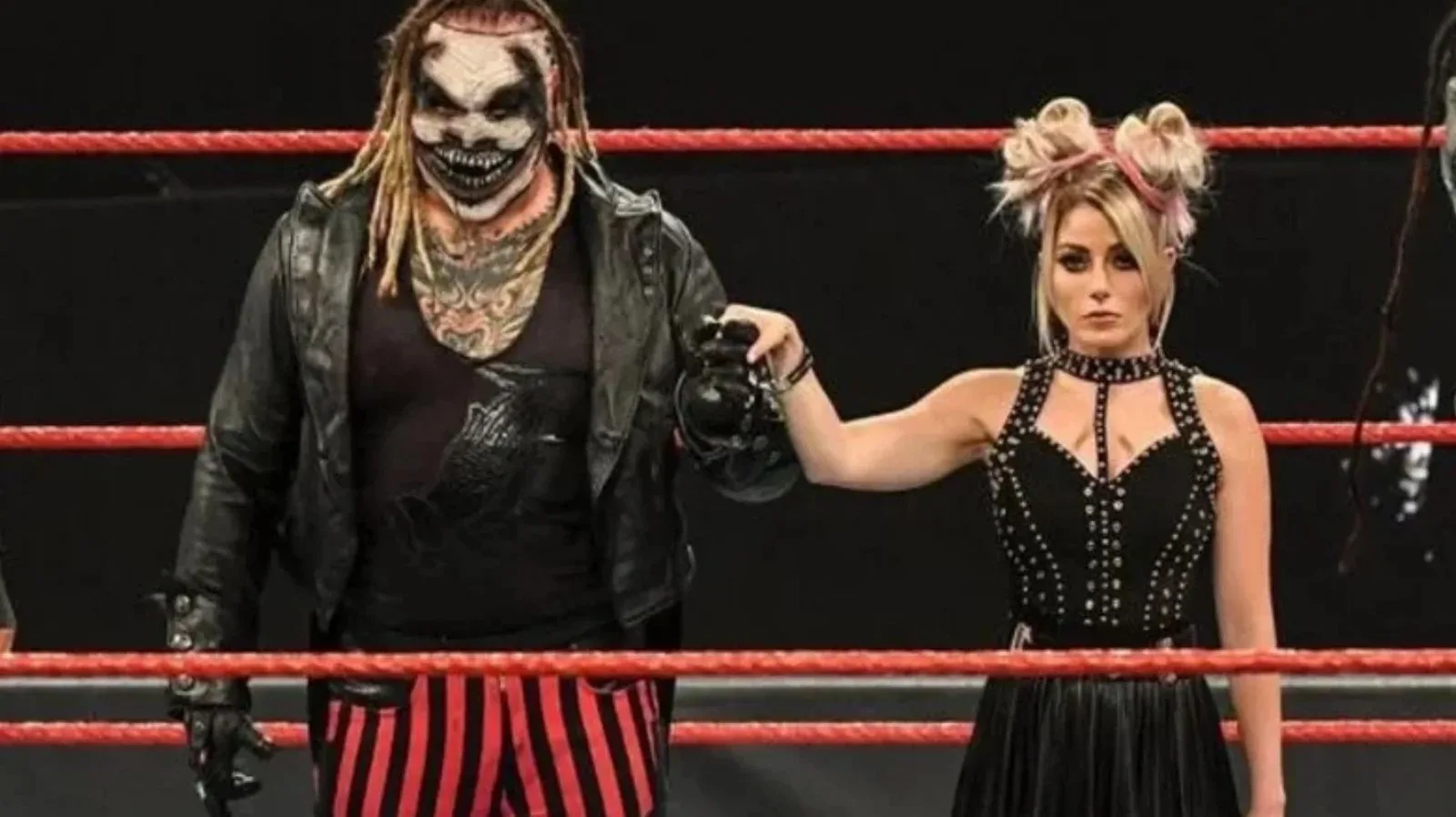
Alexa Bliss remembers being afraid of getting her first Firefly Funhouse segment wrong. Bray Wyatt had already built one of WWE’s most distinctive settings, and Bliss knew she was stepping into something that worked before she got there. What stayed with her was the way Wyatt handled a moment when he thought they could improve the performance. Rather than telling her what she had done wrong, he told her, “We can do that better.”
Speaking on What’s Your Story?, Bliss called that first Firefly Funhouse her fondest memory of working with the late WWE star. Their partnership ran through WWE’s pandemic-era ThunderDome shows and ended in dramatic fashion at WrestleMania 37, with a giant jack-in-the-box part of the split. But when Bliss looked back on their time together, she spent less time on the spectacle than on how Wyatt helped her get comfortable enough to contribute to it.
Why the first Firefly Funhouse meant so much to Alexa Bliss
Bliss said her nerves came from an appreciation of what Wyatt had already made. The Funhouse was not simply a new set for her to work on. It was a setting with its own tone and logic, and Wyatt had established both before she arrived. Bliss described it as a “world, within a world, within a world.” She did not want to be the person who brought it down or to make a mistake that disrupted what he had created.
That was the pressure Bliss felt going into the segment. What she remembers getting from Wyatt, though, was a note she could act on without feeling singled out. She said the exchange was caught on camera and that she knew exactly whose performance he meant when he said they could do better.
For more background on this topic, read Cody Rhodes Recalls Why His Torn Pec Hurt Less Than It Looked at WWE Hell in a Cell.
“‘We,’ meaning me. He was just so nice because I know it was me, that I could’ve done better.”
Bliss did not take the wording to mean Wyatt was avoiding giving her feedback. She heard the criticism clearly enough. The kindness was in how he delivered it: He treated getting the scene right as something they would do together, even when she understood that the adjustment was hers to make. For someone worried about damaging a character and setting that fans already knew, there was a difference between being corrected and being made to feel like she did not belong there.
Bliss recalled that Wyatt was happy to hear ideas and willing to consider them. That quality mattered alongside the reassurance he offered in the first segment. She was not just learning how to work within a setting that belonged to another performer. She was working with someone who, in her telling, gave her room to offer something of her own. That helps explain why the first Funhouse stands out to her even after the partnership went on to have a much bigger stage at WrestleMania.
Wyatt gave Bliss movies and documentaries to watch
Bliss also recalled how often Wyatt brought up movies and documentaries. His recommendations were more than suggestions for what to watch on a night off. They introduced Bliss to a way of preparing for a role. She said Wyatt gave her a list, and she watched everything on it because she wanted to establish who that version of her character was going to be.
“He was just such a creative genius and I remember always, always I would get, ‘You need to watch this documentary,’” Bliss said. “‘You need to watch this movie.’ And just learning from him how to do research on a character.”
Bliss did not identify the titles in her account, but she was clear about what she took from the exercise. Wyatt had shown her how to look beyond wrestling for material that could inform a performance. For Bliss, watching the films and documentaries was part of deciding who she was playing, not merely a way to pick up references to use on television. She described wanting to establish her own character within the partnership, rather than leaving that work to the fact that she was appearing alongside Wyatt.
That preparation also puts her first-segment nerves in context. Being invited into the Firefly Funhouse gave Bliss a place in Wyatt’s story, but it did not automatically tell her how to perform in it. The recommendations gave her a way to work through that question away from the camera. His feedback, once she was in front of it, gave her a way to make adjustments without losing sight of what she was trying to build.
Bray Wyatt was always coming up with another idea
Bliss described Wyatt as “notorious” for constantly having ideas. He would share thoughts with her before he had worked them out, then warn her not to tell anyone yet. As she remembered it, the reason was simple: The idea was not fully developed. Wyatt might be ready to talk it through with a collaborator without being ready to put it in front of anybody else.
Her recollection offers a glimpse of a less visible stage of the partnership. Viewers saw the Funhouse after its concepts had been worked into WWE television. Bliss heard some of Wyatt’s thinking while it was still unfinished. She could listen to an idea before it was ready to go anywhere, and she remembered Wyatt returning the favor by listening when other people had suggestions. The fact that he had ideas to spare did not, in her account, make him less interested in hearing hers.
The finished work could be extravagant, as the WrestleMania 37 breakup made clear. A giant jack-in-the-box is an easy image to associate with their run, but it is not the image Bliss chose when recalling what the partnership meant to her. She went back to the first Funhouse, when she was still worried about whether she could fit into it. The scene itself mattered, but so did the moment when Wyatt stopped to tell her that they could make it better.
Bliss’s account of working with Wyatt is ultimately as much about learning the job as it is about any one WWE storyline. She remembered a colleague who gave her homework, talked through ideas he was not ready to share widely, and offered a correction without making her feel like an outsider. Years after the partnership ended on WWE’s biggest stage, it was that small choice of words in their first Funhouse that she still wanted to talk about.
In pictures

Darryl Polo
Darryl Polo is a passionate wrestling fan covering WWE, AEW, TNA and beyond. He loves great rivalries, breakout stars and the moments that keep fans talking long after the bell. How we work.