
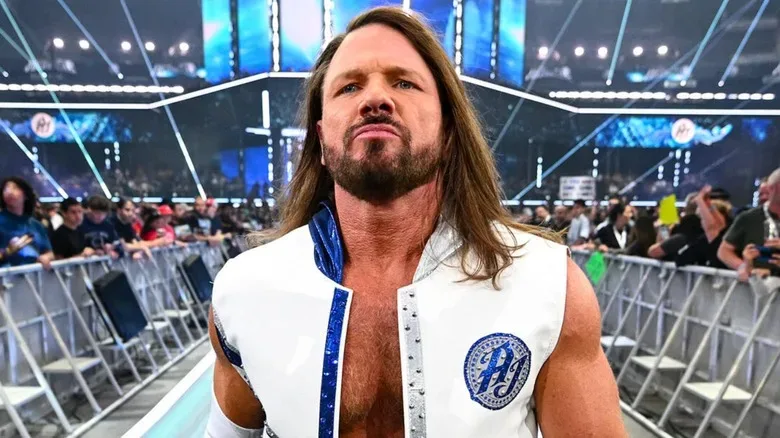
AJ Styles could be headed toward a more significant behind-the-scenes role within WWE as his influence in scouting is reportedly expected to grow. The development would add another dimension to Styles’ long-established value to the company, with the veteran continuing to be viewed as a positive presence around the WWE Performance Center.
The reported plans should not be confused with Styles taking over day-to-day operations at the Performance Center. That specific suggestion has been denied, although Styles recently stepped in to finish a class there. His involvement has instead been characterized as that of a consistent and constructive presence, with a possible expanded focus on identifying and evaluating talent.
At the same time, Bobby Roode has reportedly been considered for a different kind of WWE office role. The former NXT Champion and former United States Champion has been discussed internally for a position comparable in nature to those held by Bruce Prichard or Michael Hayes. However, that possibility is not finalized, and there is no indication that an official new role for Roode has been established.
Styles’ Experience Could Be Valuable In Talent Evaluation
Styles is one of the most accomplished and widely traveled performers of his generation. His career has taken him through a number of major wrestling environments before he arrived in WWE, giving him experience with different styles of presentation, match structures, locker-room cultures, and pathways into the industry. That background naturally makes him a compelling figure to have involved in conversations about potential recruits.
For more background on this topic, read LA Knight’s Old Backstreet Boys Performance Resurfaces as WWE Star Remains Off TV.
Scouting in modern WWE can involve far more than simply identifying wrestlers who have already built reputations elsewhere. The process can include evaluating athletes from other sports, assessing performers who are early in their wrestling development, and determining which individuals may have the presence, adaptability, discipline, or physical tools to thrive within WWE’s system.
A performer with Styles’ résumé can offer a practical perspective in that process. He has worked at a top level for many years and has performed in a wide range of match settings. That does not mean every scouting decision would necessarily fall to him, nor does the report suggest that he is being assigned sole authority over recruitment. It does, however, point to the possibility of WWE drawing more heavily on his knowledge as it evaluates future talent.
There is also a meaningful distinction between having scouting influence and being responsible for the Performance Center itself. The latter would suggest a formal operational leadership role involving a broad range of training and administrative duties. The information surrounding Styles instead stresses that rumors of him running the facility are inaccurate.
Still, the note that he filled in to finish a class offers a glimpse at the level of trust placed in him. Leading or completing a session is different from overseeing the entire developmental system, but it reflects the value WWE sees in having an established veteran interact directly with developing talent.
A Positive Performance Center Presence
The Performance Center remains a central part of WWE’s developmental structure. It is a place where recruits can learn in-ring fundamentals, develop television instincts, adjust to WWE’s production expectations, and prepare for the demands of performing in front of increasingly large audiences. Experienced active or recently active wrestlers can provide valuable feedback in that setting because they understand the gap between training drills and the realities of weekly television.
Styles being described as a “constant and positive presence” at the Performance Center is notable in that regard. Even without running the facility, a respected performer can help shape the environment simply through regular interaction with prospects and trainees. Advice from someone with his body of work may carry particular weight for wrestlers trying to refine their timing, character work, pacing, or approach to a major televised match.
It is important, though, not to overstate the report. There has been no confirmed announcement detailing a title, a formal scouting department position, or a specific list of responsibilities for Styles. The expectation is that his influence in scouting will increase, rather than that he has already been publicly installed in a new executive or full-time coaching role.
That uncertainty leaves open several possibilities. His involvement could grow gradually and remain flexible around his existing WWE commitments. It could also center on consultation, prospect evaluation, or mentoring rather than a traditional office job. Until WWE publicly clarifies the arrangement, the key takeaway is that Styles is reportedly expected to become more involved in the scouting side of the operation.
Bobby Roode’s Potential Role Remains Unsettled
Roode’s reported situation is more tentative. He has been considered for a role similar to the positions held by Prichard or Hayes, but the potential move is described as far from finalized. That language matters, particularly in WWE, where internal discussions can evolve before any responsibilities are formally assigned or publicly revealed.
Prichard and Hayes are long-standing influential figures behind the scenes, though their individual responsibilities and contributions are not interchangeable. A comparison to their types of roles suggests that Roode could be under consideration for work connected to the creative and production side of WWE rather than an in-ring return. It does not establish an exact job description, reporting structure, or date for any transition.
Roode has extensive experience as a performer, including his time in NXT and on WWE’s main roster. His career also includes years spent working in other prominent wrestling settings before joining WWE. Like Styles, he brings a broad perspective developed through both television wrestling and in-ring competition, though the report places the two men on potentially different behind-the-scenes tracks.
For Roode, the important point is that conversations appear to have taken place, not that a decision has been completed. Any expectation that he will definitely assume a Prichard- or Hayes-like role would go beyond the available information. WWE has not announced a finalized position, and the situation remains one to watch rather than a confirmed organizational change.
WWE Continues To Benefit From Veteran Knowledge
The reported developments surrounding Styles and Roode underline a familiar reality in professional wrestling: veteran performers can remain deeply valuable to a company even when their contributions extend beyond matches. WWE has a large developmental pipeline and a constant need for people who can help identify promising talent, communicate what works at the highest level, and offer guidance grounded in firsthand experience.
Not every successful wrestler is suited to scouting, coaching, or creative work. Those jobs require different skills, including communication, observation, patience, and an ability to evaluate potential rather than only present-day performance. But the reported interest in expanding Styles’ scouting influence indicates that WWE sees something useful in his approach around emerging talent.
The Performance Center element also gives the story added context. Styles may not be running the facility, but his reported willingness to assist with a class and his regular positive presence suggest that he is already contributing in meaningful ways. A larger scouting role would represent an expansion of that contribution, not necessarily a dramatic departure from what he has already been doing around WWE’s developmental environment.
Meanwhile, Roode’s name being attached to a possible creative-adjacent assignment shows that WWE is at least considering how his experience could be used behind the scenes. Whether that turns into a formal role remains unknown. For now, the situation is best viewed as an internal possibility rather than an imminent announcement.
What To Watch Next
The next meaningful sign of change would be confirmation of defined responsibilities for either man. In Styles’ case, that could come through a clearer indication of how he is participating in scouting and whether the role becomes a regular part of his WWE work. In Roode’s case, the question is simpler: whether discussions lead to a finalized job comparable to the creative and production influence associated with Prichard or Hayes.
Until then, the report paints a measured picture. Styles is expected to gain greater input in scouting and remains a valued figure around the Performance Center, but he is not running the facility. Roode has been considered for a substantial behind-the-scenes opportunity, but nothing has been finalized. Both situations reflect WWE’s apparent interest in utilizing the experience of respected veterans in ways that can help shape the company’s future.

Darryl Polo
Darryl Polo is a passionate wrestling fan covering WWE, AEW, TNA and beyond. He loves great rivalries, breakout stars and the moments that keep fans talking long after the bell. How we work.