
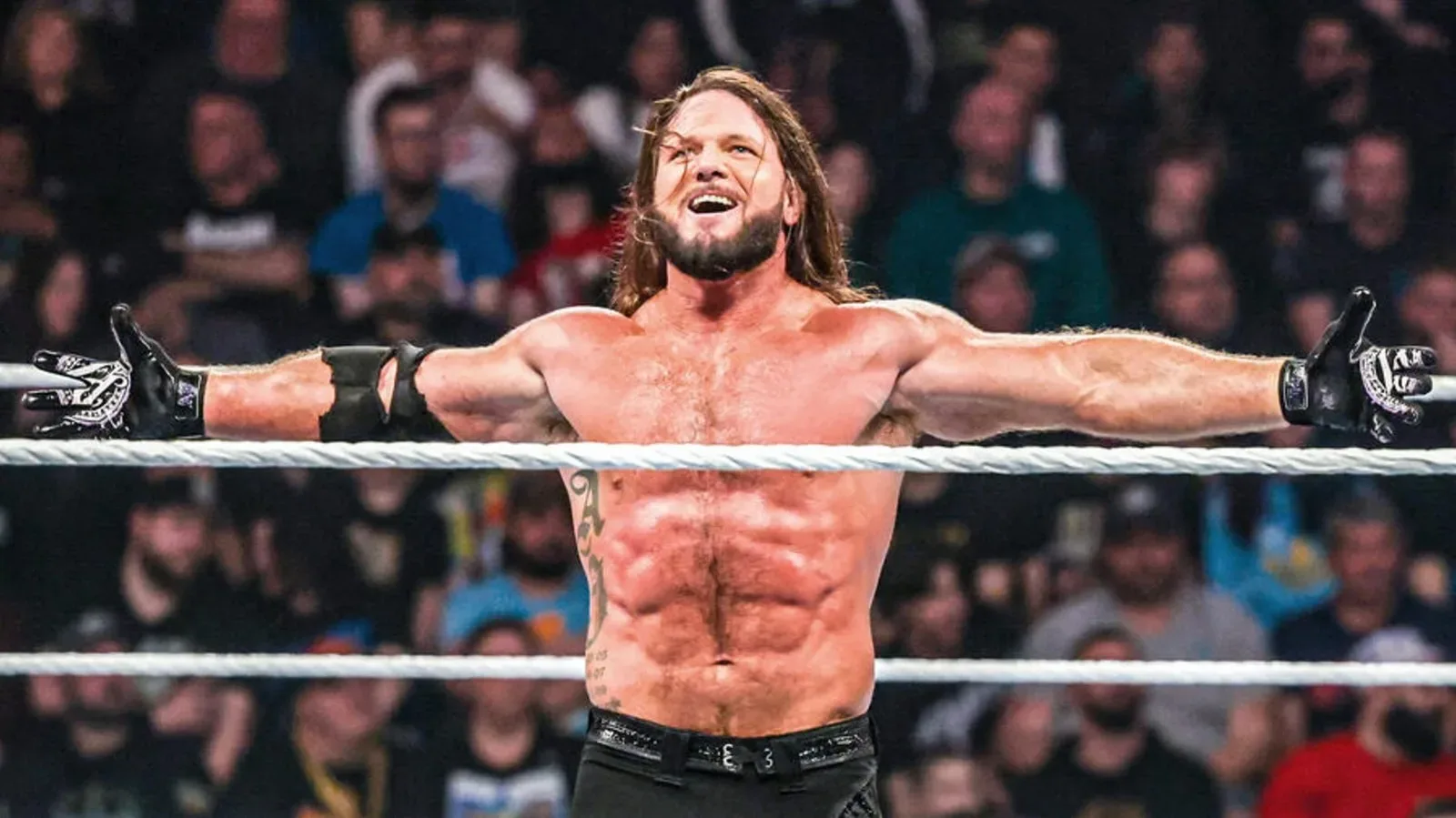
AJ Styles built his reputation as one of the most gifted in-ring wrestlers of his generation long before he arrived in WWE, but he does not agree with the common belief that his peak years were exclusively tied to TNA Wrestling.
During a conversation with Cody Rhodes on What Do You Want To Talk About?, the retired WWE star addressed the long-running discussion around which version of Styles was at his best. While his breakout run in TNA established him as a global name and supplied many of the performances fans still celebrate, Styles believes the most complete form of “The Phenomenal One” emerged after he joined WWE.
For Styles, the distinction is not simply about athleticism. He pointed to the physical shape he was in upon reaching WWE, but he placed even greater emphasis on the experience and ring awareness he had developed by that point. The evolution, in his view, was learning not just how to perform difficult moves, but how to decide whether those moves served the match.
“A lot of people say, ‘Well, that prime AJ Styles was in TNA.’ I disagree,” Styles said. “I was in the best shape of my life when I got to WWE, but I understood psychology.”
For more background on this topic, read John Cena Explains Why He Did Not Show Emotion During His Final WWE Match.
That answer speaks to the difference between being an exciting performer and being a performer capable of guiding an audience through a match with purpose. Styles’ early career featured the speed, risk and innovation that helped make him stand out. His later years, however, gave him a wider tool kit: a better understanding of pacing, emotional investment, physical preservation and the importance of making every major moment matter.
Styles Sees Psychology as the Defining Difference
Styles explained that maturity changed the way he approached the structure of a match. Rather than treating every opportunity as a reason for another spectacular sequence, he came to value selectivity. The goal was no longer simply to show what he could do physically. It was to use the right move at the right time, in a way that made sense for the story unfolding in the ring.
“So there wasn’t a dive every second and all these things that didn’t need to be done,” Styles said. “There was things that I thought was needed for that part of the match. And just because you can do something doesn’t mean you should do something.”
It is a lesson often associated with wrestlers who have spent decades adapting to different opponents, styles and audiences. Athletic ability can get a wrestler noticed, but the ability to control a match’s rhythm can make that wrestler last. Styles’ comments make clear that he measures his WWE prime through that broader lens.
The former WWE champion did not dismiss what he accomplished in TNA. That period remains central to his legacy and to the rise of his profile within the industry. It was where Styles became synonymous with high-level action, where his name became attached to performances that captured the attention of fans around the world, and where his standing as a top-tier wrestler was firmly established.
But Styles’ argument is that the best version of a wrestler is not always the youngest or the most relentlessly explosive one. In his case, he believes his physical condition and improved grasp of storytelling came together at the same time in WWE. That combination gave him a level of control that he feels he did not possess to the same degree earlier in his career.
Cody Rhodes Agrees With Styles’ Assessment
Rhodes agreed with Styles’ evaluation, noting that Styles was in the best shape of his career when he came to WWE. Rhodes also highlighted another component of Styles’ longevity: he had learned how to protect his body while continuing to wrestle at a high level.
That balance is particularly significant in a career associated with demanding in-ring performances. Styles became known for a style that required speed, timing and considerable physical commitment. Maintaining that standard over a long career calls for more than training alone. It also demands judgment, preparation and a willingness to adjust when necessary.
Styles has previously described long-term success in wrestling as a matter of understanding what to do, knowing when to do it and listening to one’s body. Those principles align closely with the explanation he gave Rhodes. A wrestler can still possess the ability to take risks, but experience can reveal which risks add to the overall match and which are unnecessary.
That approach can benefit both the wrestler and the audience. Styles specifically noted that a more focused style makes it easier for fans to follow what is happening. A match does not need constant escalation to hold attention if its moments are properly placed and its story is clear.
“A lot of people don’t understand that when they’re young, but you will as you get older, it makes a lot more sense,” Styles said. “And it’s easy for fans to follow, which is important.”
The point is especially relevant to Styles’ own career because audiences have seen him thrive in multiple eras and environments. The performer who became a defining name in TNA was still capable of delivering dazzling action. The performer who later arrived in WWE had retained those gifts while adding the confidence and restraint that come from years at the top level.
Physical Transformation Added to His WWE Presentation
Styles’ physical condition was also a visible part of the discussion. His physique became notably more impressive during the final years of his career, reinforcing the idea that he was not merely relying on experience as time went on. He was still putting the work into his body and presentation.
That change was especially noticeable when Styles returned to WWE in December 2023. He looked visibly bigger, a development that underlined the sustained commitment he had made to conditioning. For a wrestler with a lengthy and physically taxing career, that kind of transformation also illustrated the care he took in keeping himself prepared for competition.
Rhodes’ remarks connected that conditioning to Styles’ ability to remain effective. Being in great shape is one part of the equation, but staying healthy enough to use that conditioning in a meaningful way is another. Styles’ own philosophy suggests he understood that distinction well.
His view of his WWE prime, then, is not a claim based solely on a particular look or a specific athletic highlight. It is about the full package: improved physical condition, smarter match construction, an ability to maintain his body and the confidence to let a match breathe rather than filling every moment with action for action’s sake.
A Lesson Styles Has Shared With Younger Talent
Styles has carried that message beyond reflections on his own career. When discussing AEW’s Will Ospreay and the English wrestler’s considerable talent, Styles offered similar advice about longevity and body awareness. The underlying principle remains consistent: extraordinary ability creates possibilities, but wisdom determines how a performer uses those possibilities over time.
That advice does not reject ambitious wrestling or spectacular moves. Styles’ career would hardly support that interpretation. Instead, it recognizes that difficult, high-impact offense becomes more effective when it is placed within a larger story. A dive, a dramatic counter or a major finishing stretch can resonate more strongly when the audience has been given a reason to care about it.
Styles’ comments offer a concise explanation for why many veteran wrestlers change their style without necessarily becoming less capable. In some cases, the change reflects decline. In others, it reflects a deeper command of the craft. Styles clearly places his own WWE years in the second category.
His TNA work remains essential to any account of what made him a major wrestling figure. Those years showcased the daring, creativity and natural ability that turned him into a standout. Yet Styles believes WWE presented the version of him that combined those defining attributes with the most refined understanding of how a match should work.
For Styles, being in his prime meant more than doing the most. It meant knowing exactly how much was needed, why it was needed and when it would have the greatest impact. That is the version of AJ Styles he believes WWE audiences saw at its strongest.
In pictures

Darryl Polo
Darryl Polo is a passionate wrestling fan covering WWE, AEW, TNA and beyond. He loves great rivalries, breakout stars and the moments that keep fans talking long after the bell. How we work.